


BBC News
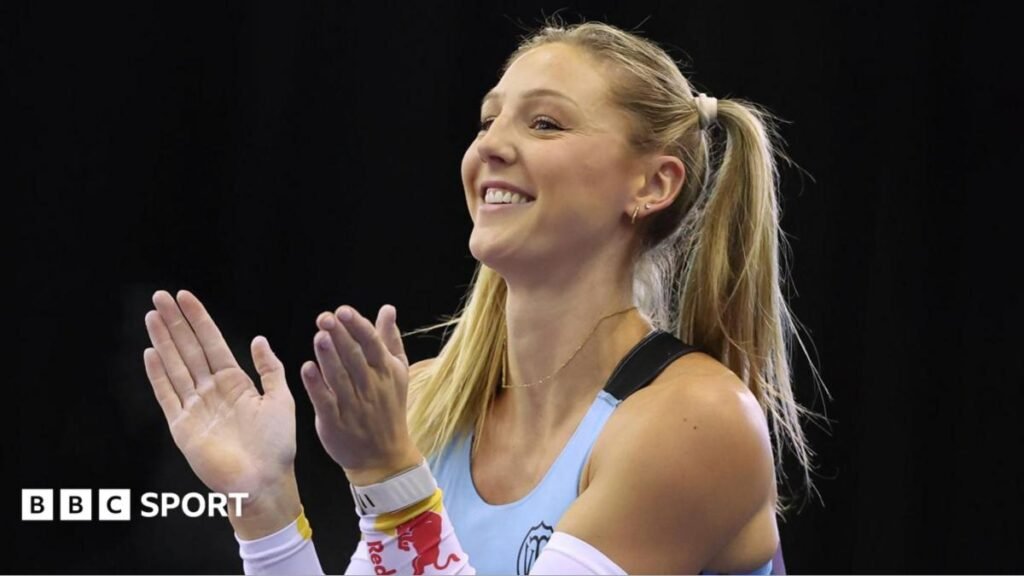
British Olympic bronze medallist Bradshaw was among the athletes to advise the EBU. The pole vaulter says she has been sent abuse on social media and has seen inappropriate videos of herself online because of revealing camera angles during live coverage of her competitions.
“How our sport is displayed during live broadcast can be incredibly powerful, yet sometimes harmful to the women competing and the women [and] girls watching,” she said.
“I first-hand have received social media abuse and witnessed inappropriate videos online of myself and colleagues when slow-motion content of us competing is captured.
“Many athletes, myself included have been in competitive scenarios where they are more focused on the cameras instead of their own performance.
“On too many occasions cameras are zoomed in, showing super slow-motion action replays of athletes in undignified positions.”
Serbian Olympic long jumper Spanovic, who also gave advice to the EBU, said certain cameras not only cause discomfort during events but can have “serious long-term effects on an athlete’s mental health”.
EBU Sport executive director Glen Killane said: “The sexualisation of women athletes through selective camera angles and editing choices continues to be a significant concern across many sports broadcasts.
“Lingering shots on bodies, low-angle cameras that capture revealing views, and excessive slow-motion replays that serve no technical or storytelling purpose are among the issues observed in the media coverage of women’s athletics competitions today.”
The BBC is a partner in the EBU, which provides coverage of sporting events to 57 countries, reaching audiences of more than a billion people.
While the new guidance has been implemented at the European Athletics Championships, the Diamond League – which is also broadcast on the BBC – does not go through the EBU and so would not necessarily have to adhere to the guidance.
#European #Athletics #Championships #guidelines #respectful #camera #coverage #female #athletes #time,
Source link


