



Digital Trends
I first caught a glimpse of Intel’s new handheld silicon at Computex 2026, where I saw early hardware powered by it, including the MSI Claw 8 EX AI+ and Acer Predator Atlas 8. But seeing a chip run a demo on a show floor and actually pushing it through real-world workloads are two very different things. When MSI eventually sent me the production Claw for a spin, I finally got that opportunity. I only had the device for a short time, but that brief window was enough to make one thing clear: Intel’s Arc G3 Extreme is a seriously capable handheld gaming platform.
Built for the handheld watt wars
What makes it particularly interesting is that this isn’t simply another laptop processor squeezed into a smaller chassis. Intel has built the Arc G3 Extreme specifically for handheld gaming, with its power envelope and platform tuned around portable workloads. At its heart sits the Arc B390 GPU, based on Intel’s Xe3 architecture, with 12 Xe-cores, hardware ray tracing and up to 113 TOPS of INT8 GPU compute. The chip also features 14 CPU cores, an NPU and support for up to LPDDR5X-8533 memory.

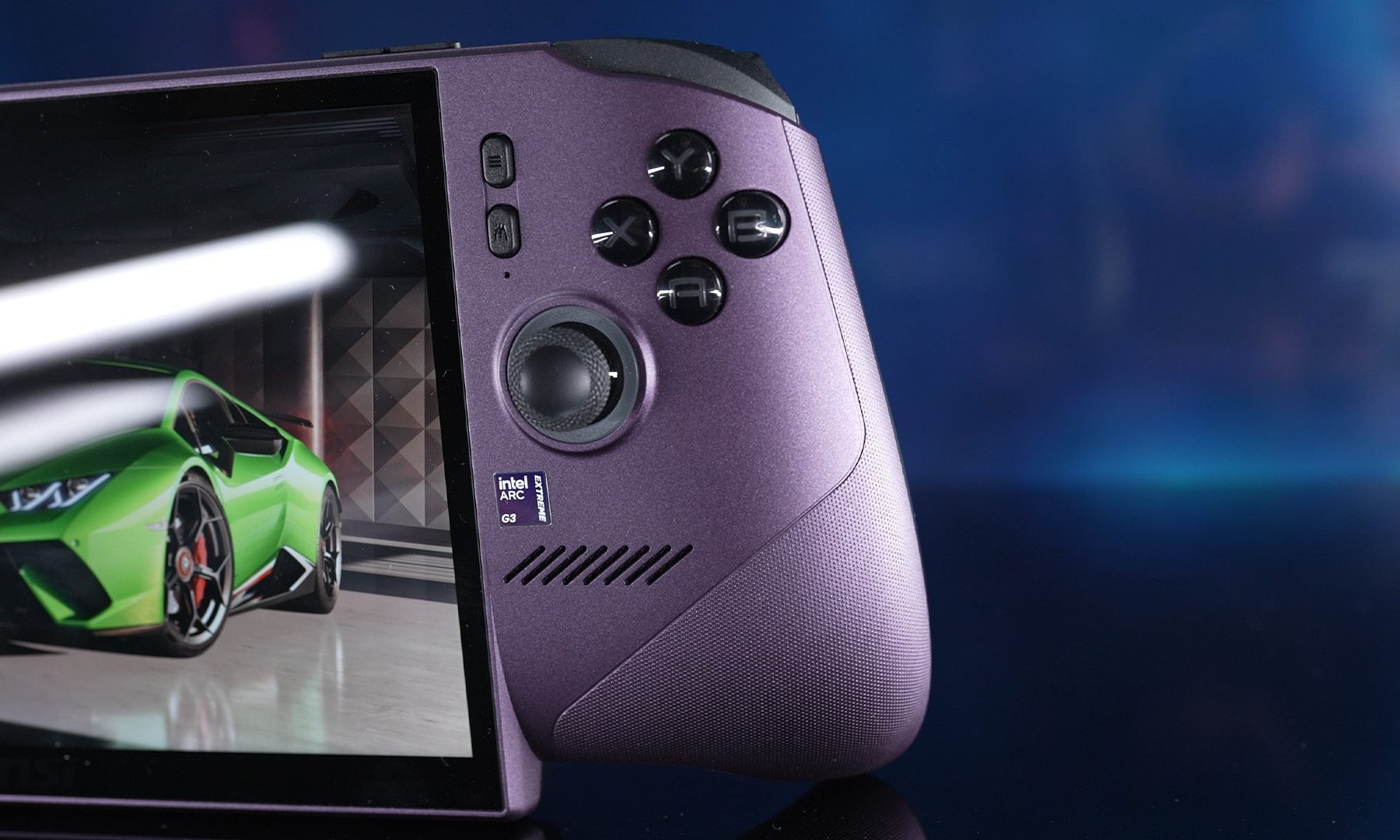
That distinction matters because handheld gaming is ultimately a battle for watts. There is only so much power available, and every watt spent on CPU performance is potentially a watt that could have gone towards graphics. Arc G3 Extreme takes a more graphics-focused approach, and after testing it, I think Intel has finally built a handheld chip that understands the assignment.
The test: How fast is the Intel Arc G3 Extreme?
There’s an important caveat before getting into the numbers. I only had the MSI Claw for a short testing window, so my dedicated synthetic and gaming benchmark runs were conducted at its 35W performance setting. I therefore wouldn’t present this as a comprehensive analysis of how Arc G3 Extreme behaves across every possible TDP level. Instead, these results show what Intel’s new handheld silicon can do when given a generous power budget.
| Benchmark | Score |
| Cinebench 2026 MT | 3646 |
| Cinebench 2026 ST | 497 |
| Cinebench R24 MT | 921 |
| Cinebench R24 ST | 122 |
| Cinebench R23 MT | 14720 |
| Cinebench R23 ST | 2003 |
| GeekBench 6 ST | 2777 |
| GeekBench 6 MT | 14173 |
| GeekBench OpenCL | 52812 |
| GeekBench Vulcan | 58710 |
| 3DMark Time Spy | 7098 |
| 3DMark Fire Strike | 12307 |
| 3DMark Night Raid | 44355 |
And at 35W, the results are seriously impressive. Across my synthetic tests, the Arc G3 Extreme delivered the kind of performance I simply haven’t seen from an Intel-powered handheld before. The CPU is capable enough to deliver laptop-class performance, but the real star is the Arc B390 GPU. I found the Arc G3 Extreme comfortably ahead of AMD’s Ryzen Z2 Extreme in its gaming tests. In fact, the Claw is the most powerful handheld gaming PC I’ve tested.
| Game | Profile | Avg FPS |
| Forza Horizon 6 | Graphics Preset: Medium, Intel XeSS-SR: Quality | 69 |
| Forza Horizon 5 | High Graphics Preset (RT: Medium) – MSAA 2x | 99 |
| Cyberpunk 2077 | Preset: Medium, NO RT, XeSS 2.0 – Balanced – Frame Generation | 153 |
| DOOM The Dark Ages – Level: Hebeth | Resolution Scaling Mode: Off | Overall Quality: Low | Upscaler: XeSS – Balanced, No FG | 78 |
| Black Myth Wukong | XeSS:60, Preset: Medium, Ray Tracing: Off, Frame Generation: Auto | 105 |
| Assassin’s Creed Shadows | Overall Preset: Steam Deck, Frame Rate Target: 240, Intel XeSS: Balanced, Frame Generation: On | 92 |
| Hogwarts Legacy | XeSS: Balanced | Quality Preset: Medium | 88 |
| LEGO Batman | Preset: Medium | AA: Off | XeSS: Balanced | Frame Generation: On, 4x | Full screen effects: Off | 221 |
| Spider-Man 2 | Preset: Medium | Upscale: XeSS | FG: On (FSR) | Dynamic Resolution Scaling: 60 | 116 |
| Red Dead Redemption 2 | Preset: Favor Performance | API: Vulkan | Upscale: Off | FG: Off | 90 |
| Shadow of the Tomb Raider | Preset: High | API: DX12 | Anti-Aliasing: TAA | Upscale: Off | 75 |
| Baldur’s Gate 3 | Preset: Ultra | Upscaler: Off | Frame Generation: Off | 51 |
| F1 24 | Preset: Ultra High | Upscaler: Off | Frame Generation: Off | 38 |
| Control | Preset: Medium | API: DX11 | Anti-Aliasing: Off | 85 |
The gaming results are even more telling. Across the titles and settings I tested, the Arc G3 Extreme consistently delivered the kind of performance that makes 1080p gaming genuinely viable on a handheld. More importantly, it doesn’t need to lean entirely on upscaling to get there. Native performance is already strong, while XeSS 3 provides additional headroom in supported games. Intel isn’t merely catching up anymore. It’s competing at the very top of the handheld performance stack.
The interesting part isn’t just performance
Raw performance is only half the story with a handheld. Give a chip 35W, and it should be fast. The more difficult question is what happens when the power budget comes down.

I didn’t have enough time with the Claw to build a comprehensive 17W, 20W, and 25W benchmark suite, so I took a different approach. I wanted to test efficiency the way a regular gamer would actually experience it. I switched to Endurance Mode and spent several hours playing Sleeping Dogs. The result? More than four hours of continuous gameplay, without turning the experience into a compromised version of the game. That is particularly interesting because the same silicon that can deliver this level of performance at 35W can scale down into a genuinely usable, battery-conscious gaming platform.
Then there’s standby behaviour, which might be my favourite efficiency improvement. The Claw’s idle drain was practically non-existent during my testing. Leave it in sleep mode overnight, and it wakes up with almost the same battery percentage. That’s a surprisingly important quality-of-life feature for a Windows handheld because nothing kills the convenience of portable gaming faster than picking up the device to find a dead battery.
Intel’s handheld redemption is real
I’ve tested most of the mainstream handhelds, from the Steam Deck and ROG Ally to the ROG Ally X and other AMD-powered devices, and based on that experience, the Arc G3 Extreme is comfortably the most powerful handheld platform I’ve tested. The performance advantage is especially noticeable in demanding AAA games, but Intel isn’t simply brute-forcing its way there with more watts; the chip also scales intelligently when the workload gets lighter.
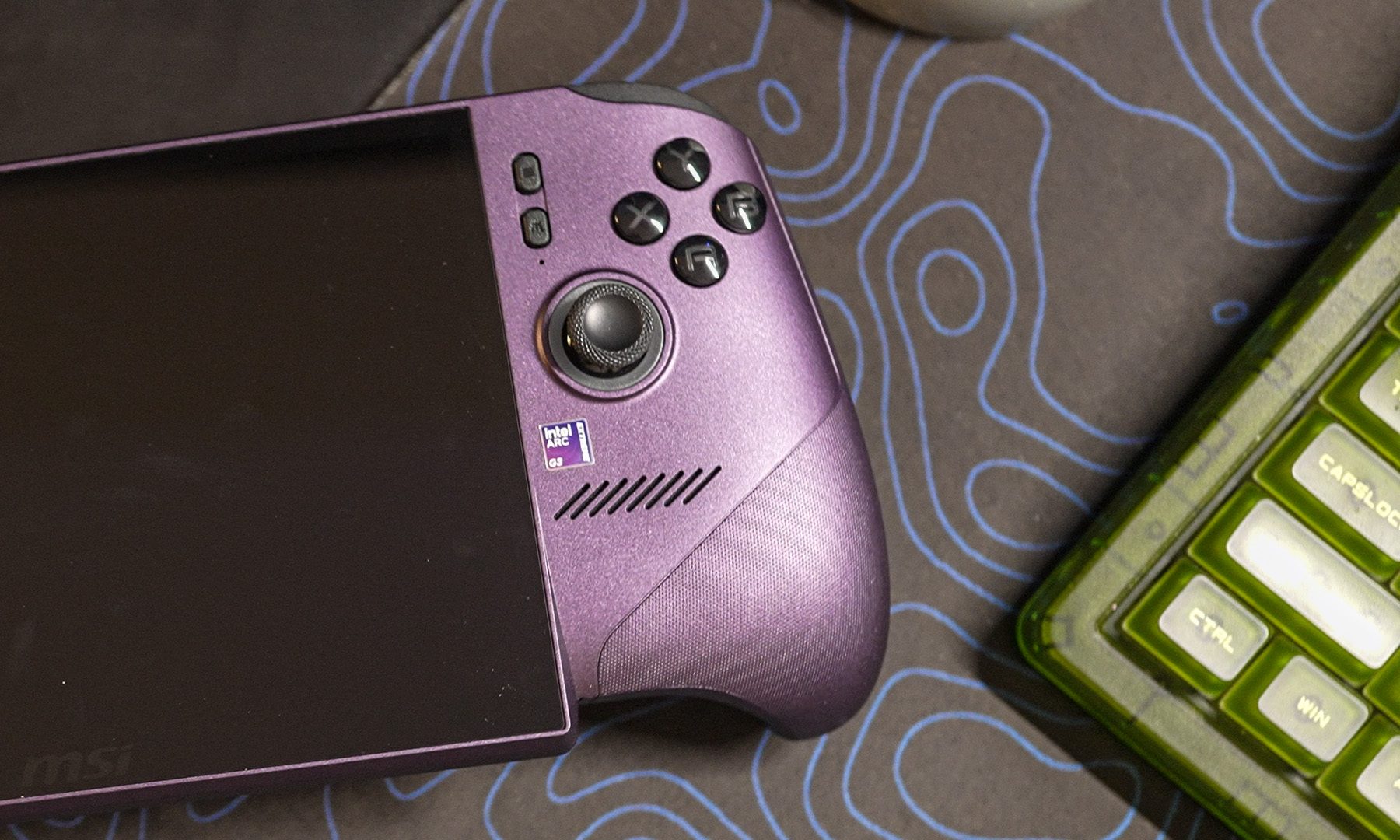
Of course, there’s some context worth acknowledging. AMD’s Ryzen Z2 Extreme launched around a year earlier, giving Intel plenty of time to study the handheld market, improve its drivers and close the gap. And the first Arc G3 Extreme devices are expensive enough that this isn’t about to become a mainstream replacement for the Steam Deck or ROG Ally overnight. But the price of the hardware doesn’t change what Intel has achieved with the silicon. Intel has finally arrived in handheld gaming, and it has done so with enough performance to compete with AMD at the top end, while bringing the efficiency to make that performance genuinely useful away from the charger.
The first Claw showed that Intel wasn’t ready. The Arc G3 Extreme shows that Intel finally is.
Intel Arc G3 Extreme Tested: Intel has finally arrived in handheld gaming
Source link


