


BBC News
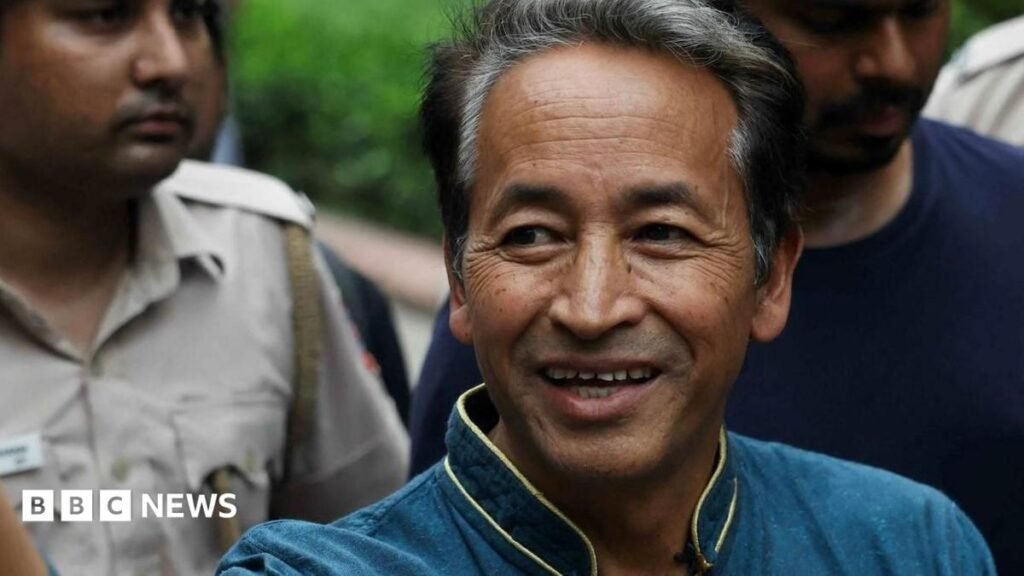
The recent youth-led protests have weakened Indian Prime Minister Narendra Modi “terribly”, says leading activist Sonam Wangchuk whose hunger strike galvanised the movement.
Wangchuk told the BBC that the atmosphere in the country had changed following mass demonstrations which triggered the resignation of the education minister on 25 July.
Young people now have more confidence they can “change things if they want to” and feel they don’t have to “take everything lying down”, the 59-year-old said.
The “cockroach” movement mounted one of the biggest public displays of dissent against Modi’s government, which has been in power since 2014.
The movement takes its name from a remark by India’s chief justice, who drew criticism after comparing sections of unemployed young people to “cockroaches” during a court hearing.
Wangchuk fasted in scorching heat in the capital, Delhi, for 26 days in June and July, consuming only salt and water. He says he has now regained six of the 11kg he lost.
The activist was forcibly taken to hospitals which he says were “more like prisons” for the final six days of his fast.
By then, the protests had escalated from public anger about the leak of exam papers into some of the biggest anti-government demonstrations India had seen in years.
Education Minister Dharmendra Pradhan resigned the day after Wangchuk ended his hunger strike.
Since then, Modi has announced fast-track courts to try those accused in the leaks and appointed a tech billionaire to lead efforts to reform the examination system.
The government also said it would offer compensation to families of students who took their own lives after exam questions were leaked.
But India’s problems are deeper – with graduate unemployment hovering around 35-40% for the past 25 years.
#Sonam #Wangchuk #Protests #weakened #Narendra #Modi #activist #tells #BBC #hunger #strike,
Source link


