





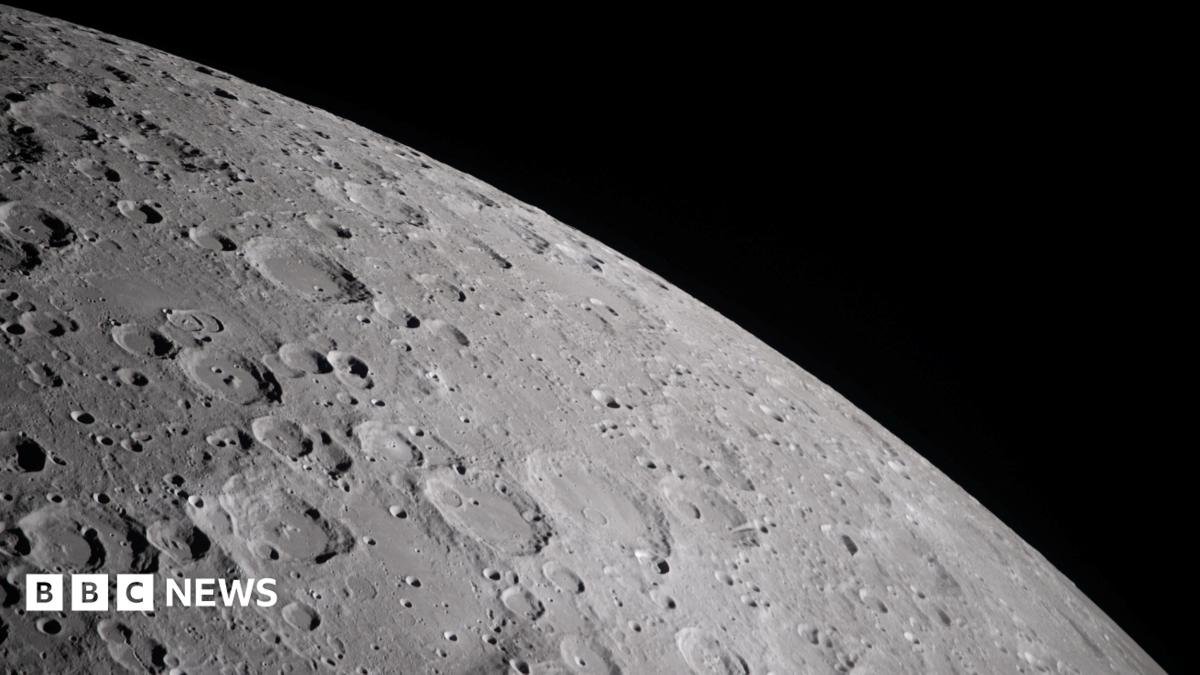
SpaceX: What can scientists learn from a Falcon 9 rocket hitting the Moon?
BBC News
A stray SpaceX rocket is believed to have crashed into the Moon, forming a crater near a famous lunar landmark and giving scientists a unique research opportunity that could help future missions.
The empty upper stage of a Falcon 9 rocket was due to strike the Moon near the Einstein crater at a speed of about 5,400mph (8,700km/h) on Wednesday.
The short, dramatic flash it created would have been hard to catch by amateur astronomers even with high-end telescopes, but larger observatories in the Americas are analysing the information.
It could be days or even weeks before the full picture of what happened and what we can learn from it is known – but for planetary geologists, this accidental collision is a scientific gift.
Space X’s Falcon 9 rocket is a reusable model and has been sent into space on several missions. Its design allows part of the rocket to return to Earth, but other sections are shed in space.
The rocket blasted off from Florida in January last year, carrying two lunar landers into space.
Its job was to fire the upper stage hard enough to send both of the landers out of Earth’s orbit and onto a path towards the Moon – mission accomplished.
The spent stage – which is about the size of a five-storey building and weighs at least 4,000kg – was left drifting in a long, looping orbit that swung out towards the Moon and back again.
Over the next 18 months, the gentle gravitational tug of the Earth, Moon and Sun, along with even light from the Sun, gave a faint push.
Astronomers tracking the rocket part eventually worked out that those small nudges had put it on a course towards the Moon and was picking up speed every day.
#SpaceX #scientists #learn #Falcon #rocket #hitting #Moon,
Source link