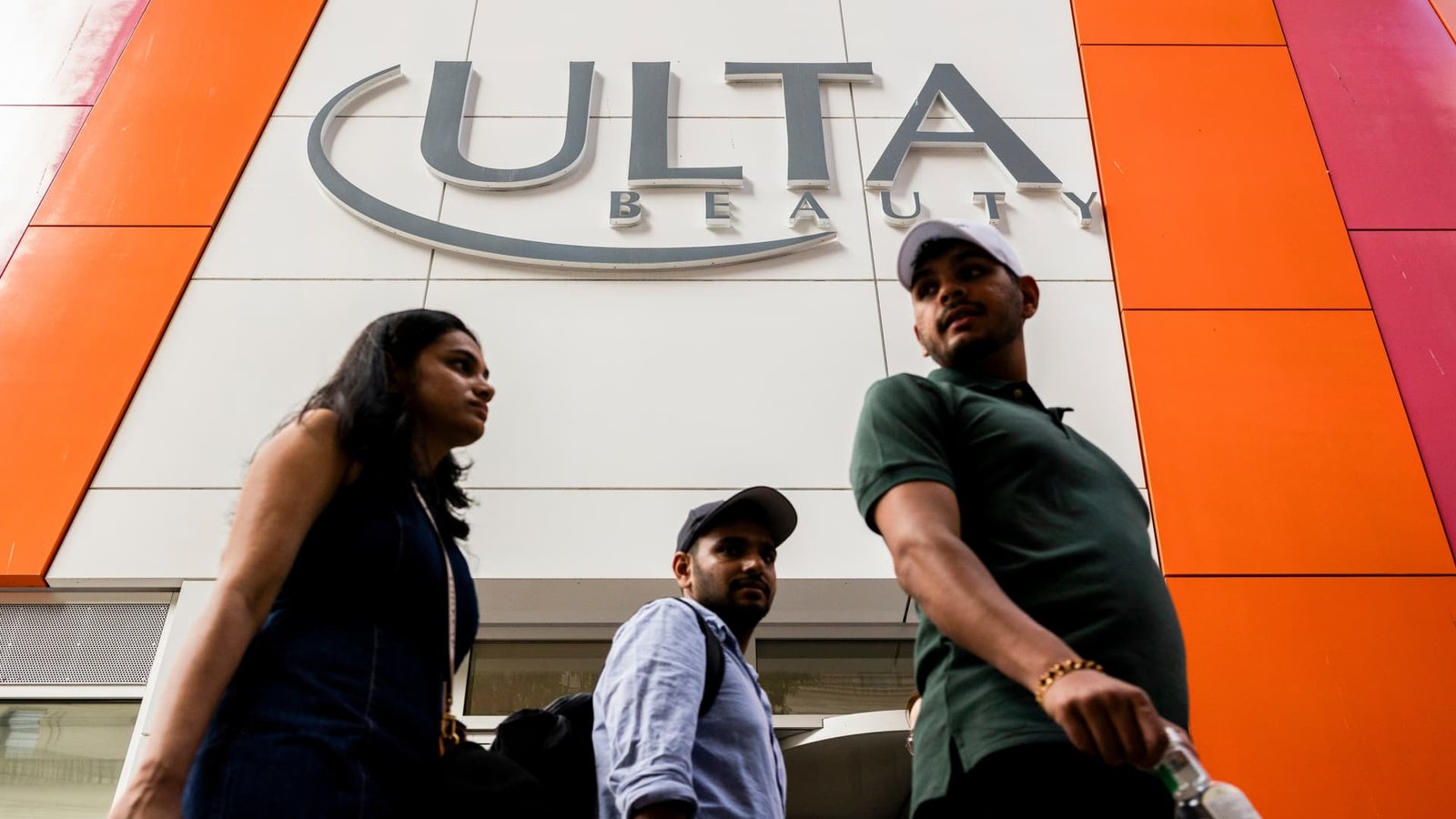
As fuel prices continue to rise, companies indexed to higher-income customers may be best positioned to weather the elements, according to Deutsche Bank. The ongoing Middle East conflict has shocked global energy supply chains in recent weeks, spiking Brent crude futures back above the $110 per barrel level on Friday. Deutsche Bank analysts pointed out in a Friday note that diesel is now above $5 per gallon for the first time since 2022, which could have secondary effects on the U.S. retail sector. @LCO.1 1M mountain Brent crude futures in the past month “We recognize the significant uncertainty surrounding the duration and impact from the ongoing Middle East conflict,” analyst Krisztina Katai said. “Middle East revenue exposure across our coverage is limited; the bigger issue is the risk of cost pressures from higher diesel and input costs, which could add a meaningful burden to U.S. household budgets, and intensify stresses already visible across U.S. customer cohorts.” To find the companies whose top lines are least affected by rising oil prices, Katai compared the correlation of quarter same-store sales and share prices to moves in prices at the pump over the past five years. “Retailers and brands whose customer bases skew higher income have historically showcased a positive relationship between oil/fuel prices and [same-store sales],” she wrote. This cohort includes Ulta Beauty , Costco Wholesale and Casey’s General Stores . On the other hand, dollar stores such as BJ’s Wholesale Club and Burlington Stores show a negative correlation to gas prices, Katai said. The finding confirmed suspicions that as gas prices increase, lower income customers reduce their purchases, the analyst noted. She added that Sprouts Farmers Market also shows an inverse relationship to changes in gas prices, which the analyst attributed to its nature as a secondary destination. In an environment of higher gas prices, consumers are more likely to consolidate trips and stay closer to home. Certain companies also have greater exposure to Europe, the Middle East and Africa, such as Birkenstock . Approximately 37% of its revenue is exposed to those parts of the world, Deutsche Bank found. The sandals manufacturer is followed by VF Corp , Ralph Lauren and Nike , which respectively have 34%, 30% and 27% revenue exposure to EMEA, according to the firm. “That said, all global brands/retailers could see the negative impacts of the stronger USD, and there is risk to European consumers coming under increased pressure,” Katai said. The conflict could also impact other commodities, such as petroleum-based raw materials and synthetic fibers like polyester and nylon. However, the analyst noted that most global brands are sitting on at least two quarters’ worth of finished goods inventory, helping mitigate their risk of near-term margin pressures. “Specifically, Amer Sports and Birkenstock have > 200 days of finished goods inventory on hand, closely followed by Ralph Lauren at 195,” Katai said. “Nike and Lululemon, by our calculations, have a little over a quarter worth of finished goods inventory.” —CNBC’s Michael Bloom contributed reporting.
The U.S. stock market continues to be volatile due to tensions in the Middle East. Investors seeking some portfolio stability can opt for dividend-paying stocks with attractive upside potential.
Recommendations from top Wall Street analysts can help investors turn up stocks that pay dividends consistently and have the ability to generate long-term capital appreciation. Insight from these experts informs investors on their search as their ratings are backed by an in-depth analysis of macro and micro factors.
Here are three dividend-paying stocks that are highlighted by Wall Street’s top pros, as tracked by TipRanks, a platform that ranks analysts based on their past performance.
Diamondback Energy
Independent oil and natural gas company Diamondback Energy (FANG) is this week’s first dividend pick. The company is focused on the exploration of unconventional, onshore oil and natural gas reserves in the Permian Basin in West Texas. It recently paid a base cash dividend of $1.05 per share. FANG offers a dividend yield of about 2%.
Recently, Goldman Sachs analyst Neil Mehta discussed the impact of ongoing commodity volatility on exploration and production companies. Assuming Brent and WTI at $75 and $70 per barrel, respectively, and Henry Hub natural gas at $3.75/MMBtu as his 2027-2030 normalized price average, the analyst is bullish on the prospects of Ovintiv (OVV), Permian Resources (PR), Diamondback, and FANG’s subsidiary Viper Energy (VNOM). He expects these stocks to generate an average total return of 22%.
Specifically, Mehta reiterated a buy rating on FANG stock with a price target of $216. The five-star analyst continues to view FANG as a compelling pick, given that the stock is trading at an attractive 12% average free cash flow yield on 2027 and 2028 estimates compared to the large-cap oil exploration and production peer average of 10%.
The analyst is confident about Diamondback’s ability to deliver better-than-anticipated performance in periods of strong commodity prices, supported by the company’s low-cost structure and lower capital intensity than peers.
“FANG has continued to reiterate the flexibility embedded within the company’s Permian operations, and continued progress in further taking costs out of the business,” said Mehta.
Mehta ranks No. 452 among more than 12,100 analysts tracked by TipRanks. His ratings have been successful 62% of the time, delivering an average return of 11.4%. See Diamondback Energy Statistics on TipRanks.
Crescent Energy
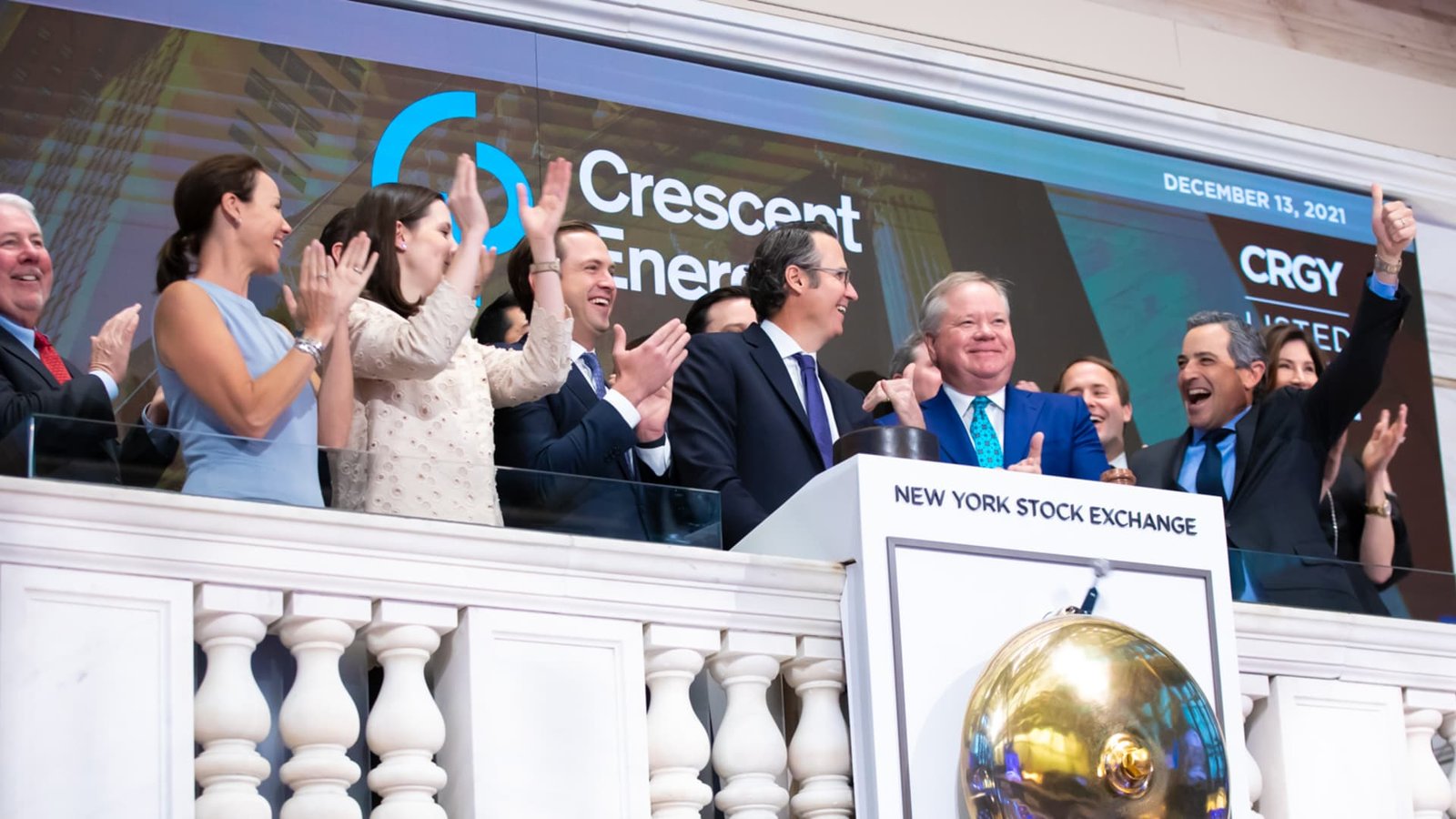
Another energy play in this week’s list is Crescent Energy (CRGY), an oil and gas company with operations focused in the Eagle Ford, Permian and Uinta basins. It also owns minerals and royalty interests across premier U.S. oil and natural gas basins, mainly operated by large, well-capitalized companies. With a quarterly dividend of 12 cents per share, CRGY stock offers a dividend yield of 3.5%.
Following a period of restriction and a “not rated” designation, JPMorgan analyst Zach Parham upgraded Crescent Energy to buy with a price target of $19. JPMorgan previously had a hold rating on CRGY stock with a price target of $14.
The top-rated analyst highlighted that Crescent is a diversified exploration and production company with a solid track record of creating value through acquisitions and divestitures. Specifically, Parham is impressed with Crescent’s improving capital efficiency and consolidation efforts in the Eagle Ford, with the company now emerging as the third-largest oil producer in the region.
The analyst noted that Crescent added debt to its balance sheet with its $3.1 billion Vital Energy acquisition, which helped it make its foray into the Permian, a much more competitive basin for acquisitions and diversification. It is worth noting that CRGY sold $800 million in assets before closing the Vital deal, reducing proforma net debt to about $4.8 billion. While Crescent’s near-term leverage remains high compared to peers, Parham expects the company to use its free cash flow to reduce its debt burden following the rise in strip prices due to the U.S.-Iran conflict.
Parham also observed that Crescent plans to let Vital’s output decline, which will help extend its Permian inventory life, thus addressing a major investor concern. “Over the long-term, we are confident in CRGY’s ability to manage its portfolio of E&P assets to generate value for shareholders,” concluded the analyst.
Parham ranks No. 1,067 among more than 12,100 analysts tracked by TipRanks. His ratings have been successful 66% of the time, delivering an average return of 10.2%. See Crescent Energy Ownership Structure on TipRanks.
Darden Restaurants
Finally, we look at Darden Restaurants (DRI), which operates several popular chains, including Olive Garden, LongHorn Steakhouse and Yard House. The company recently reported its fiscal third quarter results and issued a solid outlook. Darden declared a quarterly dividend of $1.50 per share, payable on May 1. At an annualized dividend of $6 per share, DRI stock offers a dividend yield of about 3.1%.
Following the Q3 print, Mizuho analyst Nick Setyan reiterated a buy rating on Darden stock with a price target of $235. The analyst stated that despite higher inflation and general and administrative expenses, the company delivered solid fiscal third-quarter results.
Setyan noted that quarterly performance was driven by strong same-store sales growth, highlighting near- and medium-term visibility due to Darden’s scale and diversity. Also, strength in LongHorn Steakhouse’s same-store sales growth offset the weakness in Olive Garden’s (OG) performance due to the absence of price promotions for three weeks.
The five-star analyst added that the company’s better-than-expected fourth-quarter outlook is supported by strength in March’s comparable sales trends. Setyan is confident about pricing aligning with inflation in the fiscal fourth quarter, particularly at LongHorn Steakhouse, which gives more clarity on fiscal 2027 same-store sales growth and margin expectations.
“With OG beginning the cycle of lapping tougher comparisons successfully, inflation cooling versus F26, pricing accelerating modestly, and unit growth stepping up to 3%+, visibility into DRI’s longer-term EBITDA and EPS growth algorithm is as high as ever,” said Setyan.
Setyan ranks No. 729 among more than 12,100 analysts tracked by TipRanks. His ratings have been successful 53% of the time, delivering an average return of 10.6%. See Darden Restaurants Financials on TipRanks.
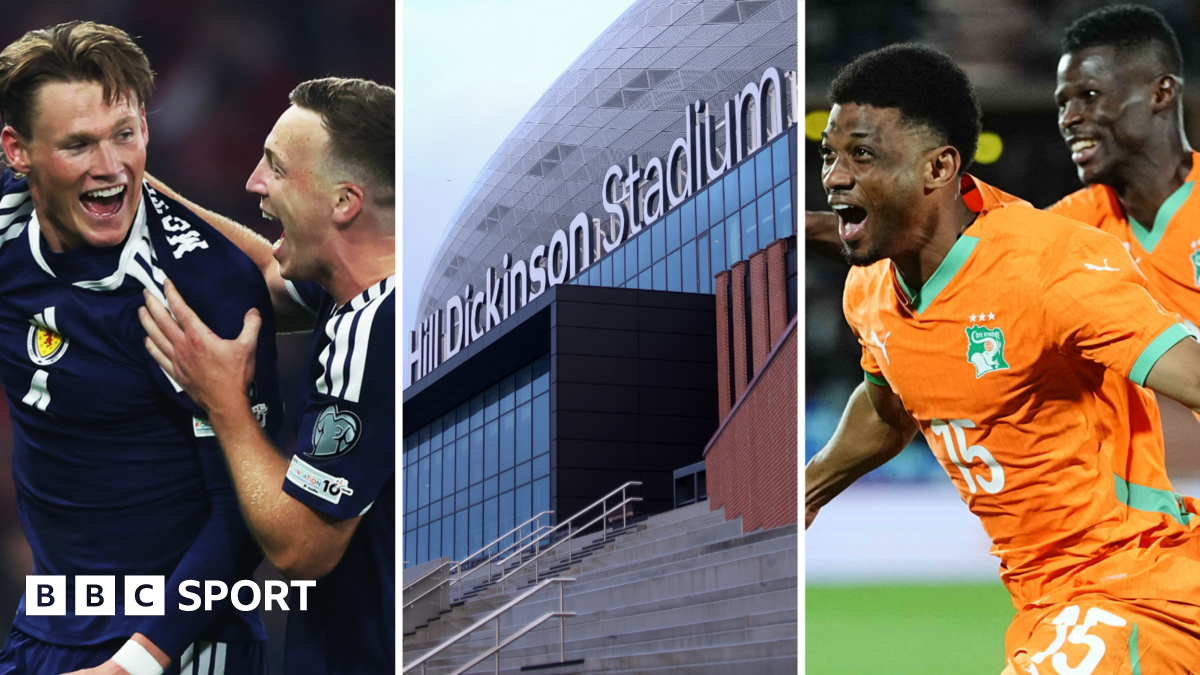
There is also a bit of symmetry about Tuesday’s first-ever meeting between these two sides.
Ivory Coast, at 35th, are five places above Scotland in the world rankings and are returning to the World Cup finals for the first time in 12 years.
With a 52,600 capacity, Hill Dickinson Stadium is just above Hampden’s 51,866.
Considering the distances involved for both sets of fans, will the attendance get close to that, or even the average of about 24,000 Ivory Coast usually attract to their games at the 60,000-capacity Alassane Ouattara Stadium?
Scotland are no strangers to playing in neutral venues, recently facing Gibraltar in Portugal, Ukraine in Poland and, in September, beating Belarus 2-0 in Hungary in a World Cup qualifier also switched because of Russia’s invasion.
However, the most famous might be the 1977 win over Wales.
Because of capacity restrictions and safety concerns at other grounds, the match was moved to Liverpool’s Anfield Stadium – Wales’ first home match held outside the country since 1890.
An infamous handball by Joe Jordan won Scotland a controversial penalty, with Don Masson slotting home the opener before Kenny Dalglish’s late strike settled the tie to send Scotland to the finals in Argentina instead of their heartbroken hosts.
Chinese jewelry company Laopu Gold still has significant upside, despite recent volatility in prices of the precious metal, analysts said. In the last two years, Hong Kong-listed Laopu has become an upstart in China’s luxury scene , drawing local crowds — and reportedly LVMH Chair Bernard Arnault — for its artisanal take on gold jewelry. Laopu’s popularity surged last year, with the stock posting a total return of more than 160%, as gold prices soared. But the precious metal has tumbled about 20% from a high in January, to hit a four-month low of $4,097.99 on March 23 . The jewelry company’s stock is only 0.16% lower year to date, after Laopu disclosed on March 23 that first-quarter net profit was at least 3.6 billion yuan (roughly $520.8 million). “Laopu is our top pick in the China consumer sector,” JPMorgan analysts said in a report Wednesday, noting the company’s “strategic resilience amid current gold market volatility.” “We see Laopu as best positioned to benefit from experience-led growth with a systematic approach (disciplined store count, a direct to consumer [DTC] model and differentiated service quality upheld by a highly selective/trained team),” the analysts added. They also noted Laopu’s 17 years of experience in pricing products, even when gold is in a downturn, although both the jeweler and JPMorgan expect gold prices will remain elevated this year. JPMorgan rates the stock overweight, with a price target of 1,296 Hong Kong dollars (about $165.63). That’s more than two times Laopu’s close Friday of 617 HKD. Building a following The Beijing-based Chinese jewelry company has built a following not just with its unique, locally inspired designs, but also with regular product price hikes and limited discounts, reinforcing a concept of investment pieces. Laopu also typically only opens stores in the highest-end malls in China. “While gold prices retracted from its peak of USD5,500/oz on 29 Jan 2026 to USD4,500/oz on 23 March, Laopu conducted a price hike on 28 Feb when gold price was USD5,200,” HSBC analysts pointed out in a March 24 report. “We believe Laopu can partially decouple from gold price cyclicality through branding and product innovations,” the HSBC analysts said. While they rate the stock a buy, they lowered their price target on Laopu to 950 HKD, from 1,023.20 HKD previously, due largely to higher costs from gold price risks. Chinese consumers have generally become more price-conscious since the pandemic. While Western luxury brands have sought to revamp their local strategies , Laopu represents new Chinese brands that are vying for the same market. According to a Rothschild forecast, Laopu’s 2025 sales were estimated to have surpassed Richemont’s jewelry sales in China last year, including those of Cartier. Brand recognition vs. gold prices “Brand Power to Drive Re rating Beyond Gold,” Morgan Stanley analysts said in a March 24 report about Laopu, which they rate overweight with a price target of 1,010 HKD. “If demand can stay consistently strong in a declining gold price environment for 1-2 quarters, it could be the case that Laopu proves itself a brand rather than a gold proxy, and the stock could re-rate meaningfully,” the analysts said. They pointed out that repeat purchases accounted for 38% of Laopu’s sales in 2025, with an even higher ratio in the first quarter of 2026, while per capita spending increased to 85,000 yuan last year, up from 50,000 yuan in 2024. However, Bank of America Securities downgraded Laopu to neutral from buy on March 26 given gold price volatility and slower economic growth. “We believe rising gold prices over the past two years were one of the key drivers of gold/jewelry stocks, as gold demand was helped by the perception of gold as a good store of value,” the analysts said. Their lowered price target on Laopu is 774 HKD, which still reflects 25% upside from Friday’s close. —CNBC’s Michael Bloom contributed to this report.
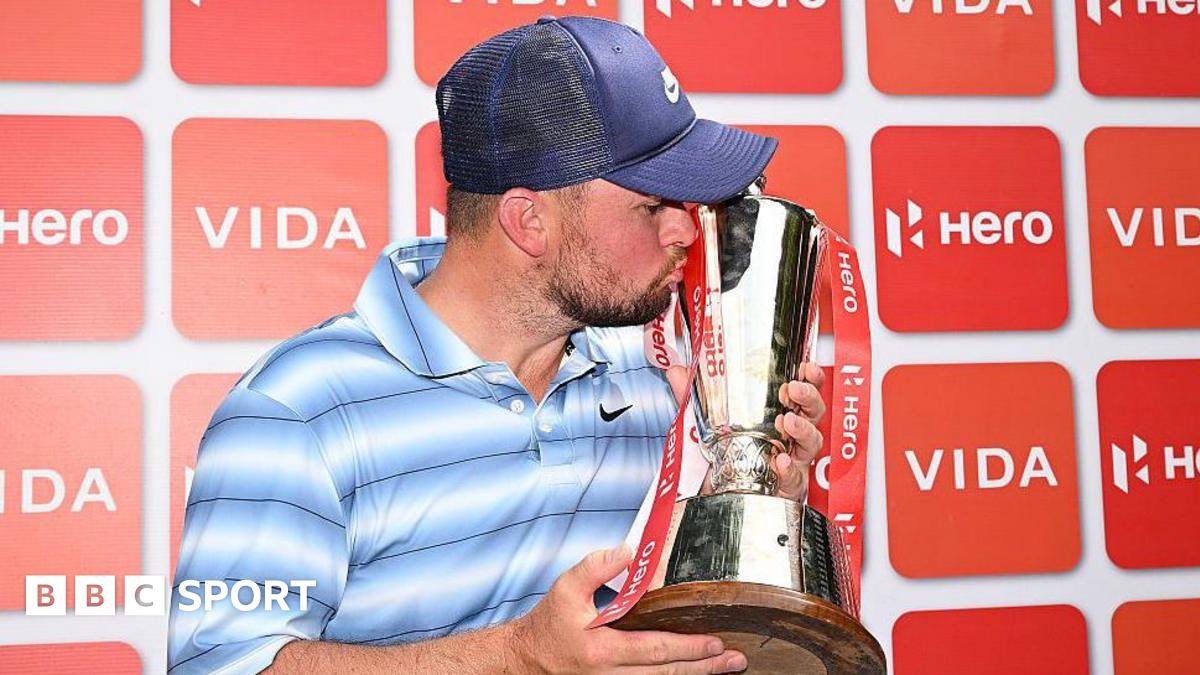
Fitzpatrick overhauled defending champion Eugenio Chacarra of Spain, who was four shots clear going into Sunday’s final round in New Delhi, to win by two shots
Back-to-back bogeys at the third and fourth did not help the Englishman’s cause but Chacarra’s tee-shot found the water at the eighth, leading to a bogey and a two-shot swing as Fitzpatrick made his birdie.
Both players birdied the ninth to turn with Chacarra three shots ahead, half of what his lead had been on the sixth tee.
Fitzpatrick bogeyed the 10th but birdied the next three, while Chacarra responded at the 13th to stay in front before missing a birdie chance at the 14th.
But things turned from the 15th as the Spaniard found a bunker off the tee to start a run of three consecutive bogeys and Fitzpatrick’s birdie gave him the lead.
Fitzpatrick birdied the 17th to go four ahead and played the par-five 18th cautiously with a double-bogey seven still enough for victory.
Liam Lawson – 7 – Bit anonymous really from the Kiwi. An odd front wing issue prevented him from getting through into Q3 like his Racing Bulls team-mate Arvid Lindblad but Lawson never fully shone. A big benefactor of the safety car to allow him a cheap pit stop and get up into the points and keep Esteban Ocon at bay for P9.
Esteban Ocon – 7 – Welcome back to the points, Esteban. A much better weekend from the Frenchman. Not outstanding but proceeded through to Q2 and had the pace over Haas team-mate Oliver Bearman, who has been putting Ocon in the shade so far this year.
Nico Hulkenberg – 6 – A mistake cost him a Q3 effort and pitting too late to really benefit from the safety car during the race results in another missed points opportunity for the Audi driver.
Isack Hadjar – 6 – The good news is that Hadjar is not suffering from the curse of Red Bull second seat. Unfortunately, it just so happens that the car isn’t performing to the level it should be. Outqualified team-mate Verstappen but struggled in the race.
Gabriel Bortoleto – 6 – A second top-10 start for the year, undone by a rough lights-out. Recovered in the race but fell away towards the end.
Arvid Lindblad – 8 – Hugely down on laps in practice, knocked Verstappen out in Q2 and a brilliant start to the grand prix. Kept Hadjar behind in the early stages but ultimately his race was ruined by the safety car.
Carlos Sainz – 6 – A fresh trim for the weekend wasn’t quite enough to see the Spaniard trouble the points for a second race in a row. But it felt like he got the most out of the equipment he has at Williams, with no heroics.
Franco Colapinto – 4 – How quickly things can change after an immense race in China. Not at one with the Alpine car, and a scary moment slowing heavily into Spoon Curve causing Ollie Bearman’s 50G crash is a stark reminder of the safety measures implemented in today’s Formula 1.
Sergio Perez – 7 – A rocky start to the weekend, colliding with the Williams of Alex Albon and still complaining of various, vague deployment issues. But outqualified Cadillac team-mate Valtteri Bottas and ahead of both Aston Martins in the race.
Fernando Alonso – 7 – First time seeing the chequered flag this year! I think that’s the only high Alonso and Aston Martin can take from this weekend. A much needed few weeks now before the Miami Grand Prix.
Valtteri Bottas – 6 – Despite having an upgrade on the car and seemingly making improvements, Perez had the better of him in Japan.
Alex Albon – 5 – Another tough weekend and some cryptic radio messages in qualifying highlight all is not well within the Williams camp. Sacrificed his race for a testing session.
Lance Stroll – 5 – A second consecutive year qualifying last for the Japanese Grand Prix and pretty much glued to the back of the pack until Aston Martin retired the car.
Oliver Bearman – 4 – Having been one of the stars of the season so far, Japan did not go his way. Bearman was eliminated in Q1 with a suspected technical issue but even when he could get a lap in he didn’t deliver on pace. The crash in the race wasn’t his fault but perhaps he could have judged his overspeed a tad better – easy for me to say. Thankfully, he walked away from a huge shunt and will have time to recover fully before we go racing again in early May.
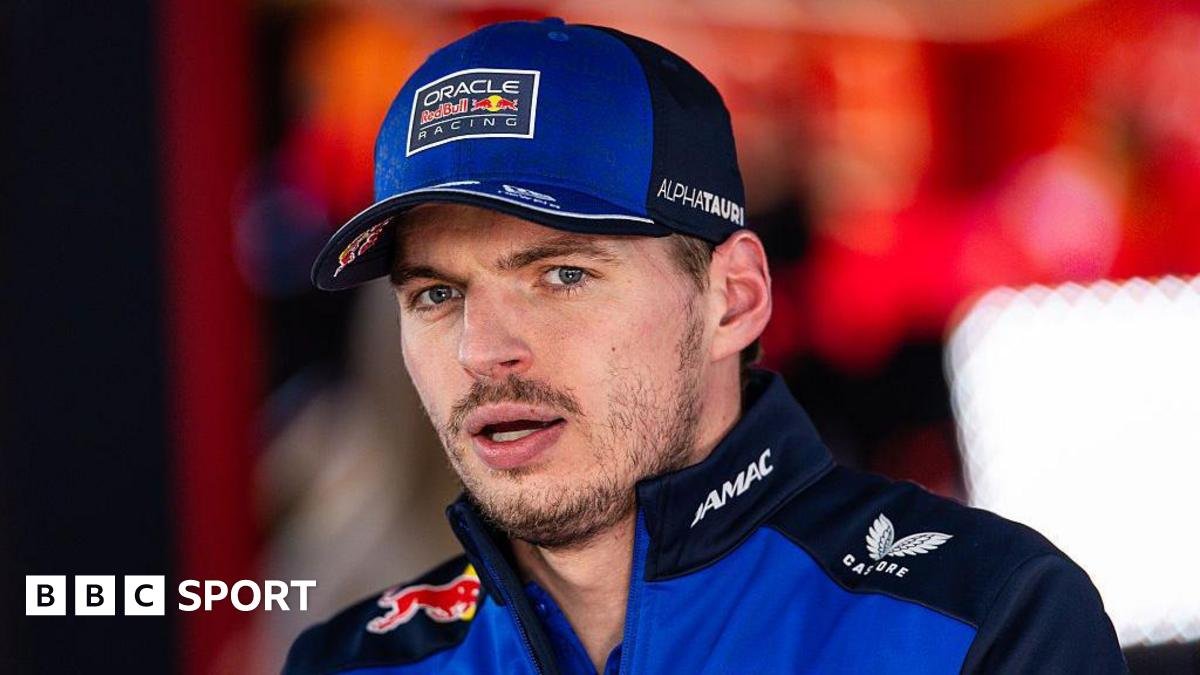
Verstappen’s dissatisfaction with F1 is focused on the degree of energy management required of the new engines.
They need to be recharged several times a lap, and that is leading to drivers losing speed on the approach to corners at the end of long straights as the engine runs out of battery power and starts to recharge.
It is also generating a form of racing that has proved attractive to fans and many in the sport, with places swapping and swapping back again.
But Verstappen does not like the way this happens as a result of different stages of battery charge between two drivers racing.
Discussing his attempts to pass Alpine’s Pierre Gasly for seventh place, Verstappen said: “You can pass around here, but then you have no battery for the next straight.
“So I tried once just to have a look, but then of course Pierre immediately got by me again on the main straight and I think that was basically the story of today. You can pass, but then you get re-passed. That was basically it.”
Commenting further on his thoughts about his future, Verstappen said: “I see it like this: You hear it from a lot of sports people when you speak to them about how are you successful. It all starts with actually enjoying what you’re doing before you can actually commit to it 100%.
“Now I think I’m committing 100% and I’m still trying, but the way that I am telling myself to give it 100% I think is not very healthy at the moment because I am not enjoying what I’m doing.
“And now people can easily say, ‘Yeah, well, you’ve won so many championships and races and now just because the car is not good you are complaining.’ Maybe you can see it like that, but I see it different.”
He added that one option would be to go and race in sports cars – he is already planning to take part in the Nurburgring 24 Hours this year.
“I have a lot of other projects anyway that I have a lot of passion about,” he said. “The GT3 racing. Not only racing it myself but also the team. It’s really nice and fun to build that. And I really want to build that out further in the coming years.
“It’s not like if I would stop here that I’m not going to do anything. I’m always going to have fun. And also I will have fun in a lot of other things in my life.
“But it’s a bit sad to be honest that we’re even talking about this. It is what it is. You don’t need to feel sorry for me. I’ll be fine.”
Referring to the bosses of F1 and his potential loss from the paddock, he implied that a change of the rules would make a difference to his decision.
“They know what to do,” Verstappen said.
F1 bosses are due to meet in the four-week gap between Japan and the next race in Miami to discuss changes to the rules to allow drivers to push flat-out in qualifying.
The need to manage energy over one ultimate lap and the effect this having on driving is unanimously regarded in F1 as an issue that needs fixing.