John Murray, BBC Radio 5 Live football correspondent
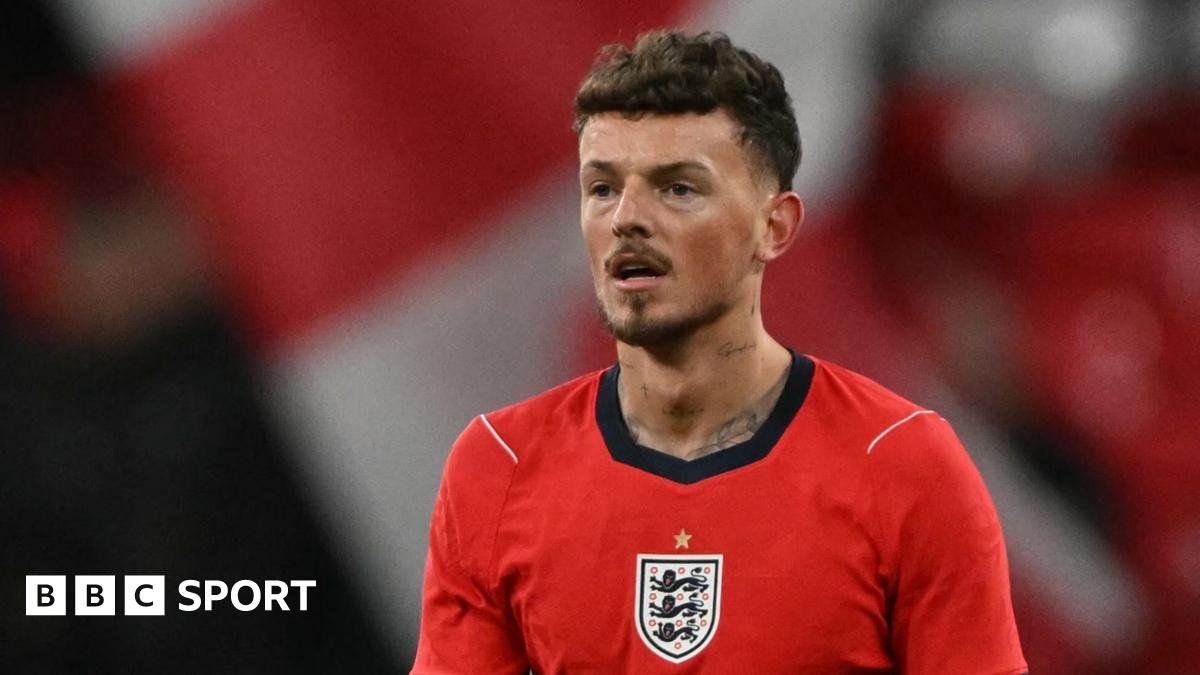
What that match will be remembered for is Ben White.
That’s the only match I have ever seen when an England player has scored his first international goal for England at Wembley and was booed by, I would say, a sizeable minority of the crowd.
When he left the squad in Qatar and went home for what was described as personal reasons – we’ve never really got to the bottom of what it was.
There were stories that there was a fall-out, something happened involving Steve Holland, Gareth Southgate’s assistant. But that was never confirmed by Gareth Southgate.
I thought last night might have been the perfect opportunity for Ben White to put his head above the parapet. He’s made his comeback, he’s just scored his first goal. But, as Thomas Tuchel was saying in advance of the match – and we kind of know this already – he described him as quite introverted, quite shy, and maybe he just doesn’t feel comfortable to do that.
But probably at some stage he will have to grasp the nettle and talk about it.
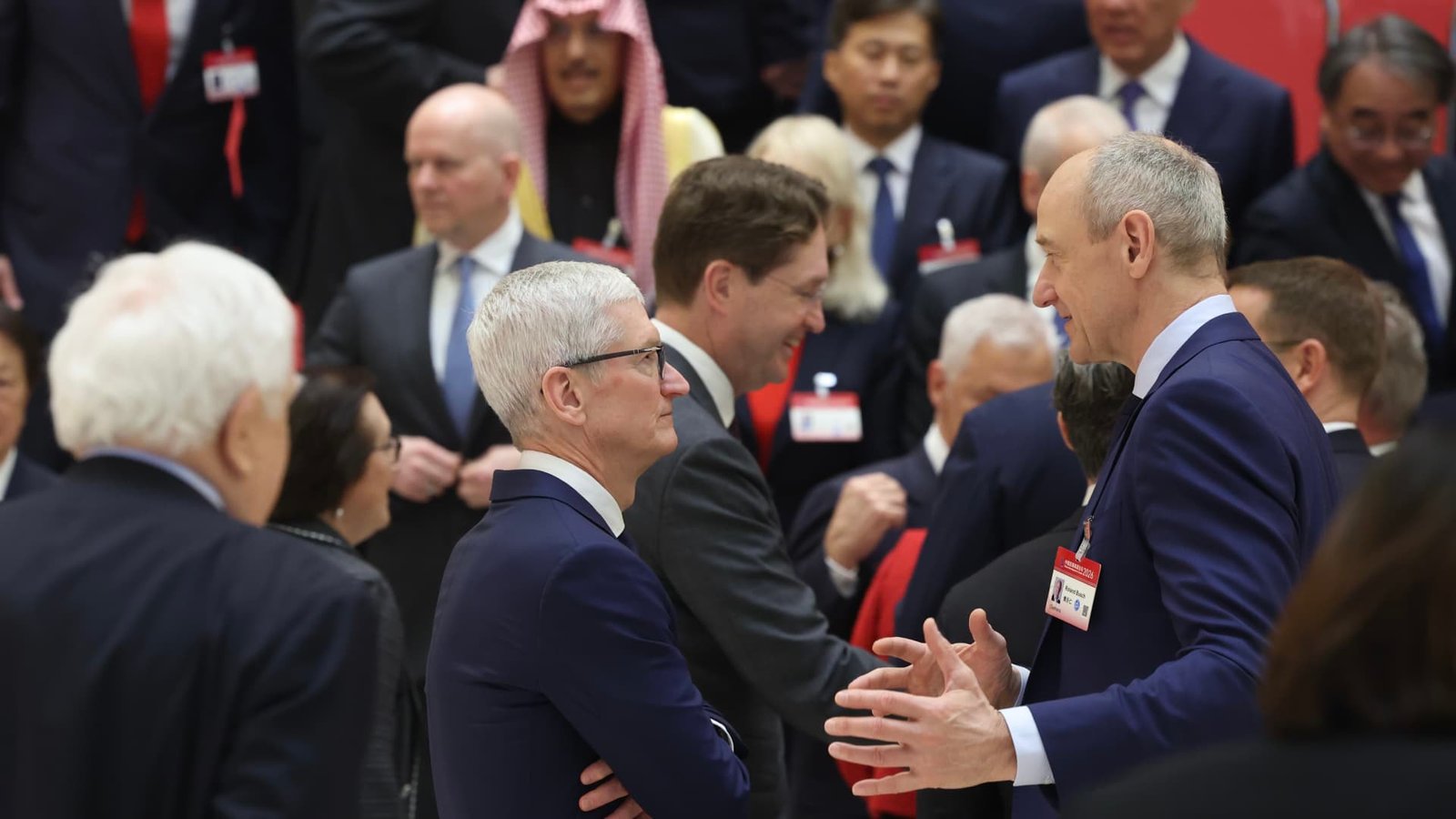
Apple CEO Tim Cook (L) stands with Siemens CEO Roland Busch prior to the opening ceremony of the China Development Forum 2026 at the Diaoyutai State Guesthouse on March 22, 2026 in Beijing, China.
China News Service | China News Service | Getty Images
BEIJING — As corporate giants navigate U.S.-China tensions, more than 80 global executives, from Apple to Eli Lilly, traveled to Beijing this weekend for the annual state-organized China Development Forum.
The executives’ remarks reflected renewed interest in capturing the Chinese consumer, after years of uncertainty from the Covid-19 pandemic, slower growth and U.S. trade tensions.
Fresh off a recovery in Apple iPhone sales in China, the company’s CEO Tim Cook took the stage after Chinese Premier Li Qiang on Sunday, praising the “extraordinary” pace of technological progress in the country, such as factory automation.
He said: “We are proud to be part of that progress, and we’re committed to working alongside our supplier partners to push it even further.” He added that more than 90% of Apple’s production in China is powered by clean energy.
On his way to Beijing, Cook also visited Chengdu, China, as Apple has been pressured to cut its China App Store fees.
According to an official delegate list seen by CNBC, attendees included more than 30 executives of U.S. companies, including McDonald’s, Coach parent Tapestry, and Mastercard, along with representatives of British, South Korean and German corporations.
Their trips to Beijing come as the U.S. and China reached a trade truce in October that lowered the effective tariff rate to less than 50% for a year. It remains unclear whether the two countries can extend the truce and whether Beijing will agree to allow more critically needed rare earths to leave the country.
U.S. President Donald Trump was scheduled to visit Beijing later this month for trade talks, but delayed the plans by at least a few weeks due to the Iran war.
U.S. companies have pushed ahead with plans to invest in China, even as the White House has sought to encourage more of that spending to return home.
Pharmaceutical giant Eli Lilly announced in March plans to invest $3 billion in China over the next decade. The company reported that just under 3% of its revenue came from China last year.
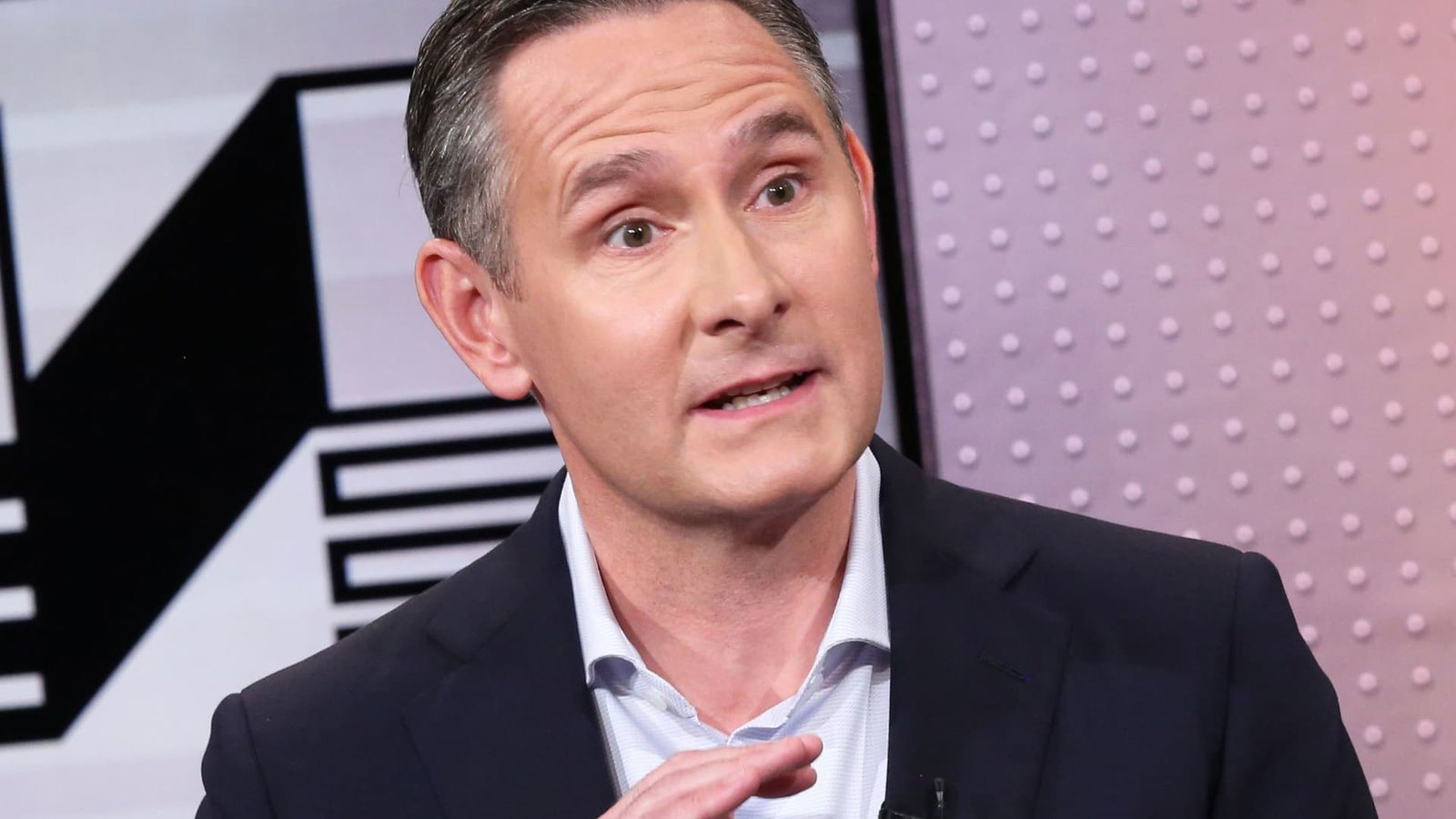
CEO David A. Ricks told CNBC’s Eunice Yoon that he sees “significant” potential in China for the company’s GLP-1 obesity drug, if there are better reimbursement systems.
Beijing has made incremental improvements to foreign access.
Eli Lilly’s Mounjaro weight-loss drug was added to China’s list for reimbursements under the state-run health insurance this year.
On Sunday, China’s Premier Li said Beijing would make it easier for foreign businesses to access the country’s services sector. He added that China would also buy more healthcare and digital technology products from abroad.
He also pushed back on the idea that state subsidies drove China’s technological development, while stating that the country has never pursued a trade surplus. Li noted that many products made in China by foreign companies are exported back to their home markets, with profits accruing to investors.
China reported a record trade surplus in 2025. This year, China began its 15th five-year development plan, with a focus on boosting tech self-sufficiency as well as domestic demand. Measures to support consumption have focused on trade-in subsidies and incremental increases to social welfare.
But the high-level China Development Forum didn’t reflect all views. Stephen Roach, an economist and senior fellow at Yale Law School, said he was not invited this year, after 25 years of attending the event.
“My focus on consumer-led rebalancing was always presented as constructive criticism,” he told CNBC by email. “Ironically, it is something they have finally embraced in the 15th five-year plan — albeit with inadequate policies.”
Weekly analysis and insights from Asia’s largest economy in your inbox Subscribe now
But executives that were still invited have businesses at stake. Volkswagen CEO Oliver Blume has now visited Beijing twice in just four weeks. He accompanied German Chancellor Friedrich Merz on a state visit in late February.
“Our long-standing partnership provides an opportunity to address challenges clearly at the China Development Forum as well: volatile supply chains, an imbalance between supply and demand, and high price pressure in the market,” Blume said in a statement distributed to media.
“As China’s largest foreign investor, we rely on stable framework conditions,” he said. “That is why we welcome measures to sustainably improve domestic demand and fair competition, as well as the stabilization of supply chains.”
“This year will be a very crucial one,” Blume told CNBC’s Eunice Yoon on the sidelines of the forum Sunday.
Marvell shares ripped 18% higher on Friday as the company posted an earnings beat and issued strong guidance, expecting robust artificial intelligence demand to continue.
The semiconductor company reported adjusted earnings of 80 cents per share for the quarter, exceeding the 79 cents per share expected by analysts polled by LSEG. The company reported $2.2 billion in fourth-quarter revenue, topping a forecast of $2.1 billion.
“Look at our results that we’re guiding. Look at our outlook for this year. Look at our outlook for next year. Do you see me blinking? You don’t,” CEO Matt Murphy told analysts on the earnings call.
Murphy said in a release that the company expects year-over-year revenue growth to accelerate in each quarter of 2027.
For Q1 2027, the chipmaker expects revenue of $2.4 billion, +/-5%. Wall Street expected $2.27 billion.
The company’s revenue for data centers in fiscal 2026 surpassed $6 billion, an increase of 46% from last year.
Marvell completed acquisitions of Celestial AI and XConn Technologies last month. Murphy told analysts on the earnings call that the acquisitions are expected to add $250 million in aggregate revenue for fiscal 2028.
The company forecasted $14.48 billion in revenue and earnings of $5.35 per share for fiscal 2028.
Analyst reactions to the earnings were largely positive.
“Overall, we are impressed with the strong multi-year revenue outlook and the diversity of customer program ramps,” J.P. Morgan analyst Harlan Sur wrote in a note Friday.
The bank reiterated its overweight rating on the stock and upped its price target from $130 to $135.
CNBC’s Kristina Partsinevelos contributed to this report.
Jurgen Klopp says Mohamed Salah is an “all-time great” at Liverpool and that he “would not be surprised if he plays another six or seven years” after the forward announced he will leave the club at the end of the season.
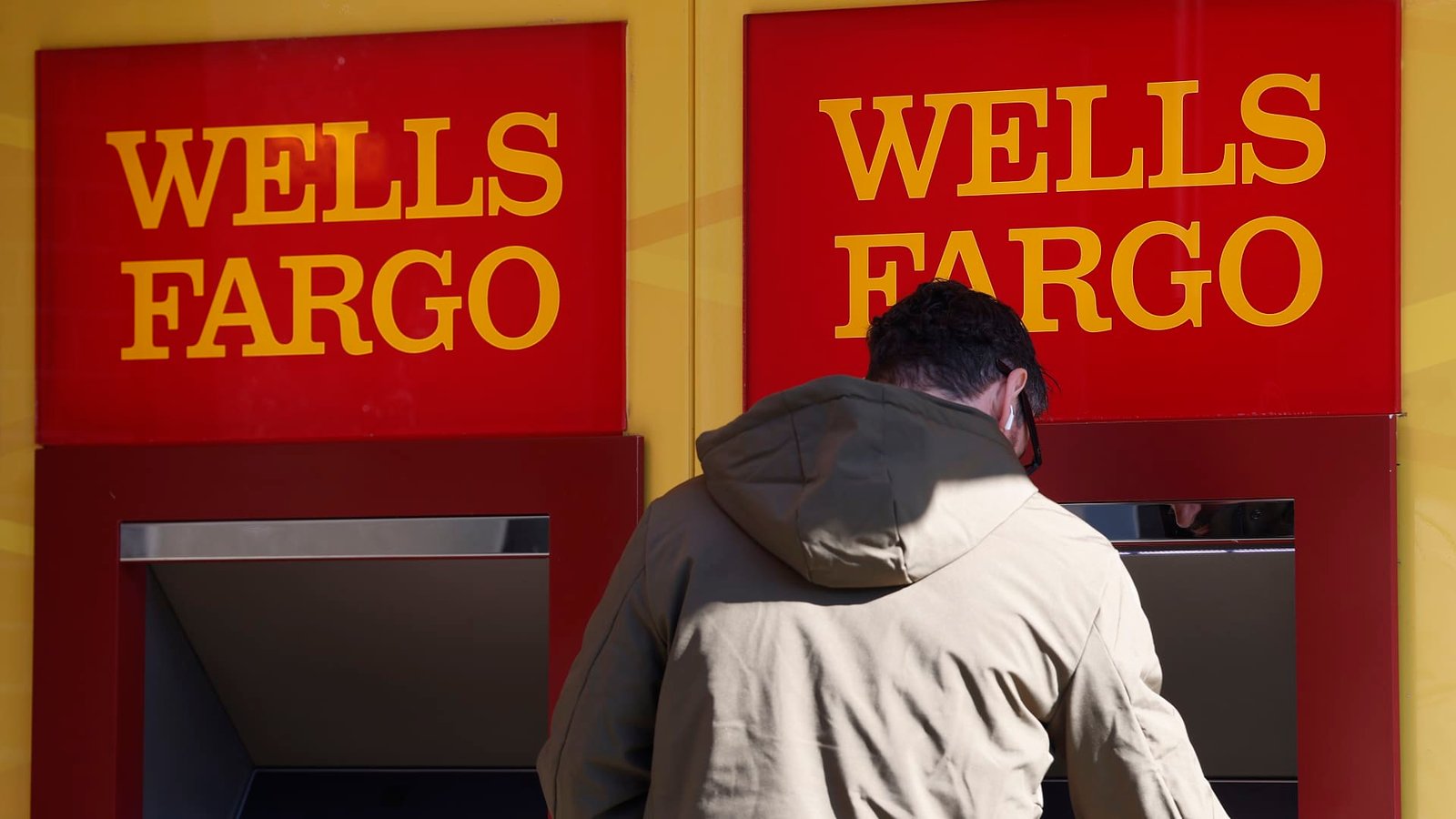
Wells Fargo is likely to gain ground as the bank continues to emerge from recently removed restrictions on its total assets, according to Jefferies. The investment bank initiated research coverage of Wells Fargo with a buy rating and put a $100 price target on shares, implying about 25% upside from Wednesday’s close. Wells was the top pick at Jefferies among four money-center or super-regional banks that it initiated with a buy rating ( Bank of America , Citigroup and PNC Financial were the others). Our “top pick is WFC as the removal of the regulatory asset cap in June 2025 should power above-average growth,” Jefferies analyst David Chiaverini said Thursday in a note to clients. Last June, the U.S. Federal Reserve lifted a 7-year restriction on assets at Wells Fargo, enabling the bank to pursue unhindered growth. The central bank originally imposed the limitations due to governance and control issues at Wells, including employees opening millions of unauthorized accounts to meet work-performance quotas. “Wells is in the early innings of a multiyear recovery in [return on tangible common equity] following the removal of its asset cap in June 2025 and the termination of key consent orders,” Jefferies wrote. “We believe the firm can compete on [an] equal footing with peers, supporting balance sheet growth, lower costs and an improving fee trajectory.” Jefferies’ bullishness tracks with the consensus on Wall Street, where 17 of 27 analysts covering Wells Fargo have a buy or strong buy rating on the stock. Shares of the bank have slumped nearly 16% in the past three months.
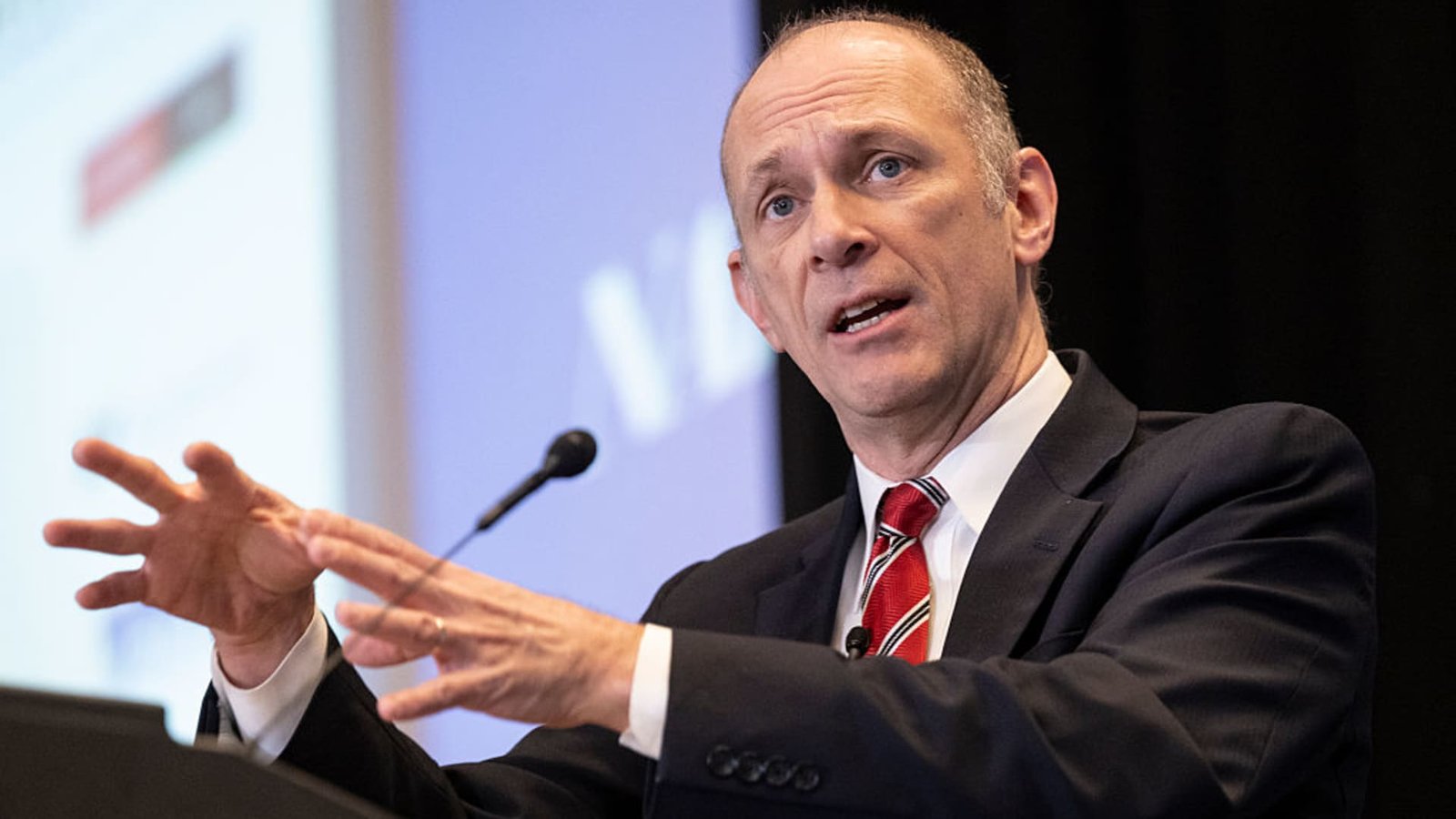
Chicago Federal Reserve President Austan Goolsbee said Monday that he’s more worried about inflation now than he is unemployment, even with apparent progress made on the war with Iran.
In a CNBC interview, the central banker said policymaking is difficult in the current environment. He spoke shortly after President Donald Trump announced that progress had been made in negotiations with Iran and that further attacks on energy infrastructure would be halted for five days as talks continue.
“The most important thing is to figure out the through line of what is happening,” Goolsbee said in a “Squawk Box” interview. “What makes this a fraught but intense moment is nobody can tell us what is going to happen on the ground in the conflict in the Middle East, and how long that lasts.”
Goolsbee had dissented on a rate cut in December and said he agreed with the majority to hold short-term rates steady at the January and March meetings of the Federal Open Market Committee. He is not an FOMC voter this year but will vote again next year.
Following Monday’s war news, traders, in volatile market action, upped bets of a rate hike by the end of the year but still expect a cut in 2027. Stocks spiked higher and oil prices plunged.
FOMC officials last week indicated a majority still expect a cut this year and another the next. However, Goolsbee said that his inclination will depend on the progress of inflation, and he cautioned against “a repeat of the team-transitory mistake” where the Fed underestimated the severity of inflation in 2021.
“I remain fairly optimistic that by the end of ’26 rates could go down, but I wanted to see proof that we’re back on an inflation headed to 2%. This [war] definitely throws a wrench into the plans. We do need to see progress,” he said.