4 Takeaways From the NCAA Men’s Basketball Tournament Sweet 16


Just like that, only eight remain. 

Two compelling days of Sweet 16 matchups that featured nothing but power-conference programs produced four nail-biting finishes and four lopsided blowouts. When the dust finally settled, the Elite Eight housed six teams seeded No. 3 or higher and two upstarts in No. 9 Iowa and No. 6 Tennessee.

The Big Ten, Big East, Big 12, ACC and SEC all have at least one team remaining in what feels like a relatively accurate cross-section of the sport. Three 1-seeds are still alive in Arizona, Michigan and Duke, the tournament’s No. 1 overall team. And No. 2 UConn is now within three games of its third national title in the last four years. 

Here are my takeaways from the Sweet 16: 

1. The Big Ten continues cruising toward the Final Four
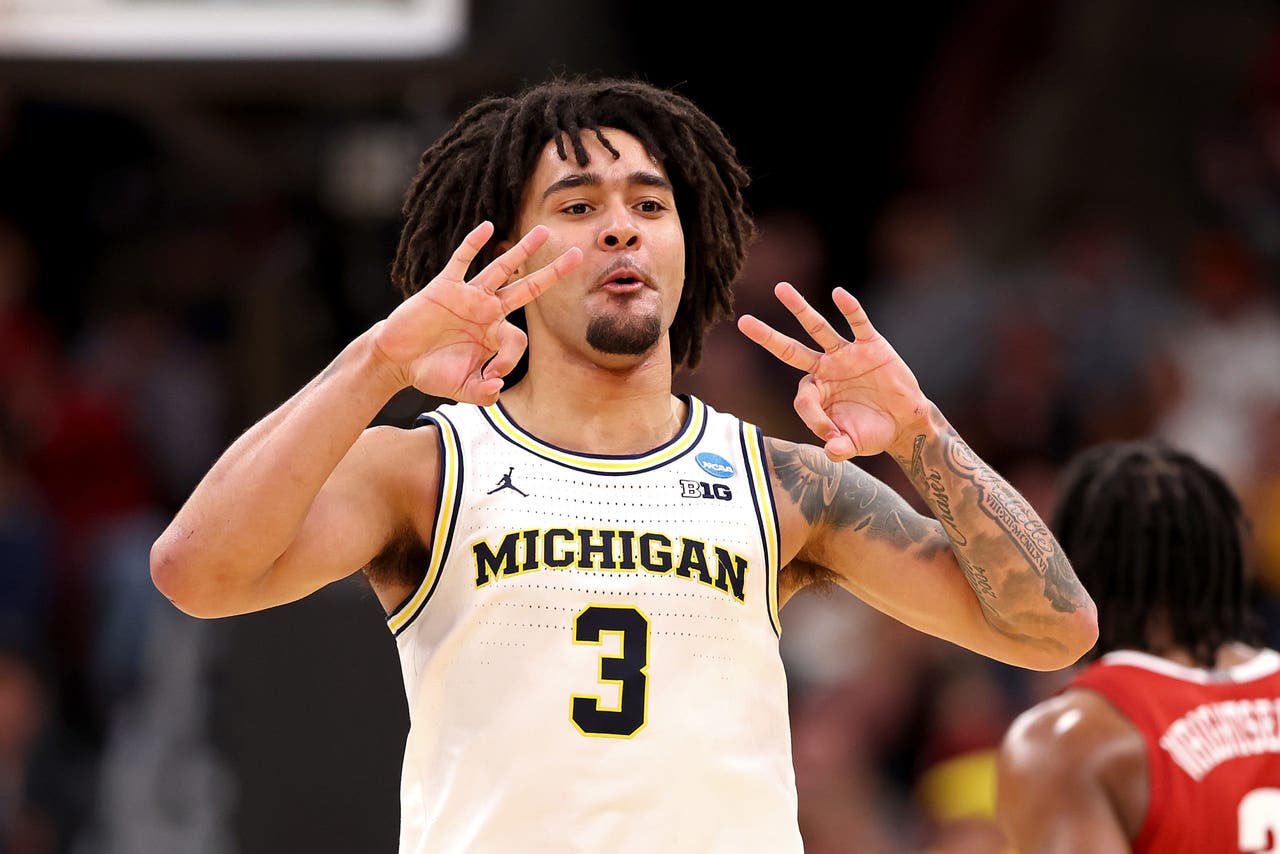
Elliot Cadeau of the Michigan Wolverines celebrates a basket against Alabama. (Photo by Michael Reaves/Getty Images)

[MEN’S BRACKET: NCAA Tournament Bracket, Leaders & Stats]

When the Big Ten sent six teams to the Sweet 16, the league established a new record for dominance in that round of the NCAA Men’s Basketball Tournament. And when four Big Ten schools prevailed on Thursday and Friday to reach the Elite Eight — Michigan, Purdue, Iowa and Illinois — that set another high-water mark for the conference. Never has the Big Ten felt closer to snapping its 26-year drought without a national title than right now. 

“College basketball has been cyclical forever,” Michigan head coach Dusty May said after his team handled No. 4 Alabama, 90-77. “Hopefully this is a long cycle for us in the conference. I think now that the playing field has been leveled out as far as finances and things like that, the environments in the Big Ten are second to none, the brands, and now I think we’re developing a different type of basketball identity with the West Coast schools joining us. 

“I know our league is incredibly tough. The coaches are off the charts.” 

Given the head-to-head matchup between No. 9 Iowa and No. 4 Nebraska, there was always going to be at least one Big Ten school bowing out in the Sweet 16. Second-seeded Purdue started the party on Thursday night by outlasting No. 11 Texas, 79-77, on a last-second tip from forward Trey Kaufman-Renn. Michigan and No. 3 Illinois — which strong-armed No. 2 Houston — both eased into the Elite Eight. The Illini have climbed all the way to fourth in the KenPom rankings thanks to an improving defense that is now among the top 21 nationally. They’ll face the Hawkeyes in a regional final that is guaranteed to place one Big Ten team into the Final Four. 

If the presumption that Michigan is still the conference’s likeliest national champion holds true, then a potential matchup between the Wolverines and fellow No. 1 seed Arizona in the national semifinals looms as a potentially defining moment. 

The Wildcats, who racked up 109 points against No. 4 Arkansas on Thursday night, have the requisite front-line size to contend with Michigan’s leading trio of Yaxel Lendeborg, Morez Johnson Jr. and Aday Mara, who combined for 38 points and 25 rebounds against Alabama. Any team that can oust Arizona is more than capable of winning it all. 

2. UConn still carries the Big East in the NCAA Tournament

Tarris Reed Jr. of the UConn Huskies dunks against the Michigan State Spartans. (Photo by Emilee Chinn/Getty Images)

When St. John’s flamed out in disappointing fashion against Arkansas during last year’s Round of 32, it was easy to point toward the Red Storm’s poor perimeter shooting as the primary reason. Head coach Rick Pitino’s team, which finished the campaign ranked 340th in 3-point field goal percentage, missed 20 of its 22 attempts from beyond the arc against the Razorbacks.

Though St. John’s still struggled with perimeter shooting this season, checking in at No. 218 nationally ahead of its Sweet 16 matchup against top-seeded Duke, with the NCAA Tournament came a flamethrowing reprieve. The Red Storm buried 10 triples in the opening round against No. 12 Northen Iowa. Eleven in the Round of 32 against No. 4 Kansas. And 13 more in what ended as an 80-75 loss to the Blue Devils. 

Instead, what ultimately undid St. John’s is something that teams coached by Pitino almost never encounter: a significant rebounding disadvantage (minus-13), an inability to control the interior (minus-12 on points in the paint) and the concession of too many extra possessions (minus-9 in second-chance points). For a team that prides itself on being stronger, tougher and more tenacious than any opponent, this is the kind of loss that will sting. 

The elimination of St. John’s left second-seeded UConn as the Big East’s only remaining participant in this year’s tournament. Whether that distinction would last another few days or another few hours was firmly up in the air, especially after the Huskies squandered a 19-point lead to fall behind midway through the second half against Michigan State.

When head coach Dan Hurley needed baskets, he turned to his most experienced players: fifth-year senior Alex Karaban and fellow senior Tarris Reed Jr. The duo combined to score the last 11 points for UConn over the final four minutes, fending off a Michigan State team that only shot 39.7% from the field and 25% from 3-point range. 

In doing so, the Huskies earned their 17th consecutive win in the Sweet 16 and beyond, a run that includes back-to-back championships in 2023 and 2024. UConn is still the Big East’s best program in March.  

3. Arizona keeps bucking the 3-point trend by dominating the interior

Koa Peat of the Arizona Wildcats dunks the ball against the Arkansas Razorbacks. (Photo by Ezra Shaw/Getty Images)

In this day and age, when a college basketball team scores 109 points in a regulation game, it’s generally safe to assume that perimeter shooting played a prominent role in the offensive explosion. Teams around the country are taking — and making — more 3-pointers than ever before in accordance with modern analytics that have infiltrated the sport.  

But a box score from Thursday night at SAP Center in San Jose, where No. 1 Arizona smashed No. 4 Arkansas, 109-88, was yet another example of how the Wildcats are thriving with an offensive system that goes against the grain. Head coach Tommy Lloyd’s team now ranks fourth in offensive efficiency despite maintaining the third-lowest 3-point attempt rate of any team in Division I, according to KenPom. Only 26.4% of Arizona’s points come from beyond the 3-point line, which ranks 360th out of 365 programs this season.

The Wildcats only attempted eight 3-pointers against Arkansas, making five of them. Instead, they relied on overwhelming size and strength on the interior to generate one high-quality look after another around the rim. Sixty of Arizona’s points came in the paint. Another 30 came at the free-throw line after forcing Arkansas to commit 25 fouls, a byproduct of relentlessly attacking both the rim and the offensive glass. Not a single player on Lloyd’s team shot worse than 50% from the floor.

“You think about this new era of basketball with spacing and shooting 3s,” Duke head coach Jon Scheyer told me in February when discussing Arizona’s unique style, “[Tommy Lloyd] has flipped a lot of that on its head where, no, we’re just gonna beat the crap out of you at the rim and out-rebound you, beat you in the free throws, score in the paint and score at the rim, and we’re going to hit wide-open 3s. I give him a ton of credit for just having a true identity for how they want to play and sticking to that, and he’s had a lot of success.”

4. Unthinkable late-game blunder stains Nebraska’s fairy-tale campaign

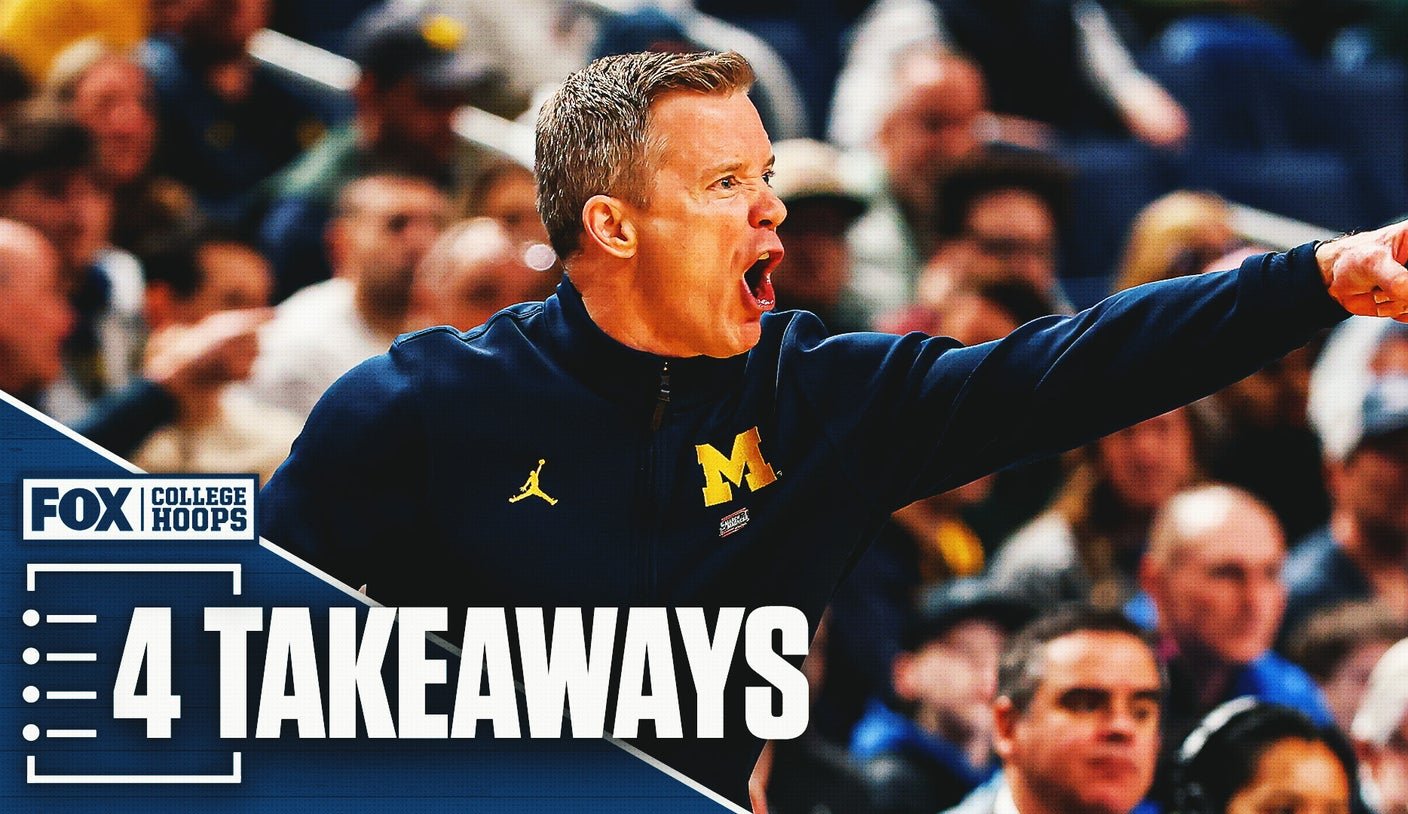
Nebraska head coach Fred Hoiberg looks on against the Iowa Hawkeyes. (Photo by Kenneth Richmond/Getty Images)

There were 58.8 seconds remaining in a one-possession game when the mistake that Nebraska fans will never forget swiftly capsized an incredible season. A referee handed the ball to Iowa guard Kael Combs along the baseline for an in-bounds pass with the Hawkeyes leading, 71-68. All the Cornhuskers needed was one defensive stop for a chance to then tie the game.

But as Nebraska’s players began working through defensive assignments in the final seconds before Combs made his pass, it quickly became apparent that there weren’t enough Cornhuskers on the floor. They only had four players. And that blunder, which head coach Fred Hoiberg took responsibility for in his postgame news conference, allowed Iowa forward Alvaro Folgueiras to break free for a layup that resulted in a three-point play. The lead ballooned to an insurmountable six points.  

“I’m from the south of Spain, from a small neighborhood called El Palo,” Folgueiras told reporters in the locker room after the game, “and we are known by being, you know, a little more life smart than some other places. So I just noticed that they were all trying to figure out who they were guarding and there were just four players on the court. I made eye contact with Kael (Combs), the ref gave him the ball, and after like two or three seconds of me jumping and saying, ‘Let’s go, let’s go, let’s go!’ we [still] had enough time to get the fast break because there were just four players and I was the only one open at the end of the court.”

Said Hoiberg: “Put that one on me. It was a miscommunication, and I’m the head coach. Put that one on me.”

This marked the second time in as many NCAA Tournament games that Folgueiras, a transfer from Robert Morris, worked his way into Iowa lore. A few days prior, in the Round of 32, he buried a 3-pointer with 4.5 seconds remaining to upset No. 1 Florida and push the Hawkeyes into the Sweet 16 for the first time since 1999. On Thursday night, his heady play at a critical juncture propelled Iowa to just its fifth Elite Eight appearance in school history. Now, the only thing standing between Iowa and the Final Four — a place it hasn’t been since 1980, the year before head coach Ben McCollum was born — is Illinois. 

Joy and elation for the Hawkeyes were juxtaposed with stunned sadness on the opposite bench, where a Nebraska team that won the school’s first-ever NCAA Tournament game had made an unfortunate mental error at the most inopportune moment. Social media platforms quickly flooded with ridicule for Hoiberg.

“It stings,” Hoiberg said. “This one hurts about as bad as any [loss] I’ve been a part of, just because of what this group is all about. We don’t get to lace ’em up anymore together as a group. They have been all about the right things. These guys will be a part of history of Nebraska basketball forever, for winning the first NCAA Tournament game, getting to the Sweet 16, most wins in the history of the program, highest ranking. They just did so many things to elevate our program.”

4½. What’s next? 

Here are a few storylines to watch as we move into the Elite Eight: 

No. 9 Iowa vs. No. 3 Illinois (Saturday) — Game after game, the idea that Iowa made the best hire in last year’s coaching cycle gains more traction. Maybe this is what athletic directors everywhere should have expected given Ben McCollum’s incredible track record of winning. He won four Division II national championships with Northwest Missouri State in a six-year span from 2017-22. He made the Sweet 16 eight times in the span of 10 tournaments at that level. Then, when McCollum finally made the move to Division I ahead of the 2024-25 season, which he spent as the head coach at Drake, he won 31 games and reached the Round of 32 in the Big Dance. Everything he touches turns to winning. 

No. 2 Purdue vs. No. 1 Arizona (Saturday) — There were many things to like about Purdue’s victory over No. 11 Texas in the Sweet 16: the continued hot shooting from guard Fletcher Loyer, the incredible efficiency from forward Trey Kaufman-Renn, the impeccable ball control that only resulted in four turnovers. And yet, there’s an underlying idea that the Boilermakers still haven’t beaten an elite opponent in this tournament. They pummeled an overmatched Queens team in the first round, upended a Miami team whose ACC brethren have almost all imploded and outlasted Texas, the 10th-place finisher in the SEC. Arizona, which entered Friday as the only team in the country ranked among the top five nationally in both offensive and defensive efficiency, is nothing like Purdue’s first three challengers. 

No. 2 UConn vs. No. 1 Duke (Sunday) — Five different Blue Devils logged more minutes than guard Caleb Foster in Duke’s victory over St. John’s, but an argument can be made that none were more impactful. Sure, Isaiah Evans (25 points) and Cameron Boozer (22 points) handled most of the scoring punch. And yes, the interior defense from forward Maliq Brown was exquisite. But adding Foster back into the mix after he missed the last three weeks with a fractured foot restores this team’s trajectory in short order. Foster contributed 11 points, three rebounds and two assists in just 18 minutes against St. John’s and afforded Scheyer the luxury of renewed lineup flexibility, plus another capable ball handler. With Foster on the mend, the Blue Devils are surefire national championship contenders. 

No. 6 Tennessee vs. No. 1 Michigan (Sunday) — Two things can be true simultaneously: On one hand, a 37-game sample size of eye tests and advanced metrics is more than enough to declare Michigan one of the sport’s elite teams. On the other hand, the Wolverines have largely breezed through the NCAA Tournament untested thanks to some good fortune. They beat a 9-seed in Saint Louis from outside the power conferences. They beat an Alabama team that was without its second-leading scorer, Aden Holloway, due to off-court issues. And come Sunday, they’ll face Tennessee instead of No. 2 Iowa State after the absence of All-American forward Joshua Jefferson caught up to the Cyclones. 


Source link

Itauma vs Franklin: British heavyweight reflects on pro career & upcoming bout


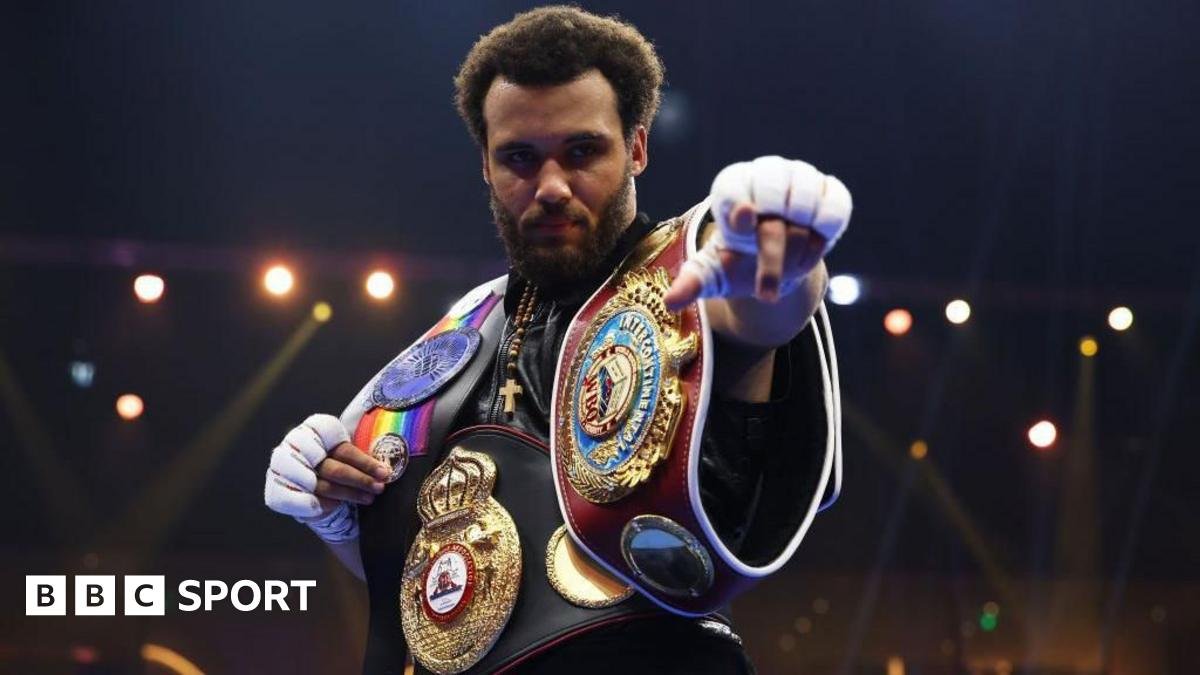
Itauma’s professional journey has been brief but brutal. He has boxed just 26 rounds in his pro career – and many of those were cut short.

He demolished Marcel Bode in just 23 seconds on his debut in January 2023 at Wembley Arena. But just like the Whyte fight, the early ending brought little joy.

“I didn’t care,” he reflects. “My brother suffered his first loss, literally a couple of minutes before. To be honest, I didn’t even want to fight that day.”

Family is the core of the Itauma story. His brother, light-heavyweight Karol Itauma, sits behind the cameras during fight week duties. The bond was forged through a 1,050-mile journey from Kezmarok, beneath Slovakia’s Tatra Mountain, to Chatham in Kent.

Born to a Slovak mother and Nigerian father, their early years were defined by racism and a search for a place to belong.

“Me and my brothers, we don’t look very Slovak, and that kind of limited opportunities that we can have in that country,” says Itauma.

“My mum was like, they’re probably going to have more opportunities and a better upbringing if they move to a country where people of mixed-race backgrounds are more common.”

Those sacrifices influenced every decision that followed. Itauma started boxing at nine, but it wasn’t until 14 that he decided to take it seriously.

“My mum sacrificed a lot coming over to the UK,” he says. “I need to kind of make it. So, yeah, it’s difficult, but I’m happy that my mum made the decisions and obviously I’m following through.”

That “family first” mentality is why he snubbed the Olympic route with Team GB to sign with Frank Warren’s Queensberry Promotions.

“The short and sweet of it was that my family needed the money,” he adds.


Source link

Dell is back on Josh Brown’s Best Stocks list. Why more gains are ahead


Source link

When do the clocks go forward in 2026 and why do they change?


Supporters of BST often argue that lighter summer evenings improve road safety, reducing traffic accidents at busy commuting times. The issue gained national attention between 1968 and 1971, when the UK ran a three-year trial keeping BST all year.

Road casualty figures fell during this period, although later analysis suggested much of the improvement was likely due to drink-driving laws introduced in 1967, rather than the clock change itself.

The trial also exposed clear regional differences. In northern Scotland the impact was less positive. Here on the shortest winter days sunrise did not occur until around 10:00 in some places, resulting in darker mornings and a rise in serious road casualties. These concerns underpin the Scottish government’s long-standing opposition to retaining BST during winter.

As a result proposals to end the twice-yearly clock change have repeatedly stalled, and there are currently no plans to alter daylight saving in the UK.

Critics also point to the disruption caused by changing the clocks, often comparing it to mild, nationwide jet lag. Losing an hour of sleep in spring has been linked to short-term effects on mood, concentration, and mental well-being.

One practical frustration has eased, however, with smartphones and connected devices now updating automatically, the seasonal time change is harder to miss —even if the debate around it remains unresolved.


Source link

Epstein files highlight how the wealthy borrow against art collections


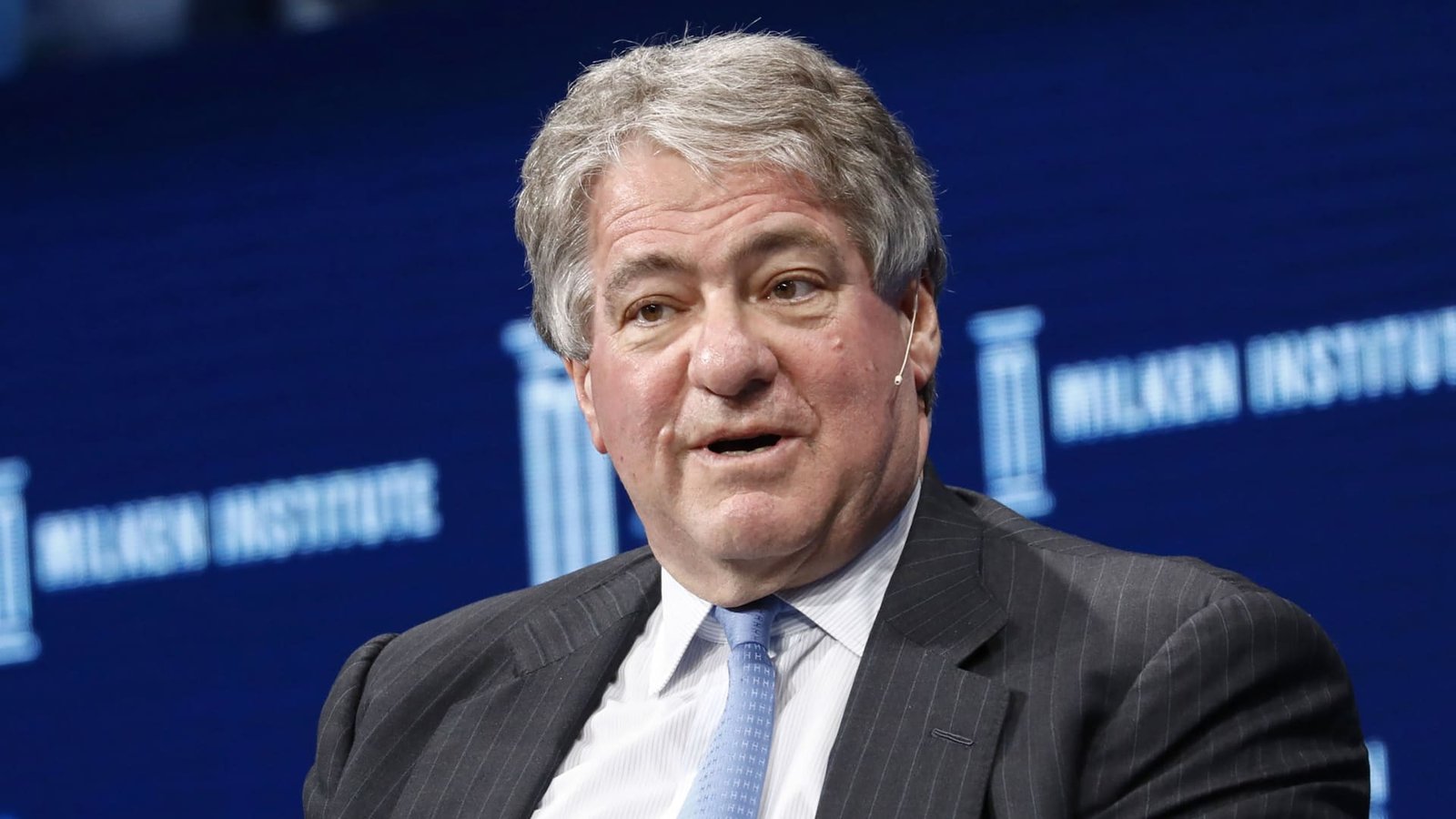
Leon Black, then-CEO of Apollo Global Management, at the Milken Institute Global Conference in Beverly Hills, California, May 1, 2018.

Patrick T. Fallon | Bloomberg | Getty Images

A version of this article first appeared in CNBC’s Inside Wealth newsletter with Robert Frank, a weekly guide to the high-net-worth investor and consumer. Sign up to receive future editions, straight to your inbox.

A $484 million art loan secured by billionaire Leon Black and disclosed in the latest Epstein files highlights one of the fastest-growing and most lucrative corners of the art world.

According to a March 2015 document released as part of the Epstein files, Black secured the loan from Bank of America backed by works of art. While not unusual for top private banking clients, the loan made headlines for its size and the exotic collateral, which included blue-chip works by Picasso, Giacometti, Titian, Matisse and others.

Art lending, however, has become an increasingly valuable tool for both wealthy collectors and the wealth management firms vying to manage their fortunes. The global market for art loans is estimated at between $38 billion and $45 billion today, according to a report from Deloitte and ArtTactic. The market is expected to top $50 billion by 2028, growing at about 12% a year.

Adam Chinn, managing partner of International Art Finance and longtime art-finance expert, said art loans are a way for collectors to pull cash from paintings that they can also continue to enjoy on their walls.

Get Inside Wealth directly to your inbox

“It’s the best of both worlds,” Chinn said. “You can monetize an otherwise non-income-producing asset. And it’s still great to look at.”

Far from signaling a lack of funds, art loans are typically used by the wealthy to provide ready cash, leverage financial investments and avoid hefty tax bills. Private banks often grant art loans to top clients at low interest rates, knowing the client has hundreds of millions or even billions in other assets in case the loans default. The interest rate on Black’s loan in 2015 was 1.43%, according to the document.

The bulk of the art lending market is dominated by the auction houses — especially Sotheby’s Financial Services — as well as specialty lenders like International Art Finance.

Scott Milleisen, global head of lending at Sotheby’s Financial Services, said collectors use the proceeds for a wide variety of purposes. The company now lends against classic cars as well as art.

“Many of our clients borrow against their fine art collections to invest in businesses, pursue new art acquisitions or release cash without selling works they love,” Milleisen said.

Chinn said many of today’s collectors are top leaders in private equity and hedge funds. Since they’re used to using leverage to turbocharge their wealth in their investments and businesses, they view leveraging their art collections as a natural extension. Chinn estimates that the total value of art held in private hands is between $1 trillion and $2 trillion. With art loans representing a tiny fraction of the total — well under $50 billion — he said the industry has plenty of room to grow.

“Art is the most underleveraged asset on the planet,” he said.

Art loans also generate lucrative tax benefits. Selling a work of art triggers a capital gains rate of 28% — a higher rate for collectibles than other categories — along with the 3.8% net investment income tax, bringing the top rate to 31.8%. Selling in certain states also triggers state taxes.

An art loan even at today’s elevated lending rates, typically around 8% to 9%, is still far more efficient than paying a tax. Plus, borrowers can usually keep the art on their walls.

The art lending business has also benefitted from a 2017 tax change that eliminated the use of so-called 1031 exchanges in the art market. The practice allowed art collectors to avoid capital gains taxes by swapping one work for another. Without the benefit, many collectors have turned to loans to provide liquidity without the tax penalties.

Chinn said that given the art market’s recent rebound, and falling interest rates, art lending is poised to continue its strong growth.

“The art market is a strange market,” he said. “But if you look at every other asset class, eventually it gets fractionalized, securitized and leveraged. It’s just the nature of the universe.”

Choose CNBC as your preferred source on Google and never miss a moment from the most trusted name in business news.


Source link

Apollo private credit fund gives investors only 45% of requested withdrawals


Marc Rowan, CEO of Apollo Global Management, during a Bloomberg Television interview in New York, Dec. 5, 2023.

Jeenah Moon | Bloomberg | Getty Images

Apollo, the asset management giant, told investors in its flagship private credit fund that it will limit withdrawals this quarter to just under half of requests, the latest sign of stress in the asset class.

In a filing with the Securities and Exchange Commission late Monday, Apollo Debt Solutions BDC said that it received redemption requests equal to 11.2% of shares outstanding in the first quarter, far exceeding the 5% quarterly cap the fund allows.

Unlike some other private credit players, Apollo is sticking with the 5% cap, an industry standard that rivals including Blackstone have recently relaxed to satisfy investor demands for their funds.

The vehicle — a non-traded business development company, or BDC — expects to return about $730 million to investors on a prorated basis, meaning redeeming shareholders will receive roughly 45% of the capital they requested. The fund has a net asset value of $15.1 billion as of Feb. 28.

“Today’s decision reflects our ongoing commitment to long-term value creation for the Fund’s shareholders,” Apollo said. “As long-term stewards of capital, we have a fiduciary duty to act in the best interests of all Fund investors, balancing the interests of shareholders seeking liquidity with those who choose to remain invested.”

Apollo said the fund’s net asset value per share declined 1.2% over the past three months through Feb. 28, but outperformed the U.S. Leveraged Loan Index, which fell 2.2% over the same period.

The withdrawals show that Apollo didn’t avoid the rush of investor redemptions plaguing rivals, driven by concern over private credit loans to software companies. Apollo executives have sought to distance themselves from other players recently, saying the firm typically made loans to larger, more stable companies.

At 12.3% of loans, software is the single biggest sector in the Apollo Debt Solutions BDC, according to the company.

Choose CNBC as your preferred source on Google and never miss a moment from the most trusted name in business news.


Source link

Looking back at when football introduced penalty shootouts


“I couldn’t believe it, my beloved Hull City were up against Georgie Best, Bobby Charlton and Denis Law. That’s like having Messi, Ronaldo and Mbappe in the same team,” Kelly recalled on the BBC’s Sporting Witness programme.

Former Hull City player Frankie Banks said: “It was a massive game, playing against Manchester United, who two years earlier had won the European Cup.

“The atmosphere was electrifying.

“The Man United players were our heroes. On paper we didn’t stand a chance. We wanted to win, we wanted to prove to everybody that although they were the best side probably in the world we could go out and give them a game.”

And that is exactly what they did, taking the lead on 11 minutes through Chris Chilton before Law pulled one back for United in the 78th minute to send the game into extra time. As the clocked ticked down on the additional half-hour, players realised they were about to be part of something historic.

“[Hull player-manager] Terry Neill obviously asked for volunteers and some of the lads were reluctant to step up and take the penalties and some were brave enough to step up and say ‘I’ll take one, I’ll take one and I’ll take one’,” said Banks, who was not on the team sheet that day but was at the game.

“Nobody wants to be the one that misses.”

And, in particular, no-one wants to be the first player ever to miss in a shootout.

However, Best was happy to go down as the first player to score, sending his right-footed shot low into the left corner.

For Hull City, Neill became the first player-manager to score in a shootout, helping keep the score level at 3-3.

“It was still anybody’s game and the noise was deafening,” said Banks.

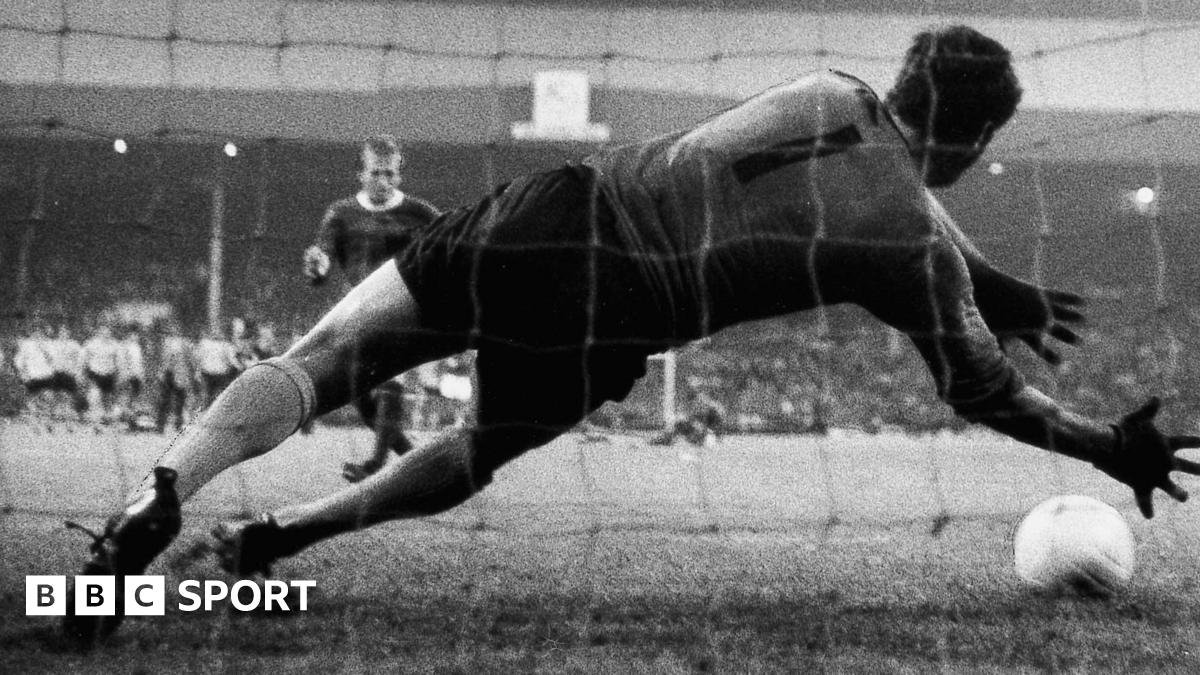
But then, in a moment that countless big-name players to come would experience through the decades, Law saw his low shot saved by a diving Ian McKechnie.

“For ever and ever, Law will go down as the first man to miss in a penalty shootout and McKechnie will go down as the first goalkeeper to save a penalty in a penalty shootout,” said Banks.

Ken Wagstaff then missed for Hull and so when Willie Morgan scored for United, Hull knew they had to convert their final kick.

And that was when McKechnie became the first keeper to take a penalty in a shootout.

“Please, not him,” Kelly remembers thinking. “I couldn’t believe it, my mum couldn’t believe it, even Alex Stepney the Man United keeper couldn’t believe it and actually asked him what he was doing up there. I had my head in my hands!”

McKechnie stepped up and blasted a powerful strike… against the upper side of the crossbar. And with that, he became the first keeper to miss a penalty in a shootout.

“I still maintain that Ian McKechnie was the right choice – he had a sweet left foot – and he had the guts to do it. I’d have put money on him to score,” said Banks.

“Missing that penalty stayed with Ian for the rest of his life.”


Source link

Olaplex tries to recover after drastic drop since its IPO


Why Olaplex is struggling to win over investors

When prestige hair care brand Olaplex first debuted on the Nasdaq in late 2021, it surpassed pricing predictions and gained momentum fast.

The company opened at $25 per share, an increase from its initial public offering pricing estimates. It was part of a broader group of retailers that went public that year amid an IPO boom. Olaplex hit its all-time high just a few months after its public debut, reaching a price of $29.41 on Jan. 3, 2022.

But that run didn’t last long.

Since its IPO, Olaplex’s stock performance has plunged drastically, losing nearly 95% of its value. The S&P 500, meanwhile, has gained more than 50% over the same period. Now, the company is hoping to turn its performance around.

“We are encouraged by the momentum we are seeing as we work to build a business that lives up to our breakthrough science, and we look forward to the journey ahead,” CEO Amanda Baldwin told CNBC in an exclusive statement.

Olaplex declined to comment to CNBC beyond that statement.

The company has a range of products, sold directly to consumers and to professional salons, that use a bond-building technology to strengthen and restore hair.

Its stock began sinking due to weakened demand and regulatory challenges in 2022, but some of Olaplex’s main issues were borne out of an early 2023 lawsuit filed against the company that accused the brand of using harmful ingredients. It involved nearly 30 women who alleged that the products caused hair loss and hair damage, citing an ingredient called lilial.

The company aggressively denied those claims and said it had removed the lilial ingredient from all of its products, but consumers on social media continued to attack the brand, its formulations and the alleged side effects.

Though the case was dismissed later that year, the allegations left lasting damage on the brand’s reputation. Over the course of that year, its stock sank more than 50% – and it never recovered. Shares of Olaplex are now trading at less than $1.50, with a market cap of roughly $1 billion.

In fiscal year 2023, Olaplex said its net sales decreased 47.8% in the U.S. compared with the previous year, while its net income sank 74.8%.

In the meantime, the hair care industry added new players that fought for Olaplex’s falling market share. Companies like K18, Ouai and Redken have crowded the playing field, gaining popularity while Olaplex battled social media backlash.

In late 2023, Olaplex recruited Baldwin, the former CEO of beauty brand Supergoop, to helm the company and turn around its brand strategy.

At the time, Baldwin said she saw “tremendous opportunity” to help the brand by deepening engagement with its customer base, innovating new products and sharpening its press strategy.

“Olaplex stands apart as a category creator redefining what is possible through the combination of beauty and science,” Baldwin said in a statement in late 2023.

Late last month, the company launched a new product, a pre-shampoo treatment intended to revitalize hair that marked the company’s next foray into advancing its bond-building technology.

In its fourth-quarter earnings report last week, Olaplex reported a 4.3% increase in net sales compared with the fourth quarter of 2024, to $105.1 million. But for the full 2025 fiscal year, net sales increased just 0.1%. Shares of the company sank more than 20% after the report.

Reviving the brand

Olaplex didn’t always have so many challenges.

Celebrity hair stylist Tracey Cunningham has been with the brand since before it officially launched, first connecting with Olaplex founder Dean Christal in 2013 to begin testing products.

Cunningham, who specializes in hair coloring, said she began with testing the product on one red-haired client. By the end of the day, her opinion was clear.

“I called Dean Christal at the end of the day, and I said, ‘Dean, I just want to tell you something — you just gave hair colorists super powers. You are going to change the game with hair color,'” she said.

Cunningham began using Olaplex on practically all of her customers at her Los Angeles salon, finding that it strengthened the hair and held color well. Over the course of the evolution of the brand, she said she’s seen its technology and formula improve.

Still, not all consumers have had the same experience with the brand, and it remains unclear whether Olaplex will be able to bounce back from its fall from grace.

Analysts from JPMorgan Chase aren’t sure that Olaplex is reaching an inflection point. In a January note, the analysts wrote that they’re holding a bearish outlook for the brand.

“We believe the company will face a challenging few quarters ahead working off a significantly lower normalized base with sales performance in FY25,” they wrote. “The increased competition, generally stressed consumers and a challenging operating backdrop will likely remain significant headwinds over the next several months.”

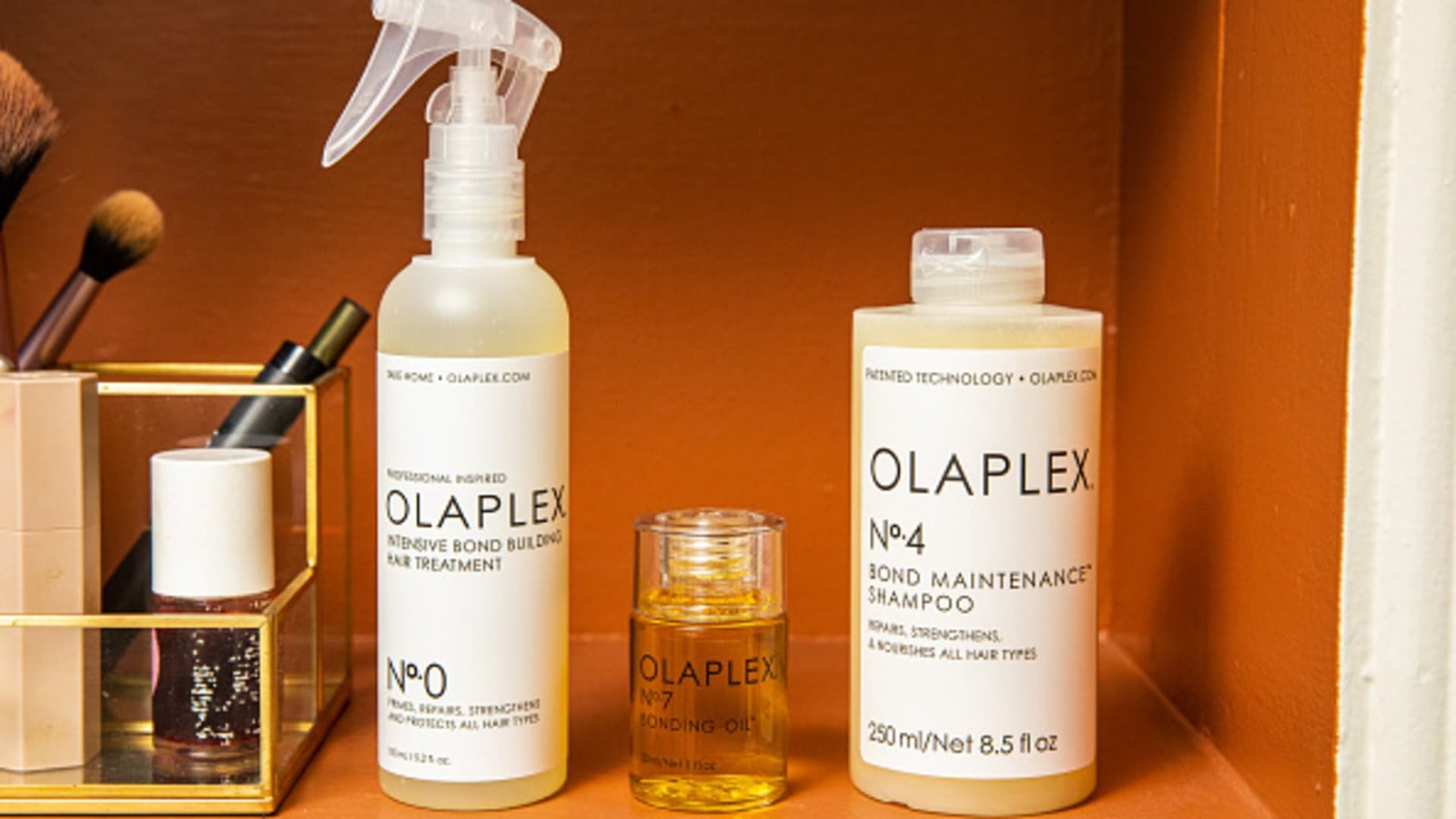
A bottle of Olaplex N.4 Bond Maintenance Shampoo arranged in Denver, Colorado, US, on Thursday, Dec. 8, 2022.

David Williams | Bloomberg | Getty Images

But Olaplex is singing a different tune.

On a third-quarter earnings call in November, Baldwin said research conducted when she first joined the company indicated that the brand was seen by consumers as “effective, yet cold and clinical.”

“According to the latest brand health tracker, which we fielded at the end of the quarter versus a baseline taken before we relaunched the brand, Olaplex is now perceived as more approachable and alluring while retaining its core identity as a scientific and iconic brand,” she said.

Susan Anderson, an analyst at Canaccord Genuity Global Capital Markets who has covered Olaplex for nearly all of its public history, said stabilizing sales, product innovation and distance from the lawsuit fallout are showing encouraging signs for the company’s progress.

“The negatives are just getting much less,” Anderson told CNBC.

She noted that the company’s challenges have been compounded by negative perception and increasing competitors, but she believes customers have largely “moved beyond” the hair loss allegations.

And hair and scalp health continues to be a buzzy category within hair care, she added.

“It’s one of the hotter areas of beauty,” Anderson said. “We don’t really see that going away anytime soon, and I do think it presents opportunities for Olaplex to continue to roll out new products.”

In a December survey, Canaccord found that Olaplex was the top prestige hair brand for consumers ages 18 to 29.

There have been recent green shoots for the company, too. In January, reports that Olaplex attracted a takeover offer from Germany-based company Henkel sent the stock surging more than 30%.

Olaplex declined to respond to the report.

“I’ve always thought this is definitely a takeout candidate, the valuation is attractive here,” Anderson said. “Obviously, it’s still a great brand that has a loyal following, so I guess I was not surprised at all.”

Choose CNBC as your preferred source on Google and never miss a moment from the most trusted name in business news.


Source link

BBC speaks to displaced families in Lebanon


More than a million people have been displaced in Lebanon as the US-Israel war with Iran continues to impact the wider region.

It comes after Israel issued evacuation orders for large parts of the south. Israel intensified its campaign against the Iran-backed armed group Hezbollah in Lebanon after it fired rockets into northern Israel earlier this month. Hezbollah has continued firing rockets at Israel since then.

With shelters overwhelmed, many families are sleeping in their cars or in open areas in makeshift tents, under extreme weather conditions. Among them children and pregnant women.

Most of the families have come from areas where Hezbollah enjoys significant support including Beirut’s southern suburbs known as Dahieh.

One child told the BBC he felt “ashamed” to be sleeping in the streets after his family were forced to flee their home in Beirut.

The BBC’s Middle East Correspondent, Hugo Bachega, spoke to some of the hundreds of displaced families about the reality of living in Lebanon amid the conflict.

Filmed and edited by Neha Sharma

Produced by Samantha Granville, Neha Sharma and Angie Mrad


Source link