Friday stocks from Wall Street analyst calls like Nvidia


Source link

2025-26 NBA MVP Odds: Wemby Closing the Gap on SGA


Who will win the league’s most coveted individual honor this year? 

Let’s take a look at the odds at DraftKings Sportsbook as of March 27, as well as what to know about the top candidates.

This page may contain affiliate links to legal sports betting partners. If you sign up or place a wager, FOX Sports may be compensated. Read more about Sports Betting on FOX Sports.

Regular Season MVP 2025-26 

Shai Gilgeous-Alexander, Thunder: -500

What to know: SGA is second in the NBA in scoring (31.5), and his Thunder have the best record in the NBA. He is also in the midst of a remarkable streak of 133 consecutive 20-point games, the most in NBA history. The Thunder have also won 13 out of 14. Still, Gilgeous-Alexander’s odds moved from -1000 just last week.

Victor Wembanyama, Spurs: +500 

What to know: The Spurs are a force to be reckoned with behind their star center, having won 23 of their last 25. They have the second-best record in the West and are within arm’s length of SGA and OKC, trailing by just two games. Wemby leads the NBA in blocks per game and is the favorite to win Defensive Player of the Year. If the Spurs catch the Thunder, Wemby could usurp SGA atop the oddsboard.

Luka Dončić, Lakers: +1200

What to know: The Lakers have won 13 of their last 15, and it appears Dončić can’t really be stopped. As of Friday, in the month of March, he’s averaging 36.9 points, 8.2 rebounds and 7.4 assists. This month alone, he has games of 60, 51, 44, 43 and 40 — all wins for L.A. 


Source link

Art and classic car auctions top $600 million despite Iran war


Art, car auctions break records: Here's what to know

A version of this article first appeared in CNBC’s Inside Wealth newsletter with Robert Frank, a weekly guide to the high net worth investor and consumer. Sign up to receive future editions, straight to your inbox.

Global collectors shrugged off the stock market declines and the war in Iran last week to spend more than $600 million on classic cars and fine art, signaling continued strength at the top of the economy.

Last week’s art sales in London topped $550 million, up over 50% from last year, according to Sotheby’s, Christie’s and Phillips auction houses. Some works sold for more than twice their estimates and records were set for several artists, with bids pouring in from 40 countries.

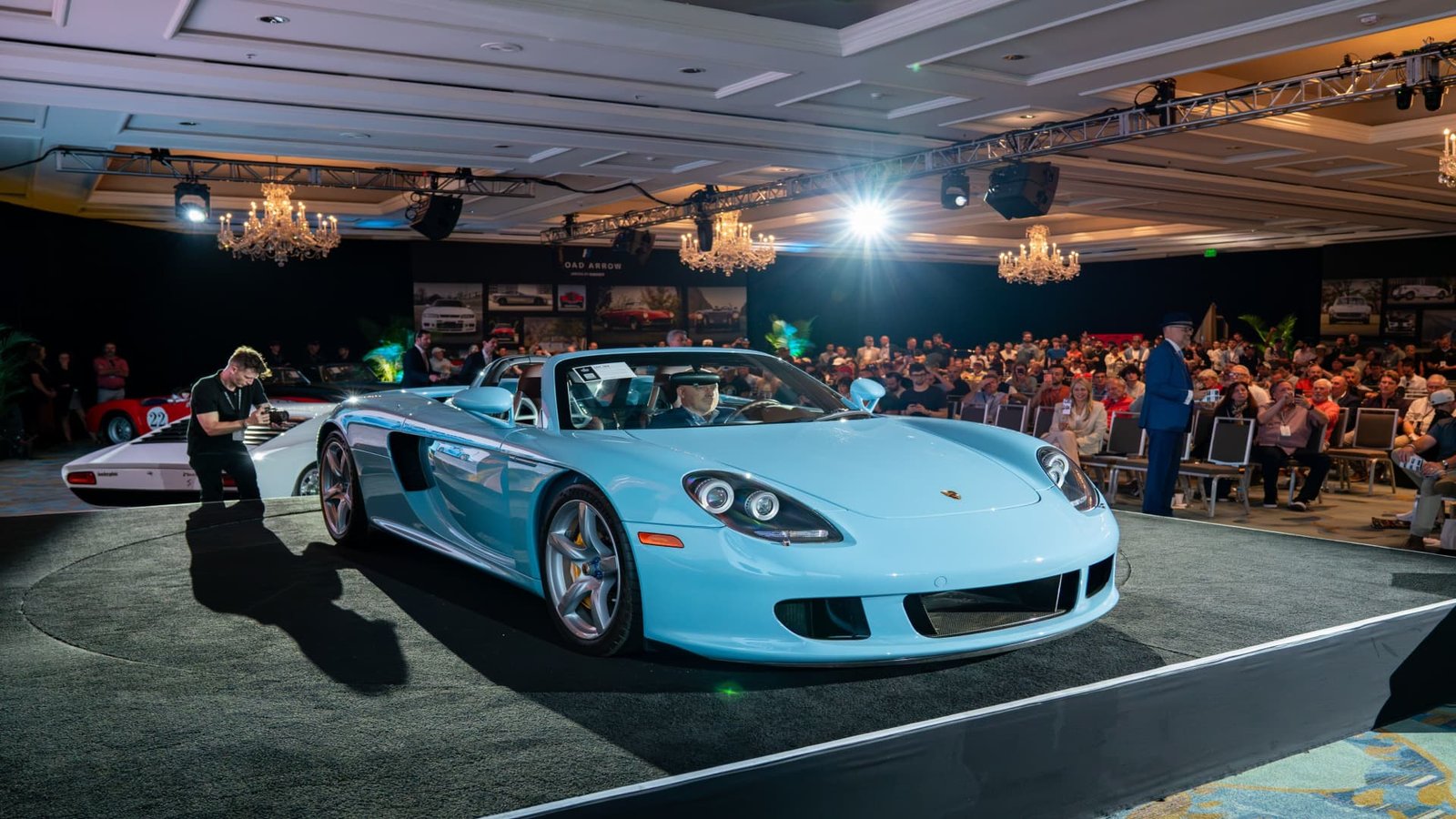
Also last week, at the Amelia Island Concours in Florida, Broad Arrow Auctions hosted the most successful auction ever at Amelia, totaling $111 million. The sale, which included a $15 million 2003 Ferrari Enzo and a $6.7 million 2005 Porsche Carrera GT, followed a strong auction a week earlier by RM Sotheby’s at ModaMiami that reached $74 million.

A baby blue 2005 Porsche Carrera GT went for $6.7 million at the most successful auction ever at Amelia.

Nick Zabrecky | Courtesy of Broad Arrow Auctions.

The strong results in both art and classic cars, stretching from London to Florida, show continued confidence among wealthy consumers even as volatility picks up and oil markets surged on the outbreak of war in the Middle East. Experts say the global turmoil may have even helped demand for rare collectibles, as the wealthy search for safe, long-term stores of value in an increasingly uncertain world.

“It’s surprising, yet not surprising,” said Drew Watson, head of art services at Bank of America. “It’s surprising with all that’s going on geopolitically. But when times are uncertain, and I think we’re in a broader era of uncertainty, people go with the tried and true.”

The strong prices continue a rapid rebound in collectibles markets following two years of declines. In 2023 and 2024, art auction totals fell by 40% from their 2022 peak, despite soaring stock markets and falling interest rates. President Donald Trump’s tariff announcement in April last year only added to the gloom.

By late summer, however, collectibles sprang back to life. The classic car auctions at Monterey and Pebble Beach in August topped $430 million, marking the second-highest total ever. The next month, a Sotheby’s sale in London of the collection of British socialite Pauline Karpidas fetched $135 million, soaring past its estimate. The strength continued in Paris and the big New York sales in November, followed by big crowds at Art Basel Miami in December.

Kenneth Ahn, president of Broad Arrow, said the wealthy today seem to have become inured to the chaotic headlines and market gyrations.

“I don’t know if desensitization is the right word,” Ahn said. “But leading up to this, we’ve had Russia, which has been going on for a while, and the market has been fluctuating. What the market has done is effectively shut out those concerns as noise.”

Ahn said the current era of classic car collectors differ dramatically from those of the past. Previous buyers, mainly baby boomers, were highly sensitive to market swings and economic cycles. He recalled a sale in Monterey in 2019 days after the stock market fell 400 points and bond yields were signaling recession.

“I had a client walk into the auction room and say ‘I just lost 30 million bucks over the last two days of my portfolio. I’m not sure if I need to bid on this car right now,'” he added.

Ahn said today “feels different.” Despite the market volatility and uncertainty, “there’s still this incredible optimism in the car market,” he said.

The reasons vary. Oliver Barker, Sotheby’s lead auctioneer and chairman of Sotheby’s Europe, attributed the market’s strength to the ultra-rare works being offered for sale.

“I think it’s a function of the quality of the material that the market is seeing at the moment,” Barker said. “For savvy collectors, this is such an incredible opportunity to acquire rare-to-market and highly qualitative examples.”

A lack of supply, not demand, has been the main source of weakness in the art market, many say. After Christie’s blockbuster $1.5 billion Paul Allen sale in 2022, which included famed works by Cezanne, Van Gogh and Gauguin, few mega-collections came up for sale in 2023 and 2024.

Last fall, big estates returned. The sale of works from the collection of Leonard Lauder at Sotheby’s included a rare Gustav Klimt that sold for $236 million, making it the second-most expensive work ever sold at auction.

The sales in London last week included celebrated British works from the collection of Joe Lewis, the U.K. billionaire and investor. A self-portrait by Francis Bacon went for $21.5 million, doubling its low estimate. A painting by Leon Kossoff, called “Children’s Swimming Pool, 11 o’clock Saturday Morning, August” sold for $7 million after a bidding war between 10 bidders.

And at Christie’s, a sculpture by Henry Moore, titled “King and Queen” sold for $35.2 million — a record for Moore — after six bidders competed in the auction.

Henry Moore’s “King and Queen” sculpture sold for $35.2 million at Christie’s in March 2025.

Christie’s

Barker and others said there’s been a “return to quality,” meaning collectors are bidding up the best works by famous artists rather than buying more speculative works by younger, less established artists. The big brand names of the art world — Picasso, Monet, Warhol — were all big drivers of prices last week.

“It’s a perfect moment where there is a greater supply of great material, and there is also an extraordinarily hungry buyer class,” Barker said. “We’re seeing not only the depth of bidding that we’ve not experienced recently, but a much, much deeper depth of quality material.”

Another factor in the renewed strength of collectibles is a new generation of buyers. As the baby boomers slow their buying or sell their collections, Gen Xers, millennials and even some Gen Zers are stepping in. Some are entrepreneurs and tech founders, while others have inherited their wealth as part of the $100 trillion great wealth transfer.

While they’re buying a broader range of collectibles, from sneakers and handbags to Pokémon cards and sports memorabilia, they’re starting to make purchases in the art and classic car markets. And they are adding to the buyer’s pool.

“I do think we’re very much in the middle of a generational transition,” Watson said. “We have seen a lot of the collectors who have driven the postwar and contemporary market over the past couple of decades starting to age out. And we have the rising generational cohort moving in. “

The shift is most dramatic in the classic car market. A market once dominated by 1950s and 1960s sports cars has quickly become eclipsed by supercars of the 1990s and 2000s, favored by the new wave of younger collectors. While the trend started before the pandemic, it has accelerated in the past three years, Ahn said.

“We’ve seen almost a parabolic move in prices for some of the modern hypercars and supercars over the past six months,” Ahn said. “There is a seismic shift that’s happening. It’s the great wealth transfer: We’re seeing it, we’re feeling it. This is a huge emergence of successful entrepreneurs who exited their business in their 30s and 40s, or inherited enormous amounts of capital, and they are passionate about the cars they grew up with.”

Not all collectibles segments are benefitting from the rising spending. While ultra-Contemporary art drove most of the post-pandemic recovery, sales by Contemporary art dealers were stagnant in 2025, according to the Art Basel and UBS Art Market Report. Higher costs have also forced some galleries to close, even as buyers flock to auction houses and at fairs for older works by recognized artists.

“On balance, this year’s data points to something more consequential than a return to growth,” said Noah Horowitz, CEO of Art Basel. “It reflects a sector adjusting to new economic realities, refining its models and strengthening its foundations for the long term.”

Yet with stock markets likely to remain volatile, and interest rates potentially falling, the financial backdrop for collectibles remains strong. Add to that the fact that America’s wealthiest 1% have seen their wealth nearly double since 2020, to over $55 trillion, according to the Federal Reserve, and experts say the bull run in the art and classic car markets is likely to continue.

“We’re optimistic that a lot of that more positive sentiment, at least in the art market, will continue,” Watson said.

Choose CNBC as your preferred source on Google and never miss a moment from the most trusted name in business news.


Source link

Former SEC Chair Jay Clayton says regulators would scrutinize trading ahead of Trump post


Former SEC Chair Jay Clayton on suspicious futures trading: The law is not as clear as it should be

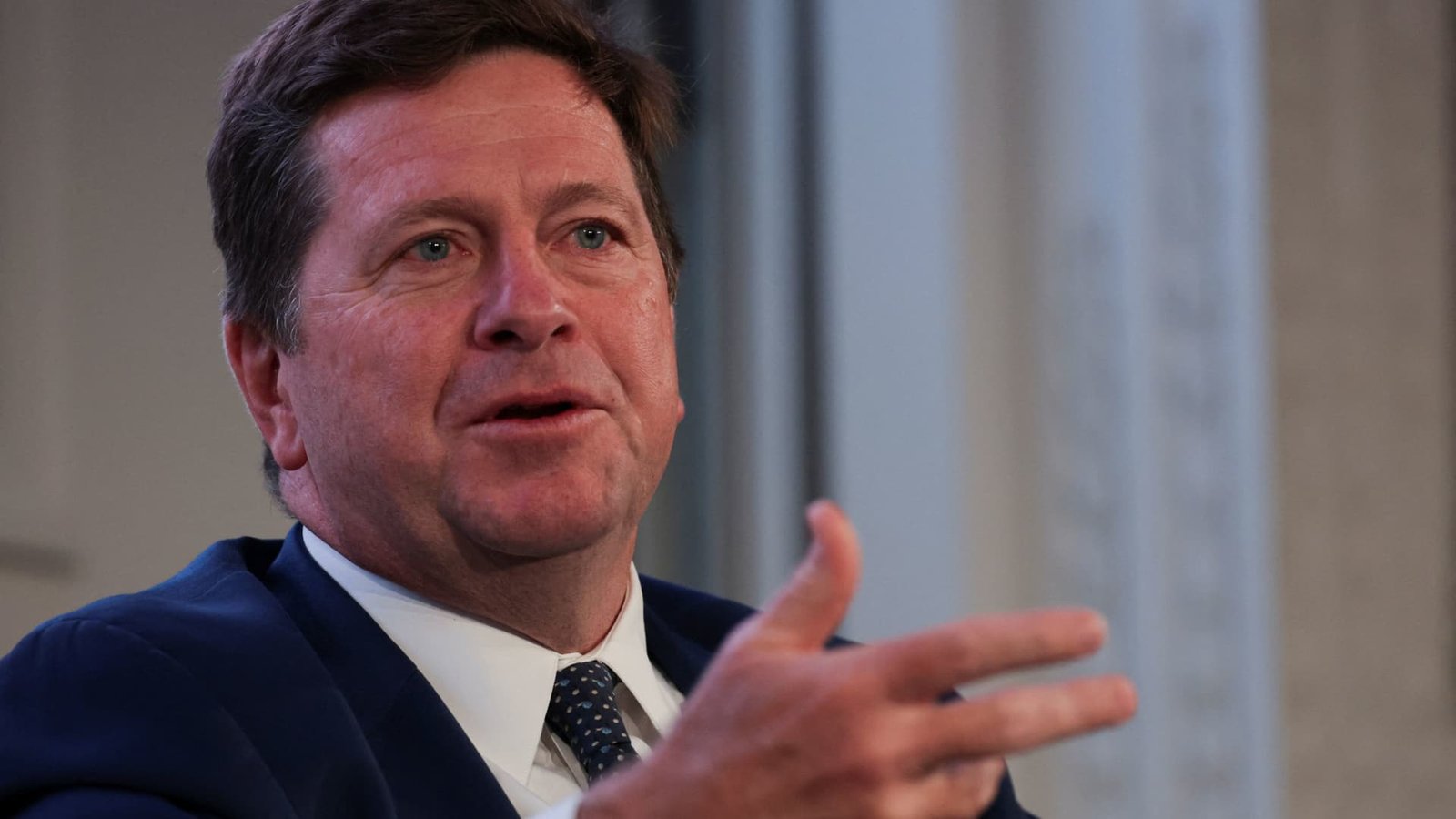
Jay Clayton said regulators would likely examine the unusual burst of trading activity early Monday that preceded a market-moving social media post from President Donald Trump.

“Any move like that in advance of any announcement, the regulators are going to look at,” Clayton, a former chair of the Securities and Exchange Commission, said Wednesday on CNBC’s “Squawk Box,” referring to the spike in futures trading minutes before Trump disclosed that the U.S. and Iran had held talks and that planned strikes on Iranian infrastructure would be halted.

Clayton, now the U.S. attorney for the Southern District of New York, said authorities would work to reconstruct the activity and identify participants across markets.

“They’ll go back and track every single thing, everyone,” he said.

The SEC declined to comment.

Clayton noted that regulators have the most visibility in cash equities, where trading data allows for detailed analysis of who bought and sold securities and when. Surveillance in other areas, including futures and commodities markets, can be more complex and less comprehensive.

“I always tell people our best surveillance is in the cash equities markets — like, we can track it,” Clayton said. “Commodities markets, and others, it’s a little more difficult.”

The comments come after a sharp spike in trading volume in S&P 500 and oil futures around 6:50 a.m. New York time, roughly 15 minutes before Trump’s post helped lift equity markets and push oil prices lower.

“There’s a point here which Congress should act on — let’s make it clear across the board,” he said. “The law is not as clear as it should be. … There are a lot of people who say this is OK. I don’t feel like it’s OK.”

Choose CNBC as your preferred source on Google and never miss a moment from the most trusted name in business news.


Source link

Lululemon (LULU) earnings Q4 2025


Lululemon offered a weak 2026 outlook on Tuesday as tariffs, higher expenses and a dramatic proxy battle with its founder weigh on its bottom line. 

The athleisure company’s guidance for both the current quarter and the fiscal year came in lower than expected on the top and bottom lines. 

Lululemon is expecting first-quarter sales to be between $2.40 billion and $2.43 billion, weaker than estimates of $2.47 billion, according to LSEG. It anticipates earnings per share will range between $1.63 and $1.68, also weaker than estimates of $2.07. 

For the full year, Lululemon is expecting sales to be between $11.35 billion and $11.50 billion, below expectations of $11.52 billion. Earnings guidance of $12.10 to $12.30 per share was also far weaker than estimates of $12.58. 

“The work is really underway in terms of our action plan, and we’re really focused on the importance of course correcting on a number of fronts,” interim co-CEO Meghan Frank told CNBC in an interview. “We’ve got a new creative director, his first line is hitting in Q1, we are seeing some green shoots, I would say, from the product in Q1 so we’re excited about some of the momentum we have on that line item. We have had some great response from some of our recent product activations, and then we’re also reducing our speed to market timeline.”

During Lululemon’s holiday quarter, the company beat estimates on both the top and bottom lines, though Wall Street had lowered its expectations for the period in recent months.

Here’s how the Vancouver-based retailer performed during its fiscal fourth quarter compared with what Wall Street was anticipating, based on a survey of analysts by LSEG:

  • Earnings per share: $5.01 vs. $4.78 expected
  • Revenue: $3.64 billion vs. $3.58 billion expected 

The company’s net income for the three-month period that ended Feb. 1 was $586.9 million, or $5.01 per share, compared with $748.4 million, or $6.14 per share, a year earlier. 

Sales rose slightly to $3.64 billion, up about 1% from $3.61 billion a year earlier.

Lululemon raised its fiscal fourth-quarter guidance during the ICR conference in Orlando earlier this year, so all eyes were on the company’s 2026 guidance following more than a year of underperformance. 

The retailer, always considered a premium brand that rarely offered promotions, had been leaning on discounts to drive sales and move inventory. The company is now working to pull back that strategy this year, Frank said. Lululemon expects the move will weigh on sales in the near term, but it will bring the company back to a full-price business over time, she said. 

Meanwhile, it’s seeing a number of pressures on its bottom line. Higher tariffs and the end of the de minimis exemption continue to be a major cost for the company.

This year, Lululemon expects tariffs to cost the company $380 million, up from $275 million last year, on a gross basis. Once mitigation efforts are taken into account, the net impact is expected to be $220 million in 2026, up from $213 million in 2025. 

Lululemon has been negotiating with suppliers and taking other actions to reduce its exposure to tariffs, but it isn’t increasing prices to offset the added costs, especially as it looked to promotions to drive sales in recent months. The brand was already priced toward the high end of the market prior to President Donald Trump’s tariff hikes last year, leaving it with fewer tools in its arsenal to offset the duties, especially as it faces intense competition and a slowdown in the athleisure market. 

Last year, the company raised prices on a select number of items. Shoppers are still responding favorably so far, but there are no plans to build on those increases for now, said Frank. 

Beyond tariffs, the company is also seeing higher expenses from marketing, labor, incentives and costs related to its proxy contest with founder Chip Wilson. Wilson, Lululemon’s largest independent shareholder, has been pressuring the company to make changes to its board of directors and has criticized it for losing sight of its creative vision.  

Just before releasing earnings, Lululemon announced it was adding former Levi Strauss CEO Chip Bergh to its board of directors. Bergh was not among the candidates Wilson put forward for consideration, but he does have considerable public company experience and spent around 13 years as Levi’s CEO. During his tenure with the company, Levi began pursuing a more profitable direct selling strategy and sales rose by around 30%.

As part of the announcement, Lululemon said board member David Mussafer, managing partner and chairman of private equity firm Advent, will not stand for re-election during the company’s upcoming 2026 shareholder meeting at the conclusion of his current three-year term. The announcement marks a win for Wilson, who has criticized Mussafer publicly. In a letter to shareholders last month, Wilson pointed out that Mussafer was overseeing the board’s interview process for prospective nominees at a time when he was up for election, creating a potential conflict of interest.

A source familiar with the matter said Wilson had called on Mussafer to step down from the board because he lacks independent leadership, among other issues.

Mussafer didn’t immediately respond to a request for comment.

Prior to the earnings announcement, Wilson issued a statement saying shareholders will be “critically evaluating” any claims of success or improvement from Lululemon when it released results.

“The core issue at lululemon is one the Company has struggled with for years: there is a disconnect between the Company’s creative engine and the Board’s understanding for how brand power and product excellence fuel cultural strength, margin durability and long-term shareholder value,” he said.

Lululemon declined to comment. 

While parts of Lululemon’s business are still growing, it has primarily seen that expansion in China and in other international regions, which make up a fraction of overall revenue. Same-store sales in its largest region, the Americas, haven’t grown in around two years, and Lululemon is expecting another year of declines in 2026. 

The company said it expects sales in the Americas to decline between 1% and 3% in 2026. 

Meanwhile, sales in China are expected to grow around 20%, and the rest of the world by a mid-teens percentage.


Source link

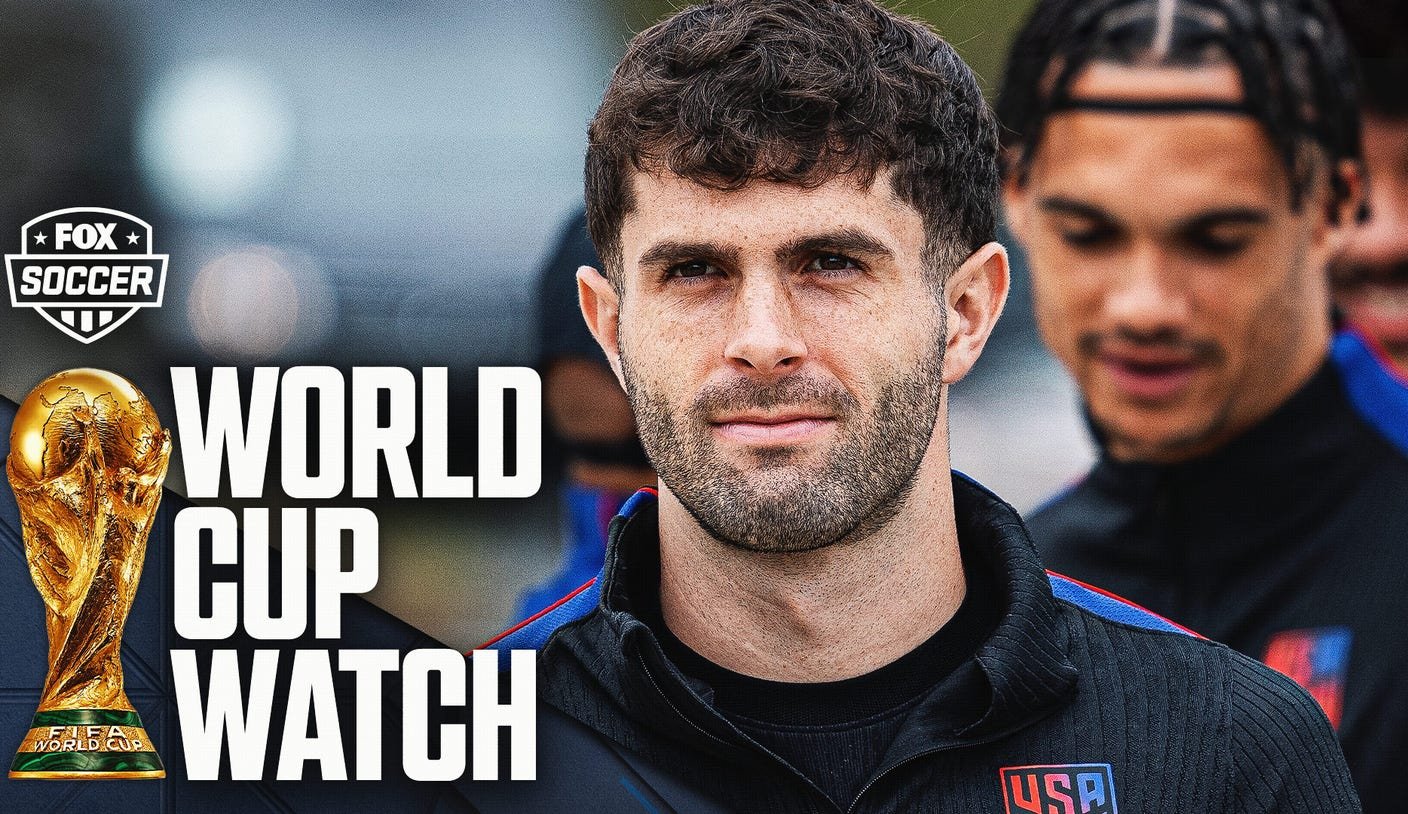
World Cup Watch: How USA’s Christian Pulisic is Embracing the ‘Pressure’


MARIETTA, Georgia — Christian Pulisic has been in this position before. The 2022 World Cup goalscorer has been a U.S. men’s national team starter for nearly a decade now. 

He’s won the UEFA Champions League with Chelsea. He’s one of the faces for both the USA team and AC Milan, one of the most storied clubs in soccer history.

Now, with the USA set to play its final two tuneups — the first against powerful Belgium on Saturday — before coach Mauricio Pochettino names his final 26-player roster for this summer’s World Cup on home soil. 

The anticipation for the tournament – the largest in its history with 48 teams spread across the U.S., Mexico, and Canada – has ratcheted up significantly. Even for a mainstay like Pulisic.

“You can feel the intensity in the trainings,” the team’s headliner said before practicing on Friday at the facility of MLS side Atlanta United.  “All the guys are wanting to really stake their claim, and they want to be on that World Cup roster. There’s no doubt about it. Everyone wants to prove themselves.”

Christian Pulisic is keeping focused on the big task at hand this summer. (Photo by Omar Vega/Getty Images)

It’s been more than four months Pochettino’s squad last convened, when they routed Uruguay in November to finish 2025 on a three-game win streak and unbeaten in five — all against nations that will participate in this World Cup.

Star-studded Belgium and Portugal, which the Americans will face on Tuesday in the second of two matches at Mercedes-Benz Stadium, will provide an even sterner test. Both opponents are ranked in FIFA’s Top 10, and will be part of the field this summer.  Convincing performances in Georgia’s capital could capture the imagination of fans and do wonders for the team’s confidence and momentum ahead of the main event.

USA Kits Revealed: ‘Stars’ and ‘Stripes’
USA’s World Cup Schedule: Opponents, Times
2026 World Cup Schedule: All Teams, How to Watch

The goal over the next week, as veteran left back Antonee “Jedi” Robinson said, is: “Making sure we put in two performances against very good opposition and kind of sending the message that we can compete at the top level and show teams who are coming to our home soil that we’re a team to be scared of.”

Still, their World Cup opener against Paraguay isn’t until June 12. While getting good results in March would be ideal, nobody will remember if the co-hosts fall flat when the whole country — and the rest of the world— is watching.

To that end, there will be some degree of experimentation in these two matches. Pochettino and his Belgian counterpart, Rudi Garcia, have agreed to allow up to 11 substitutions for each team on Saturday.

That bodes well for an American team who is fighting some injuries. World Cup alums Tyler Adams and Sergiño Dest were already missing this month and Pochettino said on Friday that center backs Chris Richards and Miles Robinson are likely to miss both games with aliments they sustained in training.

That will open the door for others.

“We are going to use all the players in the two games,” the former Tottenham, Chelsea and Paris Saint-Germain coach said.

“It’s a great opportunity [for] trying to do things, testing players, testing situations, but keeping the competition high and competing really well. We can be able to maybe [make] some changes during the game. But keeping our level of competition — that is the challenge.”

Weston McKennie is feeling great ahead of some star-studded matches against Belgium and Portugal. (Photo by Omar Vega/Getty Images)

It’s one his players are embracing.

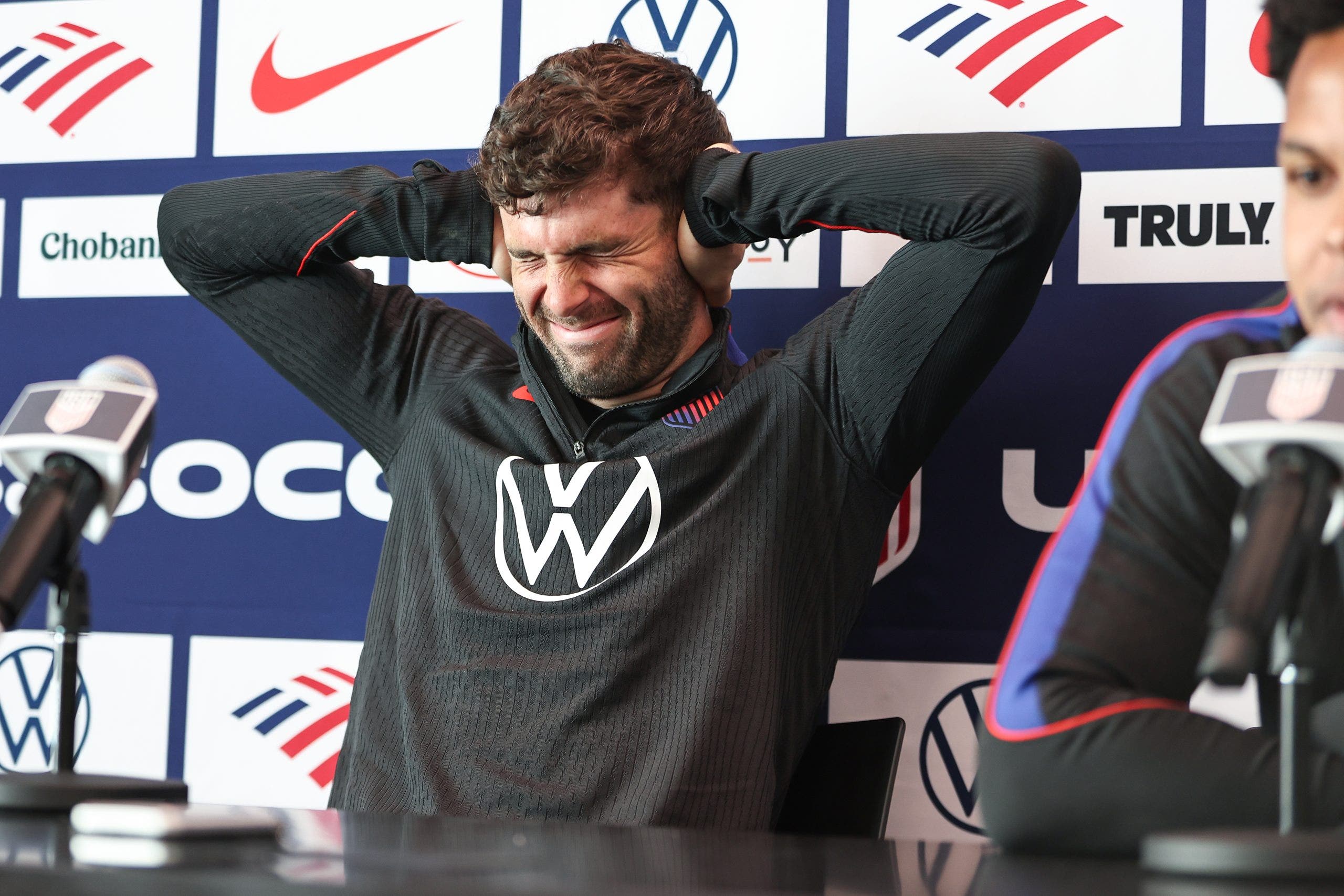
“Hosting the World Cup on home soil comes with its pressures,” standout midfielder Weston McKennie said when addressing reporters before practice. “But we’re all competitors on the team. We all chose this lifestyle. We all chose to be professional soccer players, and being competitive — having pressure — is something that you live with day in and day out. So I don’t think we really feel [much] pressure. I think we kind of invite that. We kind of like it, and we’re just really excited.”

“I wouldn’t want to be in any other position,” Pulisic added. “I’m so lucky. I feel privileged to be in this position. There’s pressure. I feel it, yes, it’s there, but it’s nothing that I can’t handle. We’re going to attack it head on.”

Starting on Saturday.

“You can definitely feel the energy in the team and feel that it’s getting a little bit more serious,” Pulisic continued. “The excitement for the tournament’s obviously starting to get real.”

2026 FIFA World Cup: How To Watch

The World Cup will run from June 11–July 19, 2026. Spread across three countries, the tournament will culminate with the final on July 19 at New York New Jersey Stadium in East Rutherford, New Jersey. All 104 tournament matches will air live across FOX (70) and FS1 (34) with every match streaming live and on-demand within both the FOX One and the FOX Sports apps.


Source link

How Russia’s threat has seen Germany become Europe’s most important army


“I would contend that it’s more destabilising for Germans than it is for the British or the French, because the British and the French have the flag to rally around, a sense of nationhood and history. But for post-war Germany, it was all about starting afresh. And it was about a rules-based order, no matter how incomplete that might be. And that, in so many ways, was the basic tenet of German foreign policy. And they now see the war to their east, and to their west [there is] the friend and ally, and the overseer that they relied upon [that] they feel is no more.


Source link