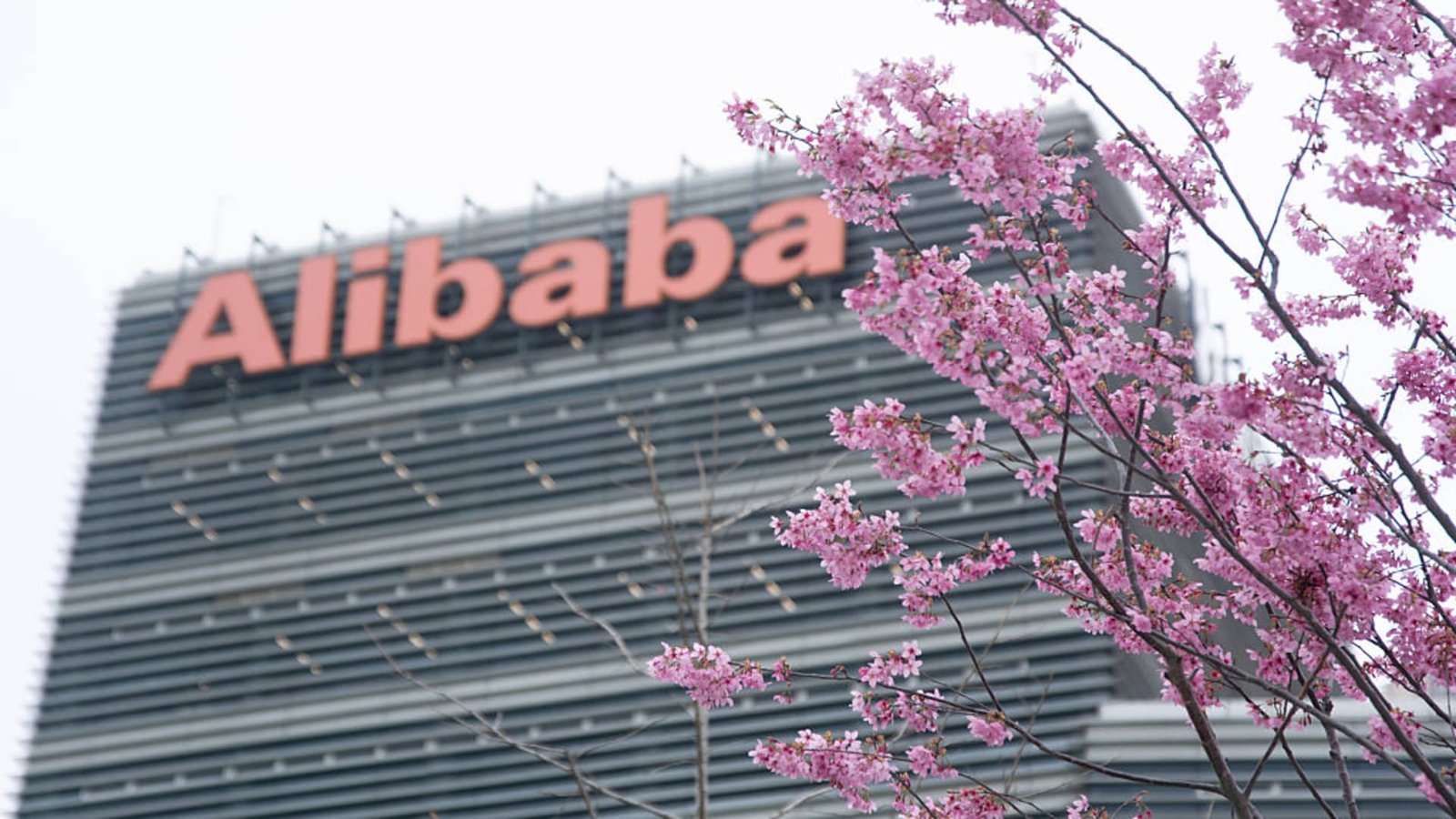
Chinese tech giant Alibaba on Thursday reported net income had dropped 66% year-over-year, as it missed analyst revenue expectations.
Here’s how Alibaba performed its fiscal quarter, ending Dec. 31, 2025:
Revenue: 284.8 billion Chinese yuan ($41.4 billion), compared to the 290.7 billion Chinese yuan expected by analysts, according to data compiled by LSEG.
Net income: 15.6 billion Chinese yuan compared to 46.4 billion Chinese yuan in the same period a year ago.
Alibaba’s U.S.-listed shares dropped 5% in premarket trading on Thursday.
The tech giant noted that the net income decrease was primarily due to the 74% year-on-year drop in operational income which was impacted by investments in quick commerce, user experiences and technology.
The results were “softer” than expected and below expectations on revenues, adjusted net profit, and adjusted operational income, Citi analysts said in a note. The slight acceleration in cloud revenue growth, which sat at 36% year-on-year, was a “positive note” coming in 1% above its consensus, but market expectations were higher, they said.
“This quarter, Alibaba maintained strong investments across our core pillars of AI and consumption,” Alibaba CEO Eddie Wu, said in a statement.
“AI is and will continue to be one of our primary growth engines. Our Cloud Intelligence Group’s revenue is up 36% with AI-related product revenue delivering triple-digit growth for the tenth consecutive quarter.”
Revenue from Alibaba’s cloud business was 43.3 billion Chinese yuan. “This momentum was primarily driven by public cloud revenue growth, including the increasing adoption of AI-related products,” the company said.
It’s pledged tens of billions of dollars in investments in AI and cloud infrastructure, as it looks to transition from being just an e-commerce giant to an AI leader.
In January, the tech giant announced a new AI model series, and has also been investing in ‘agentic commerce’ as it looks to turn chatbots into full-service shopping and payment tools.
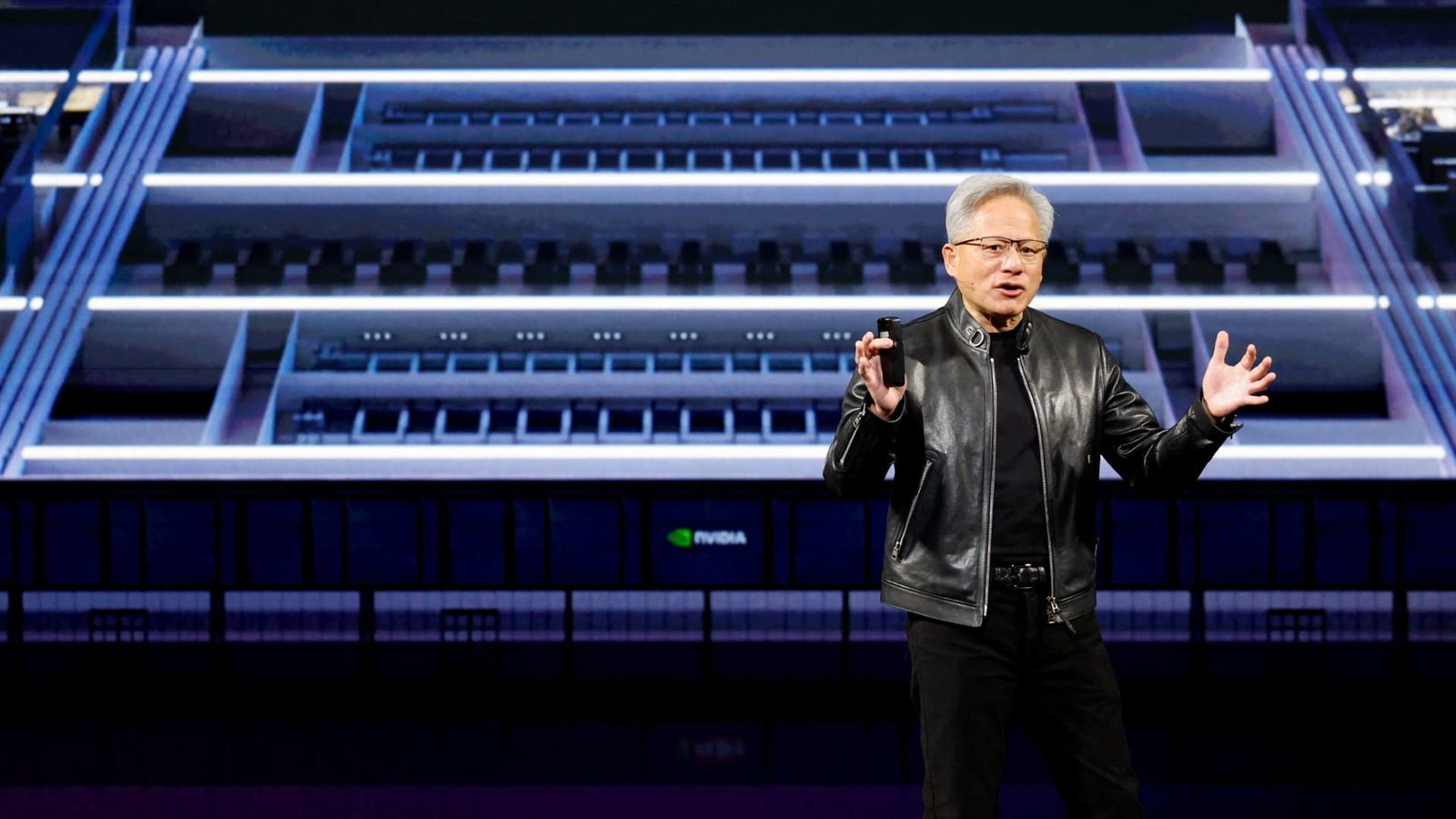
Investors have been using the largest company in the world — Nvidia — as a cash machine this month. Nearly 20% off its all-time high, the AI leader has dropped from a $5 trillion market cap to a $4 trillion valuation in just a few quarters. I want to use options to possibly establish a long position as I anticipate the Strait of Hormuz reopening and equity markets recovering short-term. As of late March, the equity market has officially flipped the script on its longtime love affair with Big Tech. The “Magnificent Seven” have seen significant profit-taking as the Iranian conflict has caused tremendous pain in the broader global equity markets shaving trillions of dollars in S & P 500 value. Nvidia is currently trading at its lowest forward P/E ratio in the last five years. With a forward P/E of 20, I like to look at NVDA almost as a value proposition. Chip demand and data center buildouts are still major themes in 2026 and beyond. I believe there will be a resolution with Iran but, as soon as the Strait opens up, I expect a 3%-5% broad market rally … regime change or not. The trade Sold NVDA 4/24/26 $160 put for $4.00 Bought NVDA 4/24/26 $175 call for $5.25 This risk reversal will cost an investor $1.25 or $125 This spread was executed when NVDA was just trading under $170 DISCLOSURES: Kilburg is long NVDA and long this spread. All opinions expressed by the CNBC Pro contributors are solely their opinions and do not reflect the opinions of CNBC, or its parent company or affiliates, and may have been previously disseminated by them on television, radio, internet or another medium. THE ABOVE CONTENT IS SUBJECT TO OUR TERMS AND CONDITIONS AND PRIVACY POLICY . THIS CONTENT IS PROVIDED FOR INFORMATIONAL PURPOSES ONLY AND DOES NOT CONSTITUTE FINANCIAL, INVESTMENT, TAX OR LEGAL ADVICE OR A RECOMMENDATION TO BUY ANY SECURITY OR OTHER FINANCIAL ASSET. THE CONTENT IS GENERAL IN NATURE AND DOES NOT REFLECT ANY INDIVIDUAL’S UNIQUE PERSONAL CIRCUMSTANCES. THE ABOVE CONTENT MIGHT NOT BE SUITABLE FOR YOUR PARTICULAR CIRCUMSTANCES. BEFORE MAKING ANY FINANCIAL DECISIONS, YOU SHOULD STRONGLY CONSIDER SEEKING ADVICE FROM YOUR OWN FINANCIAL OR INVESTMENT ADVISOR. Click here for the full disclaimer.
Warner Bros. CEO David Zaslav could receive nearly $900 million in cash, stock and tax reimbursements from the company’s impending merger with Paramount. CNBC’s Robert Frank explains how this compensation agreement, called a golden parachute, works.
Check out the companies making the biggest moves in midday trading: Meta Platforms — The social media giant tumbled more than 6%. Meta lost two major legal cases concerning child safety this week. While the financial penalties aren’t large relative to the company’s size, Meta’s losses in court raise questions around Big Tech’s role in social media safety and free speech protections on these platforms. AppLovin – The app marketing company saw shares drop almost 8%. Shares fell on a report that weakening e-commerce spending trends are hurting AppLovin and that the company hasn’t seen sufficient new client momentum to offset churn in the first quarter. Separately, Piper Sandler said in a Wednesday report that it believes the company continues to “out-execute peers and all signs point toward strong E-Com adoption.” Brown-Forman — Shares of the Jack Daniels owner rose more than 14% after Bloomberg reported that French spirits company Pernod Ricard is considering a bid for Brown-Forman. Scotts Miracle-Gro — Shares fell more than 4% after the lawn and garden products company was downgraded to neutral from overweight at JPMorgan. The analyst said “raw material issues are likely to cause some earnings growth uncertainties.” Best Buy — The electronics retailer’s stock popped 4% without any specific news driving it. Gordon Haskett analysts told clients there has been speculation that GameStop might consider buying Best Buy. GameStop CEO Ryan Cohen has signaled he’d like to make an acquisition, and the company disclosed in its 10-k filing that it has set aside $700 million in collateral tied to an unspecified derivative position. Gordon Haskett said GameStop may have built exposure to a target via swaps. H.B. Fuller — The adhesives manufacturer gained 4% on fiscal first-quarter results that beat the Street. H.B. Fuller earned 57 cents per share, excluding certain items. Analysts polled by FactSet expected a profit of 55 cents per share. The company’s full-year earnings guidance also topped analyst estimates. Pony AI — Shares fell 13% after the company outline ambitious robotaxi expansion plans. The announcement came as it reported its first quarterly profit. The Chinese autonomous driving firm’s revenue fell 18% to $29 million, largely due to the timing of project-based revenue recognition. Robotaxi revenue more than doubled and management highlighted plans to scale for over 3,000 vehicles and expand globally, which could pressure margins. Worthington Steel — The steel processing company plunged 15% after posting fiscal third-quarter adjusted earnings of 27 cents per share, marking a decline from the 35 cents per share earned in the year-ago period. Memory stocks — Shares of memory chipmakers tumbled following the unveiling of Google’ s new AI model, which the company said could reduce the amount of memory required to run large language models. Sandisk dropped 7%, Micron Technology , Western Digital and Seagate Technology each fell more than 4%. Navan — The travel tech firm soared 27% after guiding for strong revenue for 2027. Navan expects full-year revenue of between $866 million and $874 million, versus the FactSet consensus estimate of $840.8 million. The company’s fourth-quarter adjusted earnings per share and revenue also topped Wall Street’s expectations. MillerKnoll — The furniture company plummeted almost 23% after posting fiscal third-quarter adjusted earnings of 43 cents on revenue of $926.6 million. That reflected a year-over-year decline of 2% for adjusted earnings and an increase of 6% for revenue. MillerKnoll warned of a roughly $8 million to $9 million impact in the fourth quarter tied to the Middle East conflict, stemming from minimal expected shipments to that part of the world as well as higher logistics costs. Snap — The stock slipped almost 9% after the European Union said it was investigating Snapchat for allegedly not doing enough to prevent child grooming and the sale of illegal goods. — CNBC’s Fred Imbert, Darla Mercado, Sarah Min, Nick Wells, and Lisa Han contributed reporting.
The theme of the 2026 INDYCAR season has been parity. Through three races, there have been three different winners and three different points leaders.
Will that trend continue this weekend when the series heads to Barber on Sunday, March 29 for the Alabama INDY Grand Prix (1 p.m. ET, FOX)?
Here are the latest odds at DraftKings Sportsbook as of March 27.
This page may contain affiliate links to legal sports betting partners. If you sign up or place a wager, FOX Sports may be compensated. Read more about Sports Betting on FOX Sports.
Top of the Board: Alex Palou and Kyle Kirkwood sit first and second on the Barber oddsboard. At this race last year, Palou won and Kirkwood finished 11th. When it comes to this season, these drivers have both gotten into Winner’s Circle already. Palou won at St. Petersburg; Kirkwood won the most recent race two weeks ago at the inaugural Grand Prix of Arlington. This pair is also at the top of the INDYCAR standings, with Kirkwood leading the field with 126 points and Palou not far behind in second with 100.
Alex Palou (L) and Kyle Kirkwood (center) are at the top of the oddsboard to get into Winner’s Circle at Barber.
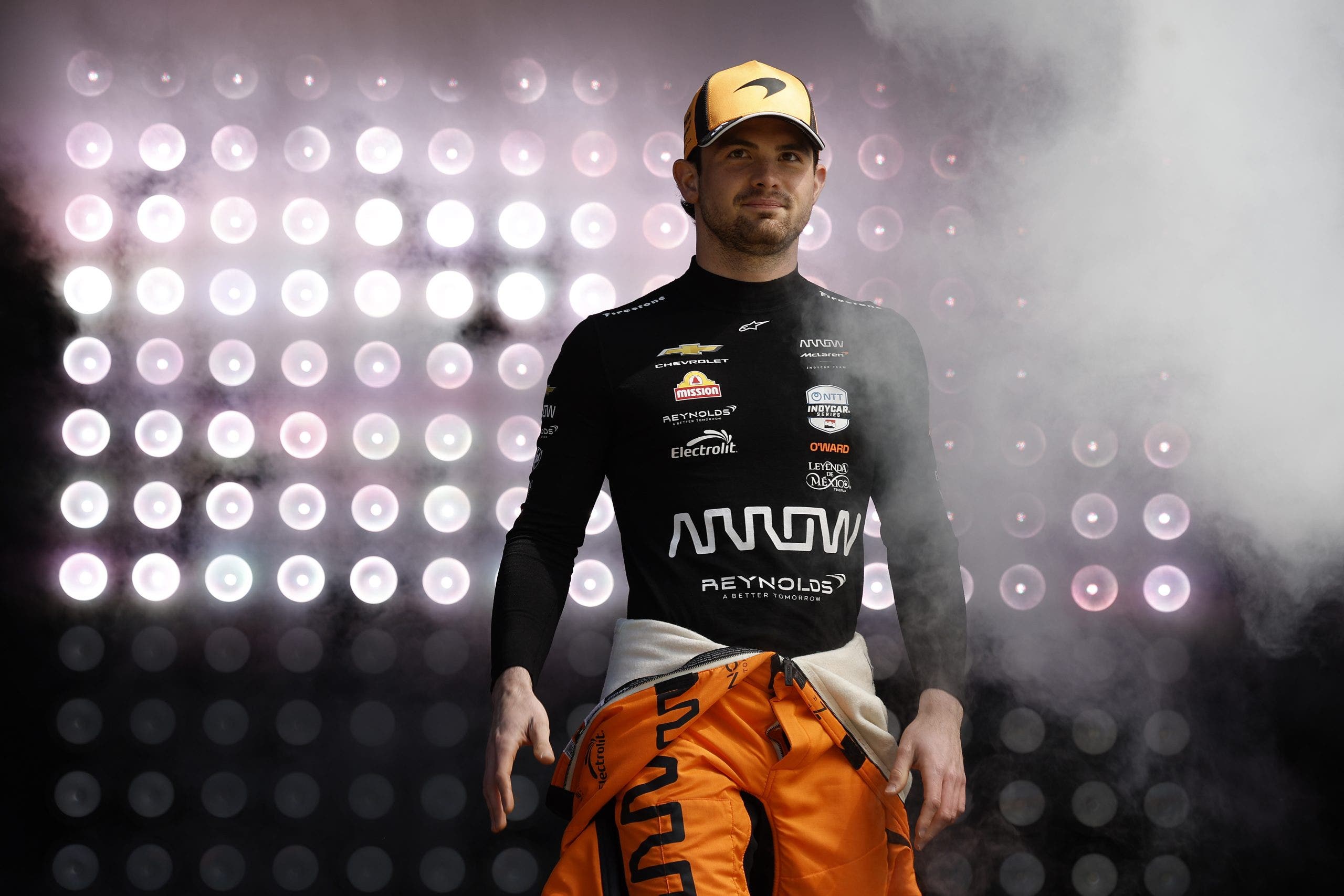
One to Watch: Pato O’Ward is one to keep an eye on at Barber. He currently sits third in the standings, and even though he doesn’t have a win on the season, he’s got three top-five finishes. Pato had a strong showing at Barber in 2025, finishing sixth after starting eighth.
Will Pato O’Ward get his first victory of the season this weekend?
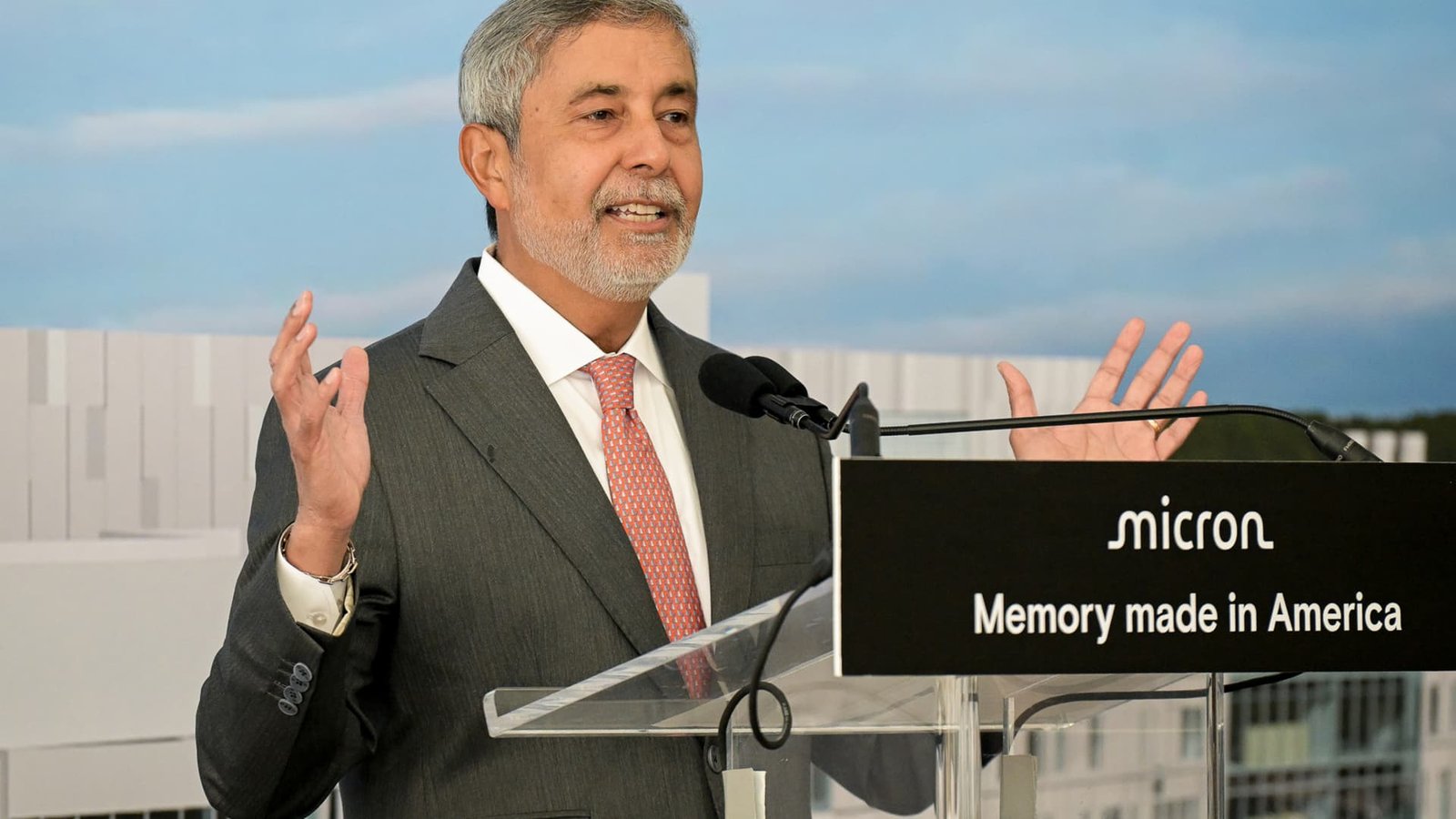
Micron CEO Sanjay Mehrotra speaks at a groundbreaking ceremony for the company’s semiconductor manufacturing facility in Clay, New York, on Jan. 16, 2026.
Heather Ainsworth | Bloomberg | Getty Images
Micron’s revenue almost tripled in the latest quarter as results topped analysts’ estimates and guidance sailed past expectations. The stock, which is up more than 350% in the past year, slipped in extended trading.
Here’s how the company did relative to LSEG consensus:
Earnings per share: $12.20 adjusted vs. $9.31 expected
Revenue: $23.86 billion vs. $20.07 billion expected
Micron is benefiting from soaring demand for Nvidia graphics processing units that run generative artificial intelligence models. Each generation of Nvidia chip packs in more memory, creating a supply crunch. Micron has been working to add capacity, as have competitors Samsung and SK Hynix.
Revenue in the fiscal second quarter increased from $8.05 billion a year earlier, according to a statement.
For the current period, the company expects about $33.5 billion in revenue, up from $9.3 billion a year ago, implying growth of over 200%. Adjusted earnings per share will be about $19.15, Micron said. Analysts polled by LSEG had expected $12.05 in adjusted earnings per share on $24.3 billion in revenue.
“The step-up in our results and outlook are the outcome of an increase in memory demand driven by AI, structural supply constraints and Micron’s strong execution across the board,” CEO Sanjay Mehrotra said in prepared remarks the company issued at the time of the release.
Micron’s stock has been on a tear. The shares tripled in 2025 and have jumped another 62% year to date as of Wednesday’s close. Among the 10 most valuable U.S. tech companies, Micron is the only one that’s up. Oracle is the leading decliner, down 22%, and Microsoft and Tesla have also seen double-digit percentage drops.
“Looking at how the shares were trading going into this earnings report, I thought the biggest risk was high investor expectations,” said Hendi Susanto, a portfolio manager at Gabelli Funds, in an email. “However, fiscal third-quarter guidance is strong, well above analysts’ and my own expectations.”
Mehrotra said that AI and conventional servers are facing a “lack of adequate DRAM and NAND supply.” That refers to the company’s traditional memory products that have long been used in data centers and devices.
Memory companies have been shifting production capacity largely to high-bandwidth memory, which is embedded onto Nvidia’s latest GPUs and many other chips powering AI. Those products have higher margins.
The company’s GAAP gross margin, the profit left after accounting for the cost of goods sold, more than doubled in the past year to 74.4% from 36.8%, and increased from 56% in the prior quarter.
Net income climbed to $13.8 billion, or $12.07 per share, from $1.58 billion, or $1.41 per share, in the same quarter last year.
Micron said revenue in its cloud memory business rose more than 160% to $7.75 billion. The mobile and client unit saw even steeper growth, with revenue jumping to $7.71 billion from $2.24 billion a year ago.
Memory is typically a commodity business, which comes with lower margins than other silicon products and short-term contracts. In the past few months, memory companies have signed longer-term contracts as semiconductor makers work to ensure future capacity.
“As AI evolves, we expect compute architectures to become more memory-intensive,” the company said in an earnings presentation. “This is why we strongly believe that Micron is one of the biggest beneficiaries and enablers of AI.”
Mehrotra said on the earnings call that volume production of HBM4 for Nvidia’s Vera Rubin started in the fiscal first quarter, and next-generation HBM4e products will ramp in 2027. Nvidia has said it will utilize custom HBM in its next-generation Feynman GPU coming in 2028.
Mehrotra added that capital expenditures will “step up meaningfully” in fiscal 2027, with construction-related costs increasing by over $10 billion.
Micron is building two giant new campuses of fabrication plants in Idaho and New York to increase its memory manufacturing capacity in the U.S. Mehrotra said on the call that initial production at the Idaho site is expected by mid-2027. Micron broke ground in January on the massive $100 billion New York campus, and expects wafer output by the second half of 2028.