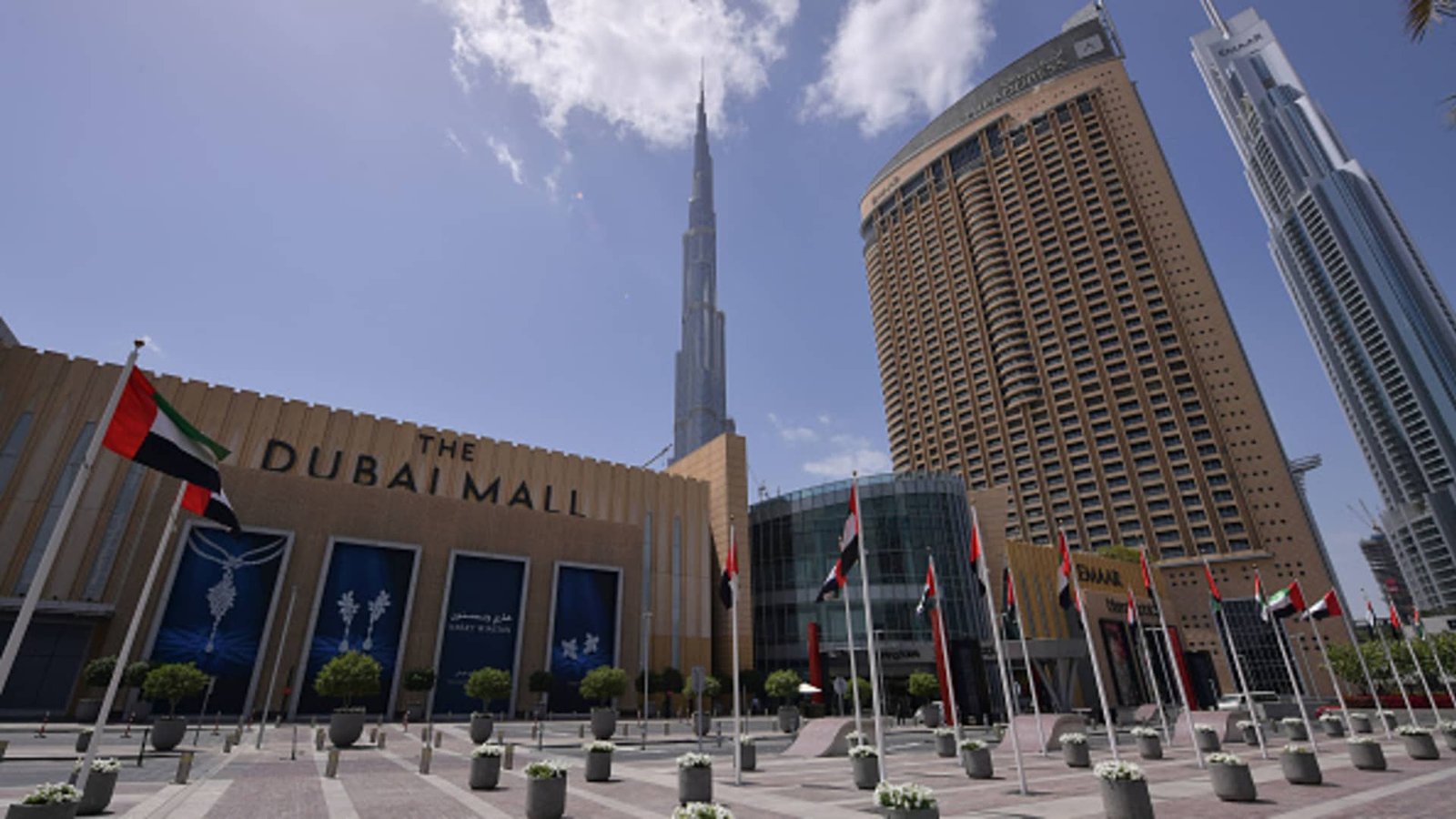
The Iran war is rattling the global luxury industry. Stocks like LVMH and Hermès have shed an estimated $100 billion in combined market value since late February. The Middle East, last year’s fastest-growing luxury market at a growth rate of 6% to 8%, is now facing deep uncertainty. Dubai’s booming millionaire population and elite retail scene made it a crown jewel for luxury brands. CNBC’s Robert Frank explains what’s to come for the Middle East’s luxury market during the ongoing conflict in Iran.
Around 20% of the world’s oil supply normally passes through the Strait of Hormuz – the narrow waterway between Iran and the horn-like tip of the Arabian peninsula.
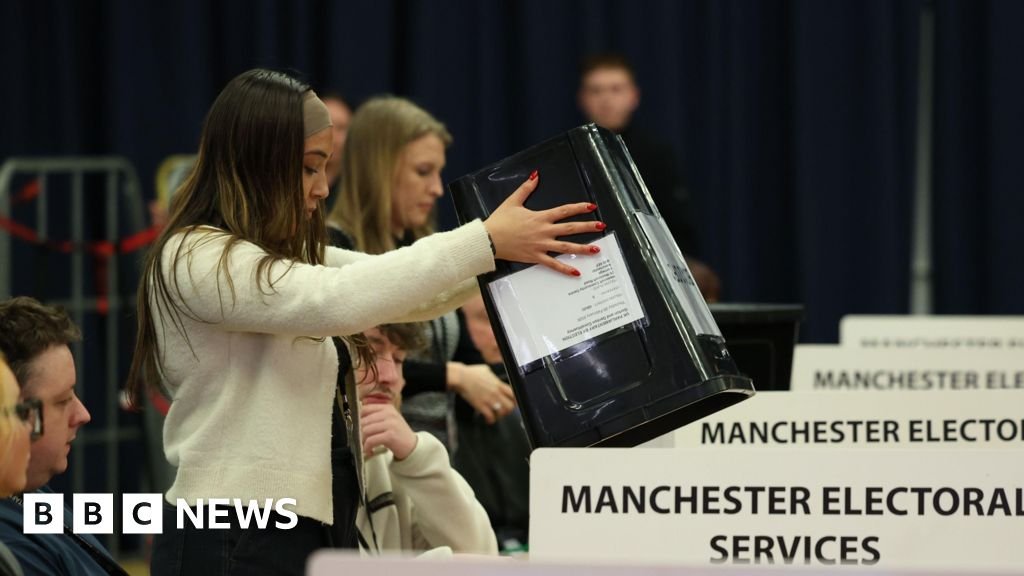
Right now it is effectively closed, with Iran deciding which ships can get through, and the impact is being felt worldwide.
The BBC’s Diplomatic Correspondent Paul Adams explains why navigating this key shipping channel could be so dangerous.
Key Points: Global Payments, a crucial intermediary between retailers and banks, trades well below competitors’ and its own historical multiples. The company hopes to turn things around by gaining a dominant share of the merchant acquisition market through the purchase of Worldpay and the introduction of a point-of-sale system. Global Payments could see upside from accelerating cash flow, substantial shareholder returns —and if that doesn’t work — a leveraged buyout is a possibility. Global Payments’ stock has been battered for so long, it might be easy for investors to overlook its tempting valuation and a burgeoning comeback story. A major restructuring in early 2025 sharpened Global Payments’ strategic focus . It has trimmed costs and shed assets. With the help of activist investor Elliott Management, the company is integrating its acquisition of Worldpay. Cash flow is expected to accelerate, providing funds for share repurchases and strengthening its balance sheet. These steps could boost its stock price, or it could catch the attention of private equity firms that have been eyeing the payments space for deals. Shares have hovered near multiyear lows for the past nine months following a more than 65% decline over the past five years. That poor performance has brought the forward earnings multiple down to just 4.9 times, well below its five-year average of roughly 15 times and a peak of 25 times. It also trades at a substantial discount to key competitors such as Fiserv , Fidelity National Information Services , PayPal , Shift4 Payments and Toast . Long payments legacy Based in Atlanta, Global Payments began as a business unit of National Data Corp. Initially, the company focused on processing transactions for banks, but over time, it came to provide a whole suite of payment products. Spun off from NDC in 2001, Global Payments only shifted to become a pure-play merchant acquirer recently after divesting its issuer solutions business. As a merchant acquirer, it acts as the intermediary between merchants and banks, helping businesses accept credit card payments, authorizing transactions, settling funds into merchants’ bank accounts, and managing risks such as fraud and chargebacks. After it acquired Worldpay in January, it became the largest player in this business in the country. The Worldpay deal also bolstered Global Payments presence in Europe and strengthened some of its offerings such as e-commerce capabilities. The newly streamlined company serves more than 6 million locations across more than 175 countries, processing roughly 94 billion transactions and about $4 trillion in payment volume. Despite its scale, Global Payments was caught off guard as more retail business went online and it ceded market share to technology-focused entrants such as Adyen , Stripe, and Square . These companies rapidly innovated as Global Payments struggled to maintain its strategic focus, contributing to below-market-rate net revenue growth of 2% in 2025 compared with 6% in the previous year. Turnaround story But last year, Global Payments consolidated its point-of-sale products into an all-in-one platform called Genius, simplifying its business as it looks to build stronger brand recognition and loyalty. Citigroup analysts expect Genius will result in Global Payments having a more recognizable brand, which will make it easier to pitch new clients or sell additional services to existing ones. That in turn could create a “snowballing of exposure,” where the more terminals it has in use, the more merchants will associate the service with business success, the analysts said. Global Payments is also leaning into artificial intelligence. Speaking at the Wolfe FinTech Forum on March 10 in New York City, CEO Cameron Bready said Global Payments has “huge opportunities to deploy AI to drive efficiency in our business.” He cited areas such as software development, developer productivity, product lead times and velocity, as well as settlement account reconciliations. Some analysts worry that Global Payments could remain tied to brick-and-mortar spending and miss the emerging shift toward agentic commerce, where autonomous AI agents compare and purchase goods and services on behalf of consumers. However, the company says it is actively engaged in the transition. “We are at the forefront of everything that’s happening from an agentic commerce standpoint,” Bready said this month. “We’ve been a part of every major protocol that’s been released and announced across Google, OpenAI, et cetera.” Global Payments’ stock price has yet to reflect this new reality even after a 17% pop following the release of a better-than-expected fourth-quarter earnings report on Feb. 18. The shares gave up that gain in subsequent days as investors remain concerned about revenue growth and the risks associated with integrating the Worldpay business. GPN 5Y mountain Global Payments stock performance over the past five years. The company said it expects adjusted net revenue growth of about 5% in fiscal 2026 and adjusted EPS growth of 13% to 15%, both above analysts’ expectations. Executives described this outlook as “prudent” on the earnings conference call, suggesting there could be additional upside to the company’s forecasts. Adjusted operating margin is expected to expand by 150 basis points supported by higher operating leverage and integration gains from the Worldpay deal, which closed ahead of schedule and is on track to deliver $600 million in cost savings over the next three years. Post-acquisition, Global Payments’ scale has the benefit of lowering transaction costs and improving its ability to detect fraud. Its global reach, omnichannel capabilities, and secure end-to-end solutions create high switching costs for multinational clients, reinforcing its competitive moat. Global Payments has added 200 salespeople and plans to expand the team to 500 by midyear, aiming to reach a broader range of merchants through a multichannel distribution model that includes direct sales, partnerships, and integrated software. This sales expansion, combined with rising sales efficiency, is expected to drive revenue growth above 5% in the second half of 2026. Not all investors have avoided Global Payments. Activist hedge fund Elliott Management took a stake in the summer of 2025, buying into the dip that followed the announcement of the transformative Worldpay deal. By September 2025, Global Payments reached an agreement with Elliott to appoint three independent directors and create an integration committee. Elliott’s involvement brings operational expertise to the board, which will play a key role in guiding the Worldpay integration. After exiting Global Payments in 2023 at $108.61 per share, David Einhorn’s Greenlight Capital repurchased shares at $77.85 in the fourth quarter of 2025. In a letter to investors, they noted that Global Payment’s consistent organic growth and its plan to return nearly $7 billion to shareholders — which is about one third of its market cap — over the next two years, should garner it recognition in the market and allow the stock to re-rate higher. Buybacks and debt reduction In February, Global Payments reiterated its intentions to buy back $7.5 billion of its own stock by the end of 2027. Its board has approved $2.5 billion for repurchase so far, with $550 million earmarked for immediate buybacks. Mizuho projects the plan could boost per-share annual earnings growth by 25% over the medium term. Global Payments’ strong free cash flow generation is helping it achieve this goal. It generated $3 billion in adjusted free cash flow in 2025 and expects more than $4 billion in 2027 and $5 billion by 2028. At this pace, the company anticipates generating enough cash within five to six years to cover its entire market capitalization. Also, the company is using its cash to reduce its net leverage ratio to an expected 3x by the end of 2027. A stronger financial position will also help support multiple expansion. An LBO target? Companies with such massive cash flow generation often attract the interest of leveraged buyout players. A recent Bank of America report noted that “deal activity has picked up recently, with private equity (PE) firms showing renewed interest in fintech and payments.” After its own stock slumped in late February, competitor Paypal found itself the target of rumored buyout interest from Stripe. Paypal is reported to be talking with banks to defend against a hostile takeover. Global Payments management seems open to the idea. “If we get to a point after a period of time of integrating the businesses, producing results, returning capital, if the public markets continue to not fairly value the business, I think we owe it to ourselves to look at all alternatives and evaluate all alternatives,” Bready said during its latest earnings conference call. With an enterprise value around $35 billion, some investors may view Global Payments as too large for a leveraged buyout. However, last year’s $55 billion acquisition of Electronic Arts demonstrates that there is still appetite for sizable deals. A buyout would likely require the backing of private equity firm GTCR, which acquired a 15% stake in Global Payments as part of the Worldpay transaction. Wall Street analysts are somewhat cautious on Global Payments stock, with about 42% of the 33 analysts covering it rating the stock a buy. About 52% are at a hold and two analysts have an underperform rating, according to LSEG. Analysts are still concerned about Global Payments’ ability to maintain a solid growth rate, fend off market share losses and integrate the Worldpay acquisition. For example, analysts at Wolfe said they are “watching for more concrete evidence of post-merger milestones.” But the average analyst price target of $101.32 is almost 44% above its current price, suggesting a view that Global Payments’ current valuation and massive expected cash flow generation gives the stock significant runway to a higher price. While the Global Payments turnaround story is just beginning and only a few savvy hedge funds are pounding the table on the name, now may be the time to get in before a flurry of analyst upgrades, or even a buyout, send shares higher. THIS CONTENT IS PROVIDED FOR INFORMATIONAL PURPOSES ONLY AND DOES NOT CONSTITUTE FINANCIAL, INVESTMENT, TAX OR LEGAL ADVICE OR A RECOMMENDATION TO BUY ANY SECURITY OR OTHER FINANCIAL ASSET. THE CONTENT IS GENERAL IN NATURE AND DOES NOT REFLECT ANY INDIVIDUAL’S UNIQUE PERSONAL CIRCUMSTANCES. THE ABOVE CONTENT MIGHT NOT BE SUITABLE FOR YOUR PARTICULAR CIRCUMSTANCES. BEFORE MAKING ANY FINANCIAL DECISIONS, YOU SHOULD STRONGLY CONSIDER SEEKING ADVICE FROM YOUR OWN FINANCIAL OR INVESTMENT ADVISOR. Click here for the full disclaimer.
People visit the Micron booth during the 7th China International Import Expo at the National Exhibition and Convention Center in Shanghai, Nov. 5, 2024.
“Memory today is very tight supply and supply cannot be brought up that easily, and you are seeing that in our results,” Micron CEO Sanjay Mehrotra told CNBC’s “Squawk on the Street” on Thursday. “You are seeing the value of memory reflected in our strong financial performance in Q2.”
Mehrotra added that the company has had trouble serving its customers as the supply crunch tightens, with key customers only getting “50% to two-thirds of their requirements.”
Micron is up over 300% in the past year. It’s the only tech company of the top 10 in the U.S. to see gains year-to-date, with Oracle and Microsoft both down over 20%.
Micron reported $23.86 billion in revenue for Q2 of fiscal 2026, almost triple its reported $8.05 billion from a year prior. The company also issued strong guidance, projecting gross margins of about 80% for the next quarter.
“Higher FY27 capex and peak gross margins concerns (81% > Nvidia 75%) likely induced some profit taking after a strong stock run into the print,” wrote Citi’s Atif Malik of the fall.
(Check out Carter’s worthcharting.com for actionable recommendations and live nightly videos.) General Electric has been an epic winner since the lows of the 2022 bear barket, a bear market in which the stock declined 48.35%, almost double the 27.54% decline in the S & P 500 . Ever since it has been a one-way rocket, advancing from a low of $37.34 on July 14, 2022, to a high of $348.88 just weeks ago on February 25, 2026. An epic 833% run the past 3½ years. Of late, its fortunes have reversed, with GE underperforming its Industry Group (Aerospace), underperforming its Sector (Industrials) and underperforming the market (S & P 500 Index). The 1-month % change table below tells the tale: And most telling, the stock is trading below its smoothing mechanism (150-day moving average) and said moving average is on the cusp of inflecting and turning down… the very definition of a stock in the throes of a “Bullish-to-Bearish” Reversal. DISCLOSURES: None. All opinions expressed by the CNBC Pro contributors are solely their opinions and do not reflect the opinions of CNBC, or its parent company or affiliates, and may have been previously disseminated by them on television, radio, internet or another medium. THIS CONTENT IS PROVIDED FOR INFORMATIONAL PURPOSES ONLY AND DOES NOT CONSTITUTE FINANCIAL, INVESTMENT, TAX OR LEGAL ADVICE OR A RECOMMENDATION TO BUY ANY SECURITY OR OTHER FINANCIAL ASSET. THE CONTENT IS GENERAL IN NATURE AND DOES NOT REFLECT ANY INDIVIDUAL’S UNIQUE PERSONAL CIRCUMSTANCES. THE ABOVE CONTENT MIGHT NOT BE SUITABLE FOR YOUR PARTICULAR CIRCUMSTANCES. BEFORE MAKING ANY FINANCIAL DECISIONS, YOU SHOULD STRONGLY CONSIDER SEEKING ADVICE FROM YOUR OWN FINANCIAL OR INVESTMENT ADVISOR. Click here for the full disclaimer.
A version of this article first appeared in CNBC’s Inside Wealth newsletter with Robert Frank, a weekly guide to the high-net-worth investor and consumer. Sign up to receive future editions, straight to your inbox.
Major luxury stocks have fallen 15% or more since the Iran war started, and sales in the increasingly important Middle East market could drop by half, according to analysts.
Shares of LVMH and Hermès are down roughly 16% and 20%, respectively, this month, while the S&P 500 has fallen less than 6%. Shares of Ferrari are also down 15%, and the company announced it would temporarily suspend deliveries to the Middle East. Bentley, Maserati and other high-end car companies are also halting deliveries due to security risks and logistics.
“At the moment, we don’t have an impact from a production side,” said Bentley CEO Frank-Steffen Walliser on the company’s recent investor call. “But for sure, people in the Middle East have other thoughts than looking for a new Bentley at the moment.”
For investors and luxury companies, the Iran war has highlighted the increasing importance of the Middle East to the global luxury industry and the high-net-worth economy. While the region accounts for a relatively small share of overall luxury sales, it’s growth has become critical to the industry.
The region was the fastest-growing luxury market in the world last year, posting growth of between 6% and 8% compared with flat growth globally, according to Bernstein luxury analyst Luca Solca. The Middle East now accounts for about 6% of global luxury sales, on pace to potentially rival Japan, which claims about 9% of global sales, according to Solca.
Dubai in the United Arab Emirates has been the biggest driver of growth, accounting for about 80% of the UAE’s rise, which itself accounts for more than half the luxury growth in the full region, according to research from Morgan Stanley.
The troubles in the Middle East come at a critical time in the luxury industry. After two years of stagnant sales, the industry was betting on a recovery in 2026. The China market has been showing slight improvements in sales after years of declines. The U.S. luxury consumer remains strong, thanks to rising wealth from artificial intelligence and stock markets. And Europe remained steady, helped in part by spending from tourism.
A research note from UBS luxury analyst Zuzanna Pusz and her teams said investor sentiment in luxury is “the most bearish in years.” While investors had been betting on a rebound in the beginning of the year, “heightened geopolitical uncertainty is likely to weigh on near-term earnings and delay the long-awaited inflection in fundamentals.”
Share price moves have already wiped out roughly $100 billion in market cap from the major luxury companies, with LVMH and Hermès both losing more than $40 billion in value each.
Solca said that if sales in the Middle East fall by half in March, which he described as a worst-case scenario, quarterly growth would drop by about 1 percentage point for many luxury companies.
Yet he said the decline could be milder. While stores and malls in the region may be largely empty, many luxury companies are still carrying out sales by reaching out individually to top clients and delivering products to their homes. Solca also said the wealthy who have left Dubai may continue spending on luxury in other countries.
“Most of the companies we’ve been talking to are not really pointing to a disastrous decline in the Middle East,” Solca said. “At the end of the day, if this was contained to the month of March, this would largely be a nonevent.”
Get Inside Wealth directly to your inbox
Other contributing factors to Dubai’s recent success – no income taxes, stable governments, sunny beaches – remain intact. The city’s millionaire population has doubled since 2014 to more than 81,000, according to Henley & Partners. An estimated 9,800 millionaires moved to Dubai in 2025, bringing $63 billion in wealth — more than any other country in the world, according to Henley. Most of Dubai’s wealthy are arriving from the U.K., China, India, and other parts of Europe and Asia.
Still, Dubai’s reputation for safety and security has been shaken. The Middle East luxury market is heavily dependent on wealthy tourists, who may avoid the region long after a possible ceasefire.
According to Morgan Stanley, around 60% of luxury spend in the UAE is courtesy of tourists, of which 60% are Russian, Saudi, Chinese and Indian visitors. Of the remaining 40% spent by UAE residents, about half is from foreign UAE residents, who may also change their plans to stay in the region long term.
Higher oil prices could also weigh on luxury sales. Analysts say aspirational luxury consumers, who are more sensitive to inflation and economic slowdowns, could pull back on spending with higher gas prices and food costs. At the same time, wealthy consumers could be spooked by volatile stock markets. Since the spending of the wealthy is more dependent on stock markets and the so-called wealth effect, declining or even flat stocks could cause a pullback.
“Higher oil prices could prompt a downward adjustment in global stock markets and that would be very bad,” Solca said.” The consumer sentiment of people with wealth in the stock market would be damaged.”