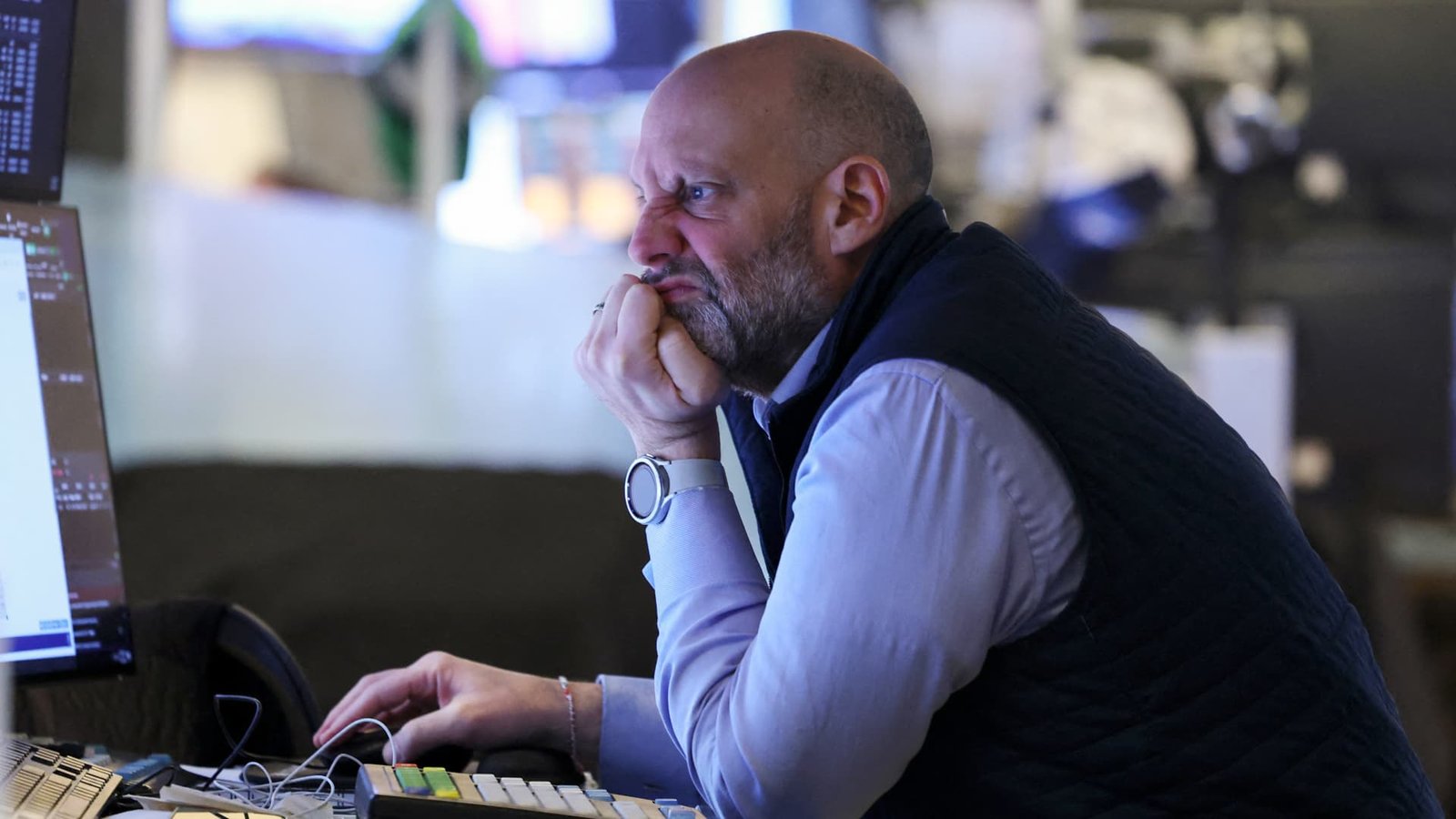
A trader works on the floor of the New York Stock Exchange (NYSE) at the opening bell in New York on March 18, 2026.
Angela Weiss | Afp | Getty Images
The Russell 2000 has fallen more than 10% off its recent high, becoming the first of the major U.S. benchmarks to fall into correction territory in 2026.
The small-cap index closed down 10.9% from its all-time high on Friday. A correction is defined as a decline of more than 10% and less than 20%.
Russell 2000, 1-year
Small caps actually outperformed to start the year, with the Russell 2000 just 2% off in 2026 as the hope of easier monetary policy and a pivot away from large caps boosted the asset class.
But the benchmark has tumbled this month amid the ongoing Iran war, which has spurred a more than 50% spike in Brent crude oil futures. The Russell 2000, which has greater exposure to cyclical sectors, is especially sensitive to changes in oil prices and a slowdown in the economic cycle. It’s down more than 7% this month.
“It usually is the smaller companies that take the beating first,” said Sam Stovall, chief investment strategist at CFRA Research. “Questions over a softening in economic growth, stagflation, or even a recession, are more apt to adversely affect small caps than large caps, thus placing them between a rock and a hard place.”
The Russell 2000 could soon be joined by other of the major averages. Both the Nasdaq Composite and the Dow Jones Industrial Average fell into correction territory on an intraday basis on Friday, though they have each closed just above those levels.
The lawsuit, brought on behalf of a “Jane Doe”, cites a record of “incredibly alarming and erratic banking behavior” in her own Bank of America accounts, which were used by Epstein’s team. She says she met Epstein in Russia in 2011 and was controlled and sexually abused by him up until his death in jail in August 2019.
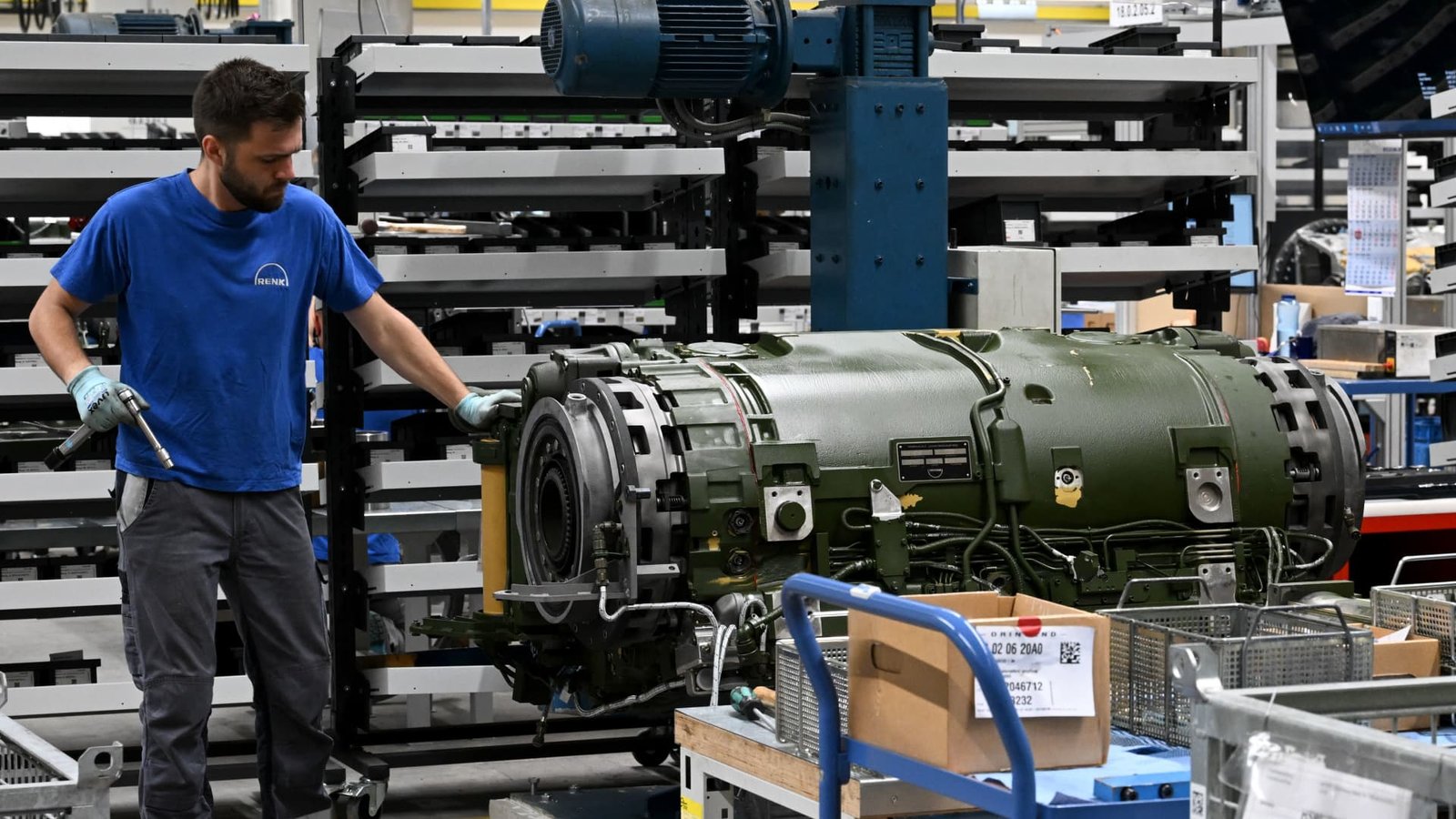
The RENK Group is one of the world’s leading suppliers of highly efficient drive and control technology. They develop systems for using high forces and torques to drive vehicles, ships and machines. Customers come from the defense, energy and industrial sectors. (Photo by CHRISTOF STACHE/AFP via Getty Images)
“The current crisis in the Middle East, the Iran war, this might lead overall, and this is really a gut feeling, to overall increasing demand for defense capabilities in this region,” CEO Alexander Sagel said Thursday on a call with analysts.
A day earlier, Sagel said the company received its first orders … for prototypes for a new Infantry Fighting Vehicle (IFV) from “a Gulf state,” which should be developed in the next two to three years. “It’s a kind of indication,” he added.
The Gulf states have been in the firing line of the war, facing Iranian ballistic missiles that have targeted U.S. bases on their territory, as well as energy facilities, civilian infrastructure and cities.
Renk reported fourth-quarter and full-yearearnings before the bell on Thursday. While the earnings covered a period before the war in the Middle East, analysts had questions about Iran.
“I think this conflict could drive further defense spendings, not only on air and not only on ammunition, and not only on air defense systems, but also on ground-based,” Sagel said.
Renk specializes in military drivetrain technology, including IFVs, and many larger defense firms count Renk as one of their suppliers.
Renk shares have risen 46% oevr the past 12 months.
The German mid-cap defense firm reported full-year revenue that grew 19.8% year-on-year, with adjusted earnings before interest and tax expanding 21.7%.
Order intake was up 9% over the year, and the order backlog came in at a record high of 6.68 billion euros, compared with 2024’s 4.96 billion euros.
Guidance for this year, however, came in below consensus, and shares in the Frankfurt-listed company were down over 4% in midday trading. The company sees 2026 revenue of at least 1.5 billion euros, about 3% below consensus at the low point.
Renk shares have almost tripled in price since their initial public offering in February 2024.
European defense stocks have rallied amid heightened geopolitical tensions and the war in Ukraine, which prompted European governments to raise spending on defense. Larger peer Rheinmetall is due to report earnings next week.
Renk’s largest and most important unit, Vehicle Mobility Solution, drove the 2025 growth, with profitability up nearly 28%.
Its Marine & Industry unit also posted double-digit growth on both the top and bottom line, and CEO Sagel sees an opportunity for the naval unit to benefit from U.S. President Donald Trump’s push for expanded U.S. defense budgets, noting the lower-than-historical number of U.S. vessels.
“If you see the geopolitics in, especially in Asia, or when you see the number of vessels to aircraft carriers striking groups now in the Middle East, they need to build up and to ramp up through frigates, destroyers, and whatever,” said Sagel.
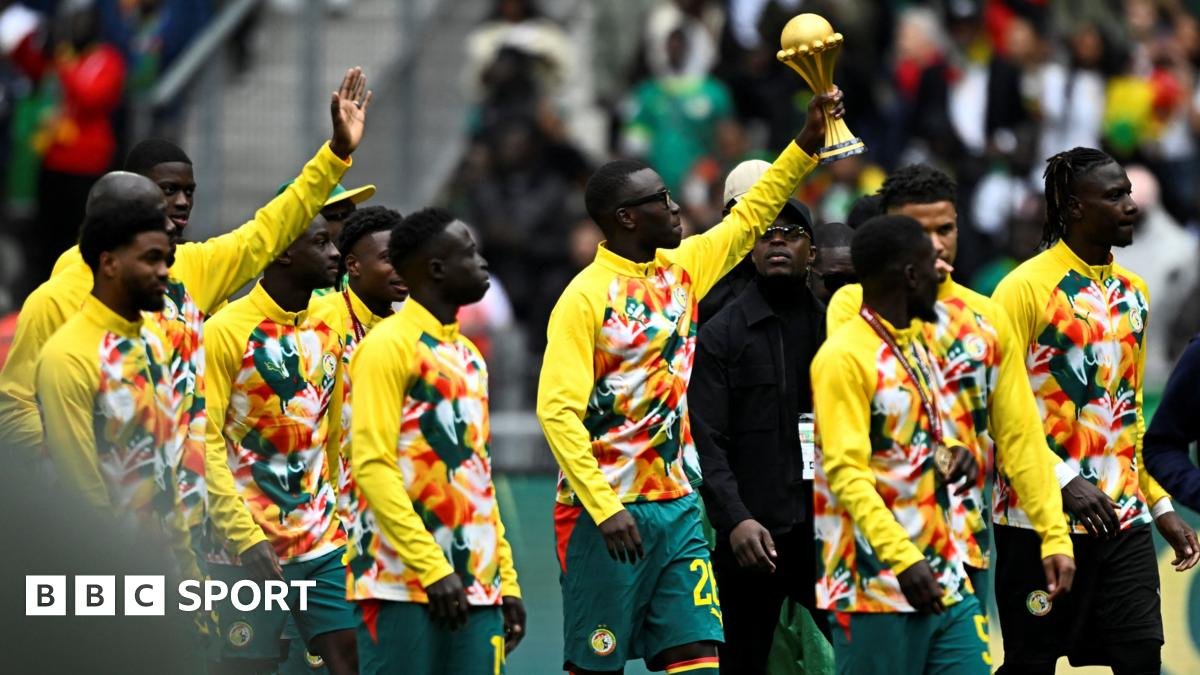
Senegal paraded the Africa Cup of Nations trophy before Saturday’s friendly match against Peru at Stade de France – despite being stripped of the title earlier this month.
Morocco were declared the winners of the 2025 Afcon tournament when the Confederation of African Football (Caf) overturned the result of January’s final.
Senegal’s players left the field in protest when, with the score at 0-0, hosts Morocco were awarded a stoppage-time penalty.
When they returned after a delay of about 17 minutes, Morocco subsequently failed to score the spot-kick and Senegal netted an extra-time winner.
Following an appeal by the Moroccan FA (FRMF), Caf later ruled that Senegal had forfeited the match and Morocco were awarded a 3-0 victory.
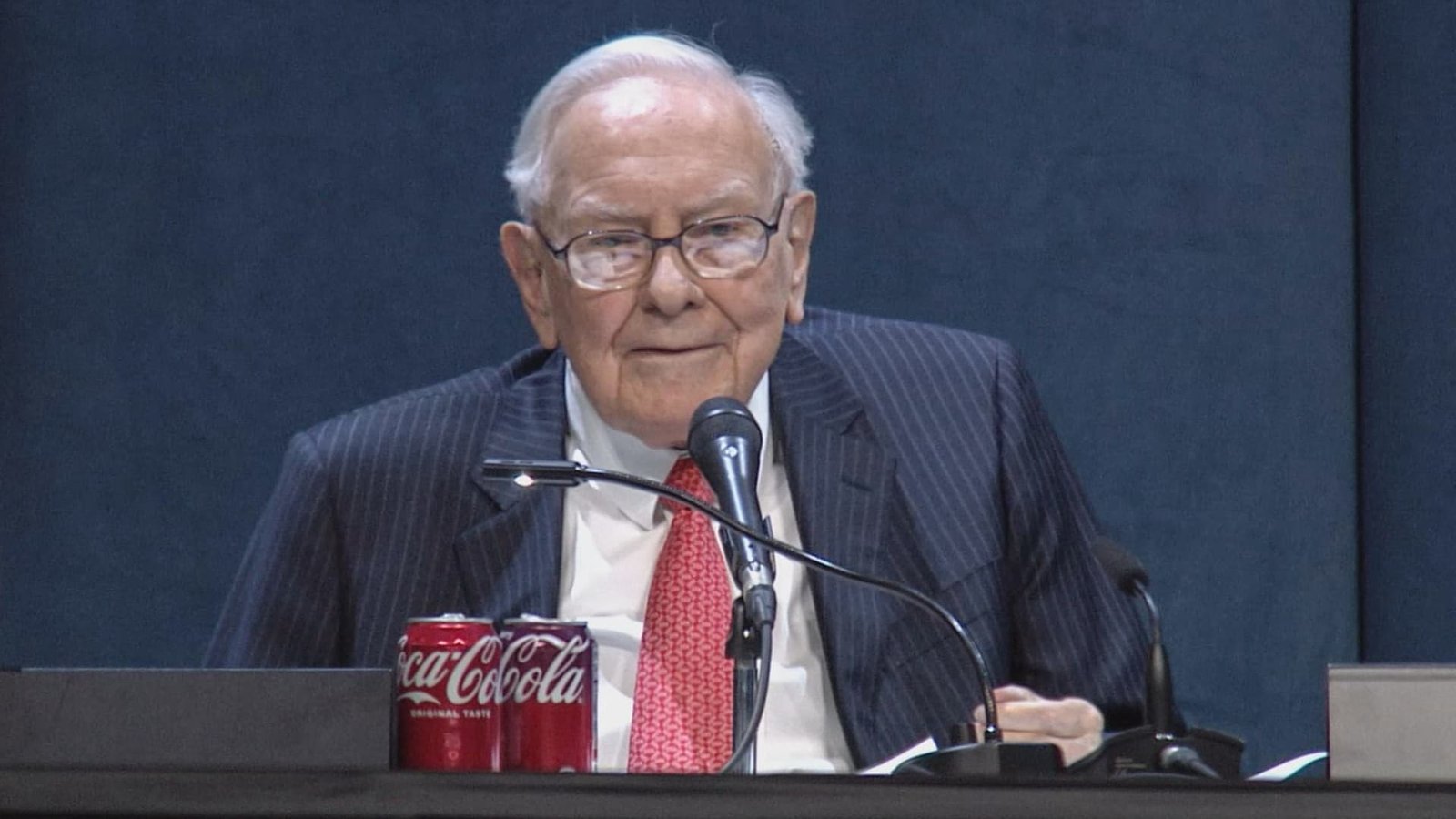
(This is the Warren Buffett Watch newsletter, news and analysis on all things Warren Buffett and Berkshire Hathaway. You can sign up here to receive it every Friday evening in your inbox.)
Berkshire shares suffer longest losing streak in more than 7 years
Shares of Berkshire Hathaway have lost ground for eight consecutive days.
It is their longest losing streak since eight straight sessions of losses in December of 2018.
The Class A shares are down 4.7% and the Class B shares have dropped 4.9% since their most recent daily gains on March 17.
While the S&P 500 index has not seen a string of daily losses, it is down 5.2% over the same period.
Berkshire’s year-to-date losses are close to the S&P’s 7% drop. The benchmark index is on a five-week losing streak.
Berkshire’s stock prices are down more than 13% since Warren Buffett announced at last year’s shareholders meeting that he would be stepping down as CEO at the of 2025.
They are roughly 2% above their August lows but have fallen below two more recent lows in early November and late January.
Berkshire’s new Japanese investment soars in value
Berkshire Hathaway’s newest investment in Japan is off to a strong start.
Shares of Tokio Marine Holdings soared more than 24% this week after Monday’s announcement that Berkshire’s National Indemnity is paying $1.8 billion for a stake of almost 2.5% in Japan’s oldest insurance company, which Barron’s calls“one of the world’s best-run property and casualty insurers.”
The two companies will also collaborate in reinsurance and look for strategic investments around the world.
In a Tokio Marine news release, the company said Berkshire’s corporate culture and values “closely align with those of our own.”
It added, “Importantly, this is not merely a business alliance. We believe that it establishes a long-term strategic relationship anchored by an equity stake that will serve as a powerful catalyst for the medium- to long-term growth of both companies.”
Ajit Jain speaks during the Berkshire Hathaway Annual Shareholders Meeting in Omaha, Nebraska on May 3, 2025.
CNBC
Berkshire’s insurance chief Ajit Jain is quoted as saying, “We expect this Strategic Partnership to create compelling long-term opportunities for both organizations.”
Barron’s reports Jain oversaw the investment “and likely involved former CEO Warren Buffett, now serving as chairman of the board.”
“The deal shows Berkshire’s ability to strike insurance deals is undiminished even as Buffett has given up the CEO job in favor of Greg Abel. That’s a good sign for Berkshire given the importance of insurance to the $1 trillion market value company.”
Tokio Marine issued new shares for Berkshire to purchase. It plans to buy back an equal amount of its already-issued stock to prevent dilution for existing shareholders.
Berkshire will be allowed to increase its stake to just under 10% through open-market purchases. It would need approval from Tokio Marine’s board to go higher.
Insurance Business notes Tokio Marine has spent more than $17 billion over the past two decades for acquisitions in the U.S., including Philadelphia Insurance Companies and Delphi Insurance Group.
It expects the new partnership “could accelerate that trajectory through Berkshire’s deal-sourcing reach and reinsurance capacity.”
Please send any questions or comments about the newsletter to me at alex.crippen@nbcuni.com. (Sorry, but we don’t forward questions or comments to Buffett himself.)
If you aren’t already subscribed to this newsletter, you can sign up here.
Also, Buffett’s annual letters to shareholders are highly recommended reading. There are collected here on Berkshire’s website.
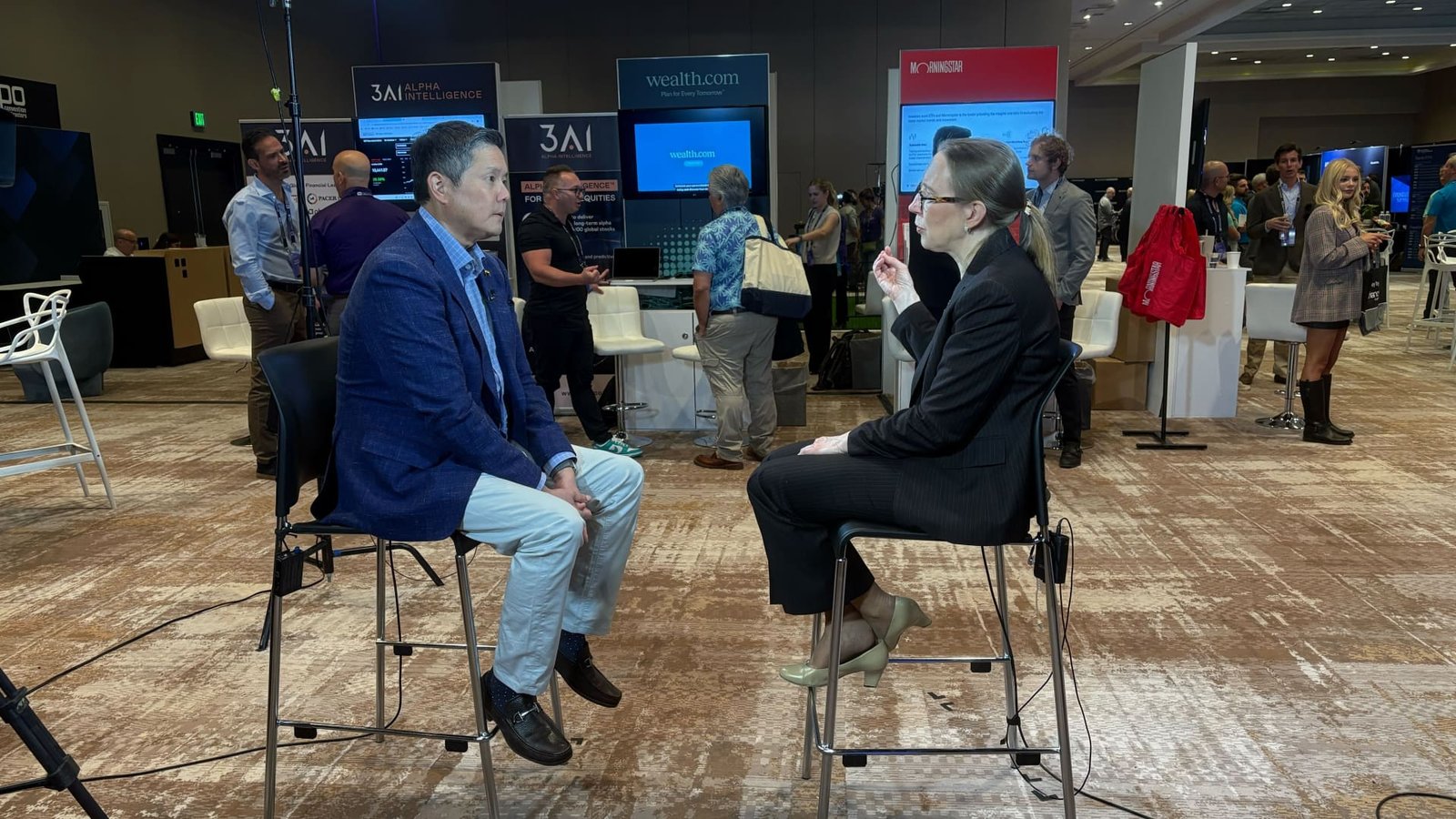
SEC Commissioner Hester Peirce is indicating an openness to work with Wall Street on emerging exchange-traded fund products tied to cryptocurrencies and tokenization.
“We want to work with people on new products,” Peirce said during an exclusive interview this week with “ETF Edge” host Dominic Chu. “It really is a come in and talk to us about what you’re trying to do. We want to work with you toward being able to experiment to see whether the market wants your products.”
Peirce joined CNBC from the VettaFi’s Exchange 2026 conference in Las Vegas.
“I’m here because this is such an important segment of what we regulate,” she said.
“It’s not the SEC’s job to decide… how the market moves forward,” she said. “But tokenization is one of those areas that since the administration changed and since the attitude toward crypto and blockchain changed, people have come to us and they’ve said, ‘We really think tokenization has potential here.'”
Peirce also alluded to the regulation priorities as retail investor accessibility to new ETFs improves.
“We want to do it [work with issuers] in a way that respects investor protection,” Peirce said. “It’s not our job to say which products are good or bad. It is our job to work with sponsors to make sure that they’re disclosing what those products are, what the risks are [and] what they’re intended to be used for.”