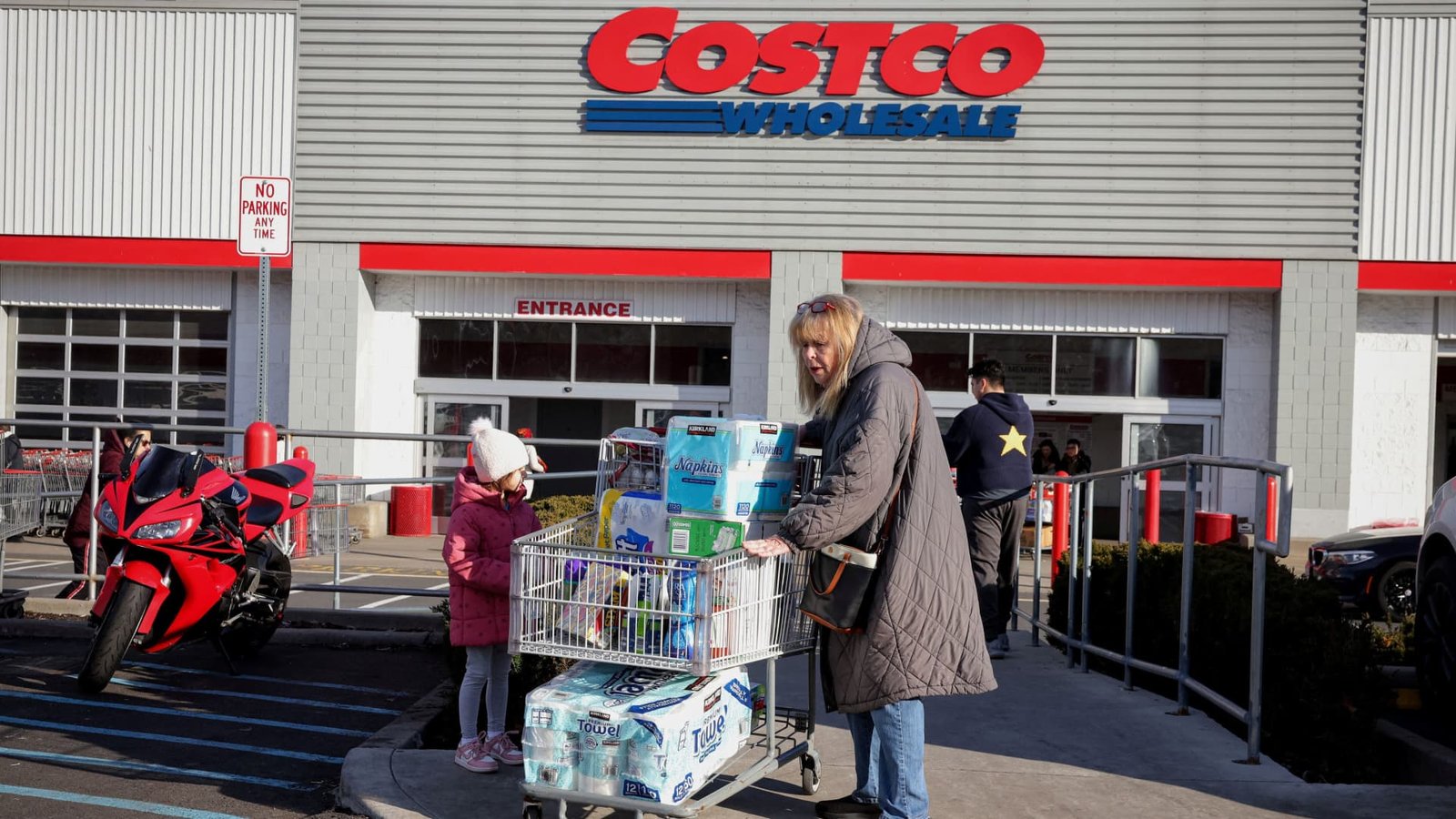
We’re raising our Costco price target after a good but not great quarter. Here’s why


Source link

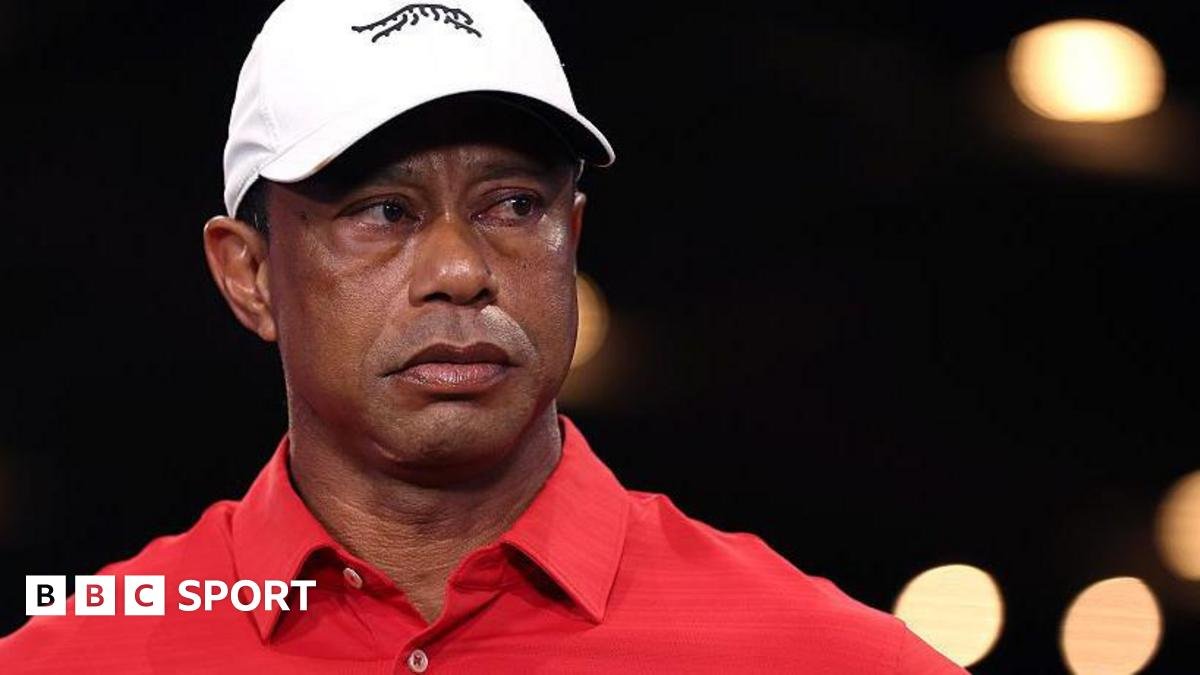
Tiger Woods: Where does latest arrest leave golf great’s legacy?


We have not seen him play competitive golf outdoors since the Open of July 2024, his only action a nine-shot cameo in this week’s TGL indoor simulator finals.

Of late, Woods’ primary influence has been off the course, chairing the PGA Tour’s Future Competitions Committee.

It is a relatively recent appointment, but for the best part of five years he has been at the forefront of shaping the tour’s response to the arrival of the breakaway LIV Golf circuit.

He was too busy to take America’s Ryder Cup captaincy last year and is currently weighing up whether to accept the job for the 2027 match at Adare Manor in Ireland.

But such roles, returning to action (he has registered for June’s US Senior Open) and indeed any public-facing activities have been upended in the way his Range Rover flipped on to its side on Friday afternoon.

Police officers are analysing skid marks on Jupiter Island’s 30mph South Beach Road to gauge the speed of the 82-time tour winner’s car while attempting his ill-fated overtake manoeuvre.

Prosecutors are looking to build their case on three charges: driving under influence (despite passing a breathalyser test for alcohol), refusing to give a urine sample and damage to property.

Regardless of whether he is able to play at the Masters, Woods was expected to be in Georgia for the unveiling of The Patch – a revamped public golf course he has worked on with the Augusta National club. He was also looking forward to Rory McIlroy’s champion’s dinner on the Tuesday night.

Instead, talk shows across America and beyond are into overdrive on a far less wholesome agenda, speculating about the turbulent life of this elite sportsman – someone who has enjoyed and endured more extreme highs and lows than pretty much any other.

Trying to play the Masters, trying to hit a ball 300 yards, escaping from the sand, holing a delicate three-footer or trying to mastermind the future of men’s professional golf or captaining his country all pale in significance now.

Tiger Woods’ priorities must lie elsewhere. He is in a bunker of a different kind. Recurring road incidents had already shown a deeply troubled side to this supreme champion.

And it has happened again.


Source link

What’s likely to move the market


Source link

Most active investment firms of ultra-wealthy


Inside Wealth Family Office 15: Most active investment firms of the ultra-wealthy

A version of this article appeared in CNBC’s Inside Wealth newsletter with Robert Frank, a weekly guide to the high-net-worth investor and consumer. Sign up to receive future editions, straight to your inbox.

Tech billionaire Eric Schmidt’s family office took the top spot in CNBC’s inaugural Inside Wealth Family Office 15 list, which ranks the most active U.S. family offices for dealmaking in 2025.

Eric and Wendy Schmidt’s family office, Hillspire, made 15 investments in 2025, most of them in artificial intelligence, according to exclusive data provided by private wealth intelligence platform Fintrx. The investments include a Paris-based AI voice startup, a fusion company and a software platform for luxury travel and experiences.

Other family offices that made the cut include Jeff Bezos’ Bezos Expeditions, Peter Thiel’s Thiel Capital, Barry Sternlicht’s Jaws Estates Capital and Builders Vision, the family office and social-impact platform founded by Walmart heir Lukas Walton. 

The 15 family offices made over 120 investments combined last year, in sectors ranging from robotics and software to biotech, food and beverage, sports and blockchain.

The list, which ranks large, single-family offices by the number of publicly disclosed direct investments, offers a rare window into the deal activities of America’s richest billionaires and families. Family offices, the private investment firms of the ultra-wealthy, are exploding in size and number, expected to grow from 8,000 last year to more than 10,700 by 2030, according to Deloitte.

With over $3 trillion in assets, family offices are becoming a powerful force in mergers and acquisitions, startup funding and capital raises for private companies. They’re also increasingly coveted by Wall Street, with private banks, asset managers, private equity firms and even insurance companies all vying for their business.

Family offices aren’t required to disclose their assets or returns and remain fiercely private, often clouding deal activity in mystery.

All of the family offices on CNBC’s list manage at least $1 billion in assets, by Fintrx’s estimate. For the sake of the list, family offices are defined as investment vehicles or holding companies of a single family or individual that don’t manage money for outside investors.

“Family offices are intentionally opaque, so deal activity fills in the gaps,” said Russ D’Argento, founder and CEO of Fintrx. “Co-invest patterns, sector activity and repeat themes create a practical roadmap for understanding their priorities and how they deploy capital.”

The ranking is based on the number of direct investments made in 2025 for each family office listed on the Fintrx database, combined with added reporting by Inside Wealth. CNBC sought comment from firms listed and incorporated feedback where appropriate. About half declined to comment.

The list doesn’t include the investment amounts and may not include all deals or all family offices, since they aren’t required to disclose their investments. Fintrx’s team of researchers compiles the data based on public and private sources. Real estate investments were not included in determining the rankings.

For 2025, the dominant investment theme was AI. In a recent survey from JPMorgan, 65% of family offices cited AI as their top investment priority, far outpacing any other sector. AI, tech and software, comprising the broader AI trade, accounted for more than a third of all deals disclosed by family offices on CNBC’s list. Health care was the next largest sector, followed by biotech.

Schmidt’s spending spree on AI echoes his public influence as an evangelist for the technology. The former Google CEO co-wrote the popular book on AI with Henry Kissinger, “The Age of AI,” and funds the AI-focused nonprofit Special Competitive Studies Project. In a talk at Harvard University in December, Schmidt said AI’s ability “to discover new facts” and learn for itself could be just four years away.

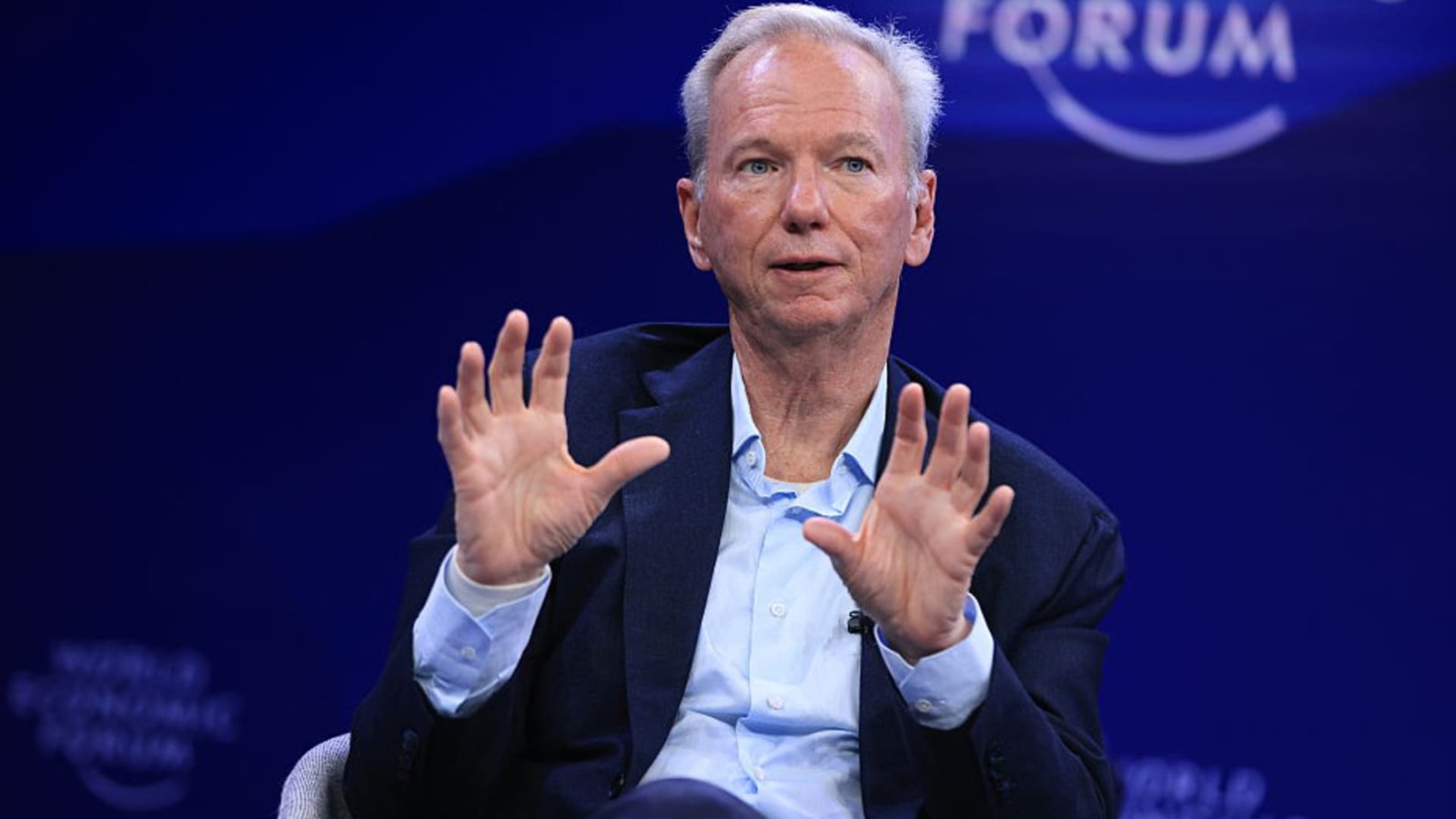
Eric Schmidt, chief executive officer of Relativity Space, during the World Economic Forum (WEF) in Davos, Switzerland, on Tuesday, Jan. 20, 2026.

Krisztian Bocsi | Bloomberg | Getty Images

Last year Hillspire invested in Gradium, a Paris-based company spun out of the French AI lab Kyutai, that’s developing AI voices that respond almost instantly, as well as Reflection AI, a startup founded by two former Google DeepMind researchers that aspires to be an open-source alternative to OpenAI and Anthropic.

Hillspire also made an investment in Peek, a software provider and marketplace for travel and experiences that also attracted investments from Twitter co-founder Jack Dorsey and Kayak founder Paul English.

Ranking a close second for 2025 disclosed deal activity was the family office of Jeff Bezos, the world’s fifth-richest man, worth $234 billion, according to Bloomberg. Bezos Expeditions backed Unconventional AI, which aims to build a more energy-efficient AI computer. It also invested in Physical Intelligence, a robot startup, alongside OpenAI and Joshua Kushner’s Thrive Capital.

One of Bezos’ few non-AI investments last year was Arrived, a trading platform that allows investors to buy shares of rental homes for as little as $100. Salesforce CEO Marc Benioff is also an investor, along with Uber CEO Dara Khosrowshahi.

Get Inside Wealth directly to your inbox

Third place on the Family Office 15 was a tie between the family offices of hedge-fund veteran Jim Pallotta and investor-philanthropist Laurene Powell Jobs. Pallotta’s Raptor Group, based in Boston, invests heavily in electronics and software. Its bets included Reelables, a smart-label tracking company; MatrixSpace, a radar technology company; and Emptyvessel, a digital gaming studio. Pallotta also invested in DryWater, which makes electrolyte and vitamin powdered drink mix.

Powell Jobs founded Emerson Collective as an investment and philanthropy platform to advance causes such as women’s health with multiple approaches. Emerson is also investing heavily in AI, but with a focus on how the technology can better help mankind. It invested in Humans&, which aims to be a “human-centric” AI startup, alongside Bezos Expeditions and Nvidia. Emerson has also backed Chai Discovery, which is using AI for drug discovery and counts General Catalyst and Menlo Ventures as investors.

Most of the family offices on CNBC’s list were founded by first-generation wealth creators who made their fortunes in tech or finance. Many launched family offices as a second act of their careers and as a way to help grow companies in the industries where they first forged their wealth.

Yet a growing number of family offices are controlled by the next generation, which is more focused on impact investing.

Walton, the 39-year-old Walmart heir, created Builders Vision, a multibillion-dollar funding machine that powers philanthropy and startups that aim to improve the world. 

“What we’re doing here is challenging,” Walton told CNBC in 2022. “We’re trying to tie together cultures from philanthropy, from impact investment, from venture capitalists, not to mention public markets and equity managers.”

Last year, Builders Vision invested in several sustainable food and agriculture companies, including Cream Co. Meats, OoNee Sea Urchin Ranch and Coral Vita. It also backed sustainability startups such as Firefly Green Fuels, which makes clean aviation fuel from sewage.

Inside Wealth Family Office 15

RANK FIRM Principal DIRECT INVESTMENTS
1. Hillspire Eric and Wendy Schmidt 15
2. Bezos Expeditions Jeff Bezos 14
3. (tied) Emerson Collective Laurene Powell Jobs 12
3. (tied) Raptor Group Jim Pallotta 12
5. Builders Vision Lukas Walton 11
6. (tied) Euclidean Capital Family of Jim Simons 8
6. (tied) Thiel Capital Peter Thiel 8
8. (tied) Bolt Ventures David Blitzer 7
8. (tied) Duquesne Family Office Stanley Druckenmiller 7
10. (tied) Access Industries Len Blavatnik 5
10. (tied) Foris Ventures John Doerr 5
10. (tied) Jaws Estates Capital Barry Sternlicht 5
13. (tied) Lightchain Capital Rodger Riney 4
13. (tied) PSP Partners Penny Pritzker 4
13. (tied) Stephens Group Witt Stephens and Elizabeth Campbell 4
Choose CNBC as your preferred source on Google and never miss a moment from the most trusted name in business news.


Source link

BlackRock’s Larry Fink warns against trying to time the market


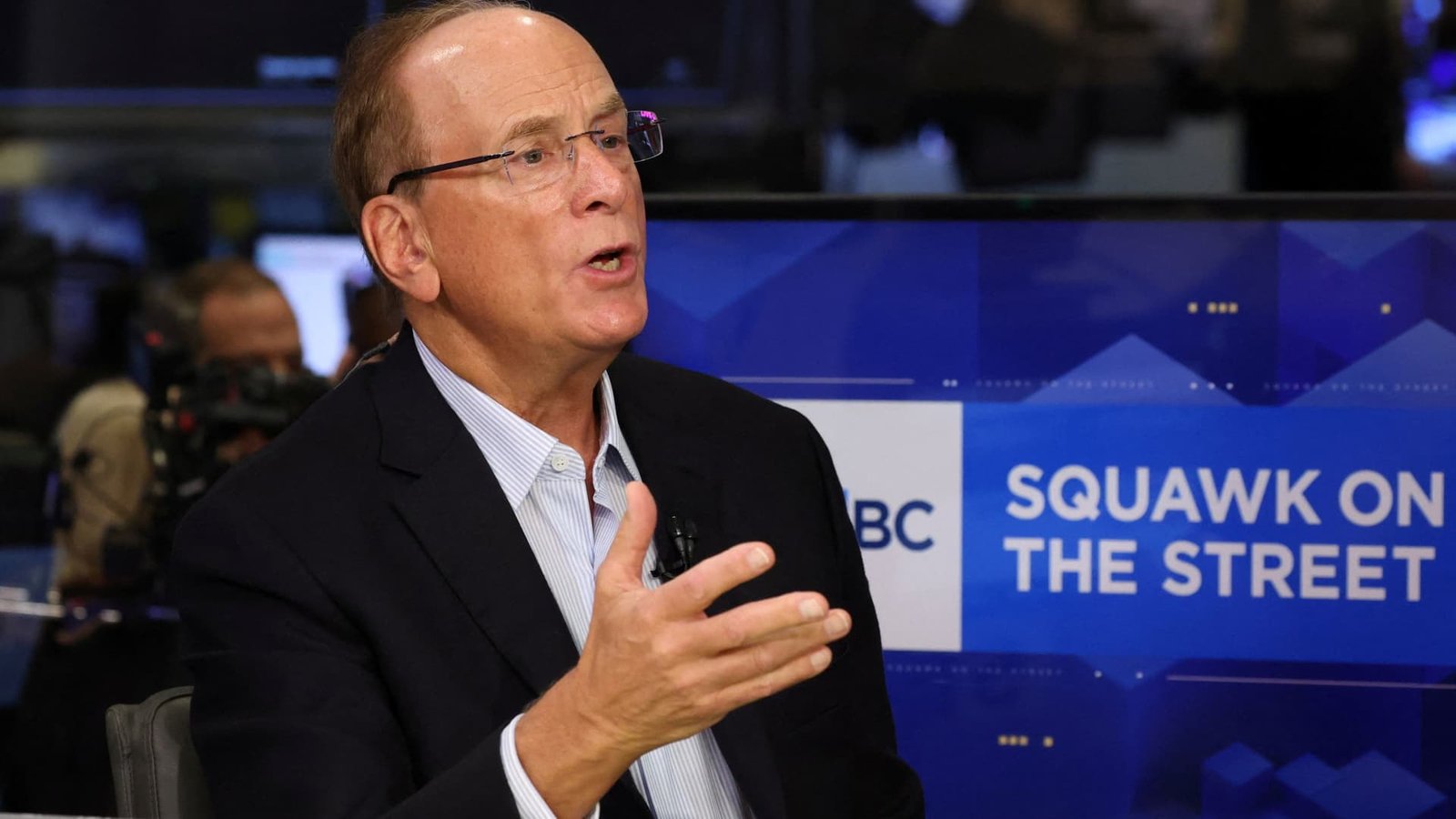
Larry Fink, Chairman and CEO of BlackRock, speaks during an interview with CNBC on the floor at the New York Stock Exchange (NYSE) in New York City, U.S., Jan. 15, 2026.

Brendan McDermid | Reuters

BlackRock CEO Larry Fink urged investors to resist the temptation to time markets, arguing that staying invested through periods of turmoil has historically delivered far stronger returns.

“Over time, staying invested has mattered far more than getting the timing right,” Fink wrote in his annual chairman’s letter released Monday. “Some of the market’s strongest days came amid the most unsettling headlines.”

He pointed to the past two decades as a stark example: every dollar invested in the S&P 500 grew more than eightfold. But investors who missed just the 10 best days over that stretch would have earned less than half as much.

The warning from the billionaire comes as markets are increasingly driven by rapid shifts in sentiment tied to geopolitics, inflation and technological disruption. Stocks rallied sharply Monday after President Donald Trump said the U.S. and Iran have held talks and that he was halting strikes on Iranian energy infrastructure.

“The danger is that we focus so much on the noise that we forget what actually matters,” Fink wrote. “The forces behind today’s headlines have been building for a long time. The old model of global capitalism is fracturing. Countries are spending enormous sums to become self-reliant — in energy, in defense, in technology.”

BlackRock is the world’s largest asset manager with a $14 trillion in assets under management at the end of 2025.

Fink also warned that the rapid rise of artificial intelligence could amplify inequality, enriching those who already own assets while leaving others further behind.

“The massive wealth created over the past several generations flowed mostly to people who already owned financial assets. And now AI threatens to repeat that pattern at an even larger scale,” he said.

Companies tied to AI have driven a significant share of recent equity market gains, concentrating returns among a relatively small group of firms and their shareholders.

Choose CNBC as your preferred source on Google and never miss a moment from the most trusted name in business news.


Source link

Gap (GAP) Q4 2025 earnings


Pedestrians in the snow at Times Square during a winter storm in New York, US, on Sunday, Feb. 22, 2026.

Bloomberg | Bloomberg | Getty Images

Historic winter storms and subsequent store closures weighed on Gap’s performance during its holiday quarter and contributed to worse-than-expected results at its portfolio of brands, the retailer said Thursday. 

Cold weather, snow and ice throughout much of the U.S. in January led to about 800 temporary store closures at the storms’ peak, contributing to a miss on comparable sales for Old Navy and mixed companywide results, the retailer said. 

“Old Navy and all the brands were actually trending better heading into that weather disruption,” said finance chief Katrina O’Connell. “The good news is the trends recovered immediately after those storms passed.” 

Across the business, which includes Old Navy, Banana Republic, Athleta and Gap’s namesake banner, the retailer reported mixed fiscal fourth quarter results – missing expectations on the bottom line and meeting consensus on revenue. 

Here’s how the retailer did compared with what Wall Street was anticipating, based on a survey of analysts by LSEG:

  • Earnings per share: 45 cents vs. 46 cents expected
  • Revenue: $4.24 billion vs. $4.24 billion expected

Gap’s stock fell as much as 9% in extended trading Thursday.

The company’s reported net income for the three-month period that ended Jan. 31 was $171 million, or 45 cents per share, compared with $206 million, or 54 cents per share, a year earlier. During the quarter, Gap’s gross margin was weighed down by tariffs and fell to 38.1%, slightly worse than analysts expected, according to StreetAccount. 

Sales rose to $4.24 billion, up about 2% compared to $4.15 billion a year earlier. 

Gap’s guidance was largely in line with expectations, but failed to exceed consensus. For the current quarter, it’s expecting revenue to rise between 1% and 2%, compared to expectations of 2%, according to LSEG. 

For the full year, the company is expecting sales to grow between 2% and 3%, in line with expectations of 2.5% growth, according to LSEG. Given a $313 million positive legal settlement Gap saw during the current quarter, it issued an adjusted full-year earnings per share outlook. The company said its expecting adjusted earnings per share to be between $2.20 and $2.35, compared to expectations of $2.32, according to LSEG. 

Gap did not factor recent changes to tariffs into its outlook because the company believes it’s “premature to plan for a change” as the situation continues to evolve, said O’Connell. Given how much of a hit Gap took from President Donald Trump’s global tariffs, which were struck down by the U.S. Supreme Court last month, Gap could issue stronger guidance in the coming quarter because the newly enacted 15% tariff is slightly below the previous rates for many countries.

“If the [current] Section 122 tariffs were to stay in place for the year or expire in July, it should lead to a more favorable outcome versus the outlook we provided today,” said O’Connell. “If 15% were the rate that would stay in place for the balance of the year, that rate is slightly below the current IEEPA rates that are contemplated in our plans, so that could give us a modest benefit to operating income if that scenario were to play out.” 

Gap’s choppy results come just over two years into CEO Richard Dickson’s turnaround plan and analysts begin to expect more from the apparel giant. Now that the company has improved profitability, returned to growth and amassed a staggering $3 billion cash pile, Dickson said he’s ready to turn to the next phase of the plan, which is about “building momentum.” 

“Our primary focus is going to be on growing our core apparel business, and we’re going to do this through continuous improvement,” said Dickson. “This has all been driven by disciplined execution, which we need to continue to do with better product, better marketing and better storytelling and that’s not easy, but we’re proving that that muscle is getting stronger and stronger now.” 

In the meantime, Gap is also turning its sights on growth opportunities for the company, including its expansion into beauty and accessories and its fashion and entertainment platform through the recent appointment of a chief entertainment officer. He said the ventures will begin to really scale next year. 

Here’s a closer look at how each brand performed: 

Old Navy

Gap’s largest and most important brand saw sales rise 3% to $2.3 billion, with comparable sales also up 3%, well below analyst consensus of 4.3%, according to StreetAccount. Despite the miss, Gap said Old Navy’s “price value equation is resonating with consumers” and it’s continuing to win over shoppers across a wide range of income levels. 

Gap

The brightest spot of Gap’s quarter came from its namesake banner, which saw sales rise 8% to $1.1 billion with comparable sales up 7%, far ahead of expectations of 4.6%, according to StreetAccount. Under Dickson, the brand has worked to regain its cultural relevance and is winning over a wide range of generations, including younger, Gen Z shoppers. 

Banana Republic

The safari-chic workwear brand posted its third straight quarter of positive comparable sales, which were up 4%, beating expectations of 2.5%. Sales rose 1% to $549 million, reflecting progress in both marketing and product assortment. “Men’s just continues to build momentum. Key items like the traveler pant, our cashmere program, really fantastic outerwear that’s been driving the performance, particularly in the quarter,” said Dickson. “Women’s performance is becoming much more consistent. We’ve had strength in denim skirts and sweaters and as we enter 2026, Banana is really starting to find its momentum.”

Athleta 

The athleisure brand saw another quarter of sagging sales, with revenue down 11% to $354 million and comparable sales down 10%. In some ways, the drop reflects an overall sluggish athletic apparel market, but the company has also had a number of strategic missteps, including targeting the wrong customer and offering products that failed to land. Under the brand’s new CEO, Dickson said Athleta has been working on revamping the assortment, bringing back customer favorites and dialing up innovation. 

Choose CNBC as your preferred source on Google and never miss a moment from the most trusted name in business news.


Source link

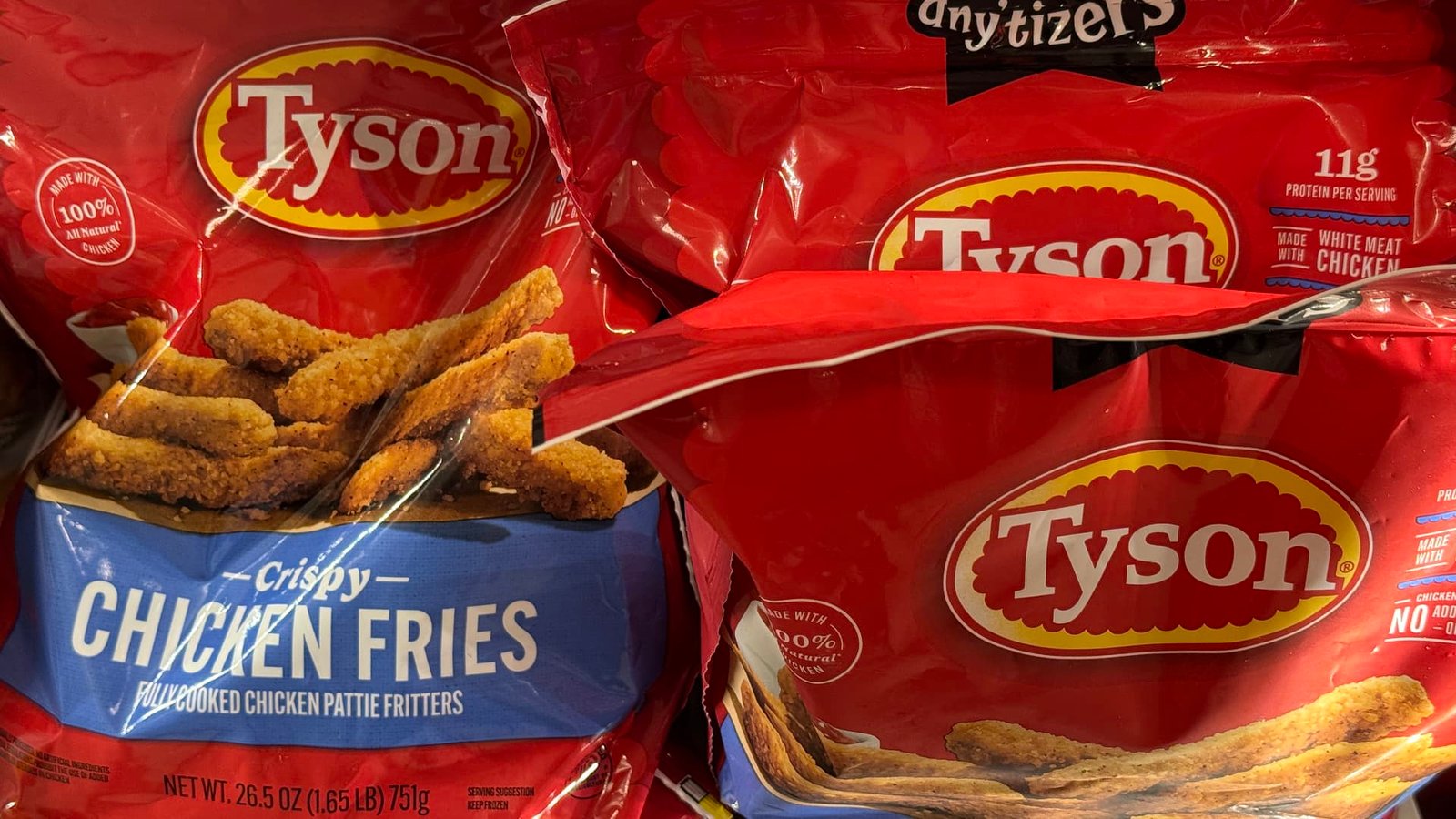
Growing demand for meat will boost this stock, Mizuho says


Source link

2025-26 Men’s March Madness Odds: Arizona Favored; Michigan Dips


And just like that, we’re three rounds down.

Here’s a look at the odds for the men’s NCAA Tournament winner at DraftKings Sportsbook as of March 28.

This page may contain affiliate links to legal sports betting partners. If you sign up or place a wager, FOX Sports may be compensated. Read more about Sports Betting on FOX Sports.

2025-26 Men’s NCAA Tournament winner 

Arizona: +245 (bet $10 to win $34.50 total)
Duke: +255 (bet $10 to win $35.50 total)
Michigan: +300 (bet $10 to win $40 total)
Illinois: +750 (bet $10 to win $85 total)
Purdue: +1300 (bet $10 to win $140 total)
UConn: +1900 (bet $10 to win $200 total)
Tennessee: +3000 (bet $10 to win $310 total)
Iowa: +5500 (bet $10 to win $560 total)

Duke opened as the favorite entering the Tournament, but after a shaky win over 16-seed Siena in the first round, the Blue Devils dropped to third. They now sit second heading into the Elite Eight. In that first-round game, Duke trailed by 11 at half before outscoring Siena by 17 in the second half to secure a 71-65 win. 

Duke then went on to beat 9-seed TCU in the second round, 81-58, and then earned a hardfought win over St. John’s in the Sweet 16, 80-75. The Blue Devils trailed by as many as 10 in the second half of that one.

Once the second round concluded, Arizona became the new favorite. It put a beatdown on 16-seed LIU in the first round, winning by 34. The Wildcats then took down 9-seed Utah State in the Round of 32, 78-66, and roasted Arkansas in the Sweet 16, 109-88.

Lastly, Michigan is third on the board. It earned a 21-point win over 16-seed Howard in the first round and then a 95-72 win over 9-seed Saint Louis in the second round.

In the Sweet 16, Michigan beat Alabama 90-77.


Source link