“I couldn’t believe it, my beloved Hull City were up against Georgie Best, Bobby Charlton and Denis Law. That’s like having Messi, Ronaldo and Mbappe in the same team,” Kelly recalled on the BBC’s Sporting Witness programme.
Former Hull City player Frankie Banks said: “It was a massive game, playing against Manchester United, who two years earlier had won the European Cup.
“The atmosphere was electrifying.
“The Man United players were our heroes. On paper we didn’t stand a chance. We wanted to win, we wanted to prove to everybody that although they were the best side probably in the world we could go out and give them a game.”
And that is exactly what they did, taking the lead on 11 minutes through Chris Chilton before Law pulled one back for United in the 78th minute to send the game into extra time. As the clocked ticked down on the additional half-hour, players realised they were about to be part of something historic.
“[Hull player-manager] Terry Neill obviously asked for volunteers and some of the lads were reluctant to step up and take the penalties and some were brave enough to step up and say ‘I’ll take one, I’ll take one and I’ll take one’,” said Banks, who was not on the team sheet that day but was at the game.
“Nobody wants to be the one that misses.”
And, in particular, no-one wants to be the first player ever to miss in a shootout.
However, Best was happy to go down as the first player to score, sending his right-footed shot low into the left corner.
For Hull City, Neill became the first player-manager to score in a shootout, helping keep the score level at 3-3.
“It was still anybody’s game and the noise was deafening,” said Banks.
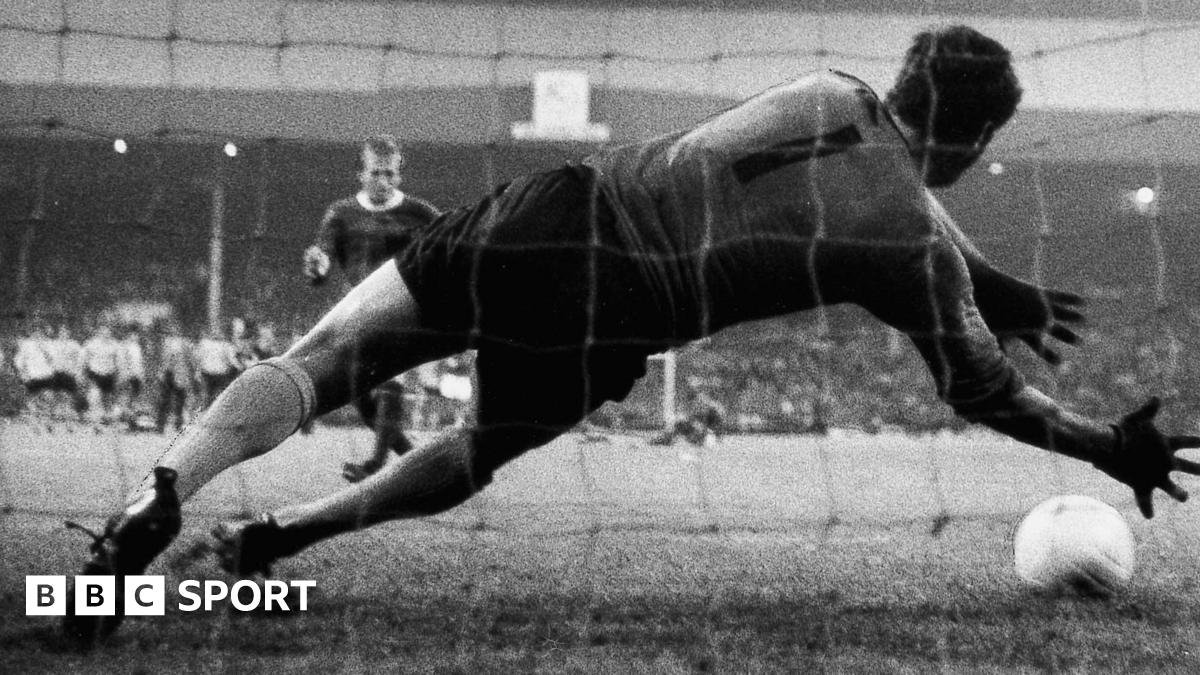
But then, in a moment that countless big-name players to come would experience through the decades, Law saw his low shot saved by a diving Ian McKechnie.
“For ever and ever, Law will go down as the first man to miss in a penalty shootout and McKechnie will go down as the first goalkeeper to save a penalty in a penalty shootout,” said Banks.
Ken Wagstaff then missed for Hull and so when Willie Morgan scored for United, Hull knew they had to convert their final kick.
And that was when McKechnie became the first keeper to take a penalty in a shootout.
“Please, not him,” Kelly remembers thinking. “I couldn’t believe it, my mum couldn’t believe it, even Alex Stepney the Man United keeper couldn’t believe it and actually asked him what he was doing up there. I had my head in my hands!”
McKechnie stepped up and blasted a powerful strike… against the upper side of the crossbar. And with that, he became the first keeper to miss a penalty in a shootout.
“I still maintain that Ian McKechnie was the right choice – he had a sweet left foot – and he had the guts to do it. I’d have put money on him to score,” said Banks.
“Missing that penalty stayed with Ian for the rest of his life.”
When prestige hair care brand Olaplex first debuted on the Nasdaq in late 2021, it surpassed pricing predictions and gained momentum fast.
The company opened at $25 per share, an increase from its initial public offering pricing estimates. It was part of a broader group of retailers that went public that year amid an IPO boom. Olaplex hit its all-time high just a few months after its public debut, reaching a price of $29.41 on Jan. 3, 2022.
But that run didn’t last long.
Since its IPO, Olaplex’s stock performance has plunged drastically, losing nearly 95% of its value. The S&P 500, meanwhile, has gained more than 50% over the same period. Now, the company is hoping to turn its performance around.
“We are encouraged by the momentum we are seeing as we work to build a business that lives up to our breakthrough science, and we look forward to the journey ahead,” CEO Amanda Baldwin told CNBC in an exclusive statement.
Olaplex declined to comment to CNBC beyond that statement.
The company has a range of products, sold directly to consumers and to professional salons, that use a bond-building technology to strengthen and restore hair.
Its stock began sinking due to weakened demand and regulatory challenges in 2022, but some of Olaplex’s main issues were borne out of an early 2023 lawsuit filed against the company that accused the brand of using harmful ingredients. It involved nearly 30 women who alleged that the products caused hair loss and hair damage, citing an ingredient called lilial.
The company aggressively denied those claims and said it had removed the lilial ingredient from all of its products, but consumers on social media continued to attack the brand, its formulations and the alleged side effects.
Though the case was dismissed later that year, the allegations left lasting damage on the brand’s reputation. Over the course of that year, its stock sank more than 50% – and it never recovered. Shares of Olaplex are now trading at less than $1.50, with a market cap of roughly $1 billion.
In fiscal year 2023, Olaplex said its net sales decreased 47.8% in the U.S. compared with the previous year, while its net income sank 74.8%.
In the meantime, the hair care industry added new players that fought for Olaplex’s falling market share. Companies like K18, Ouai and Redken have crowded the playing field, gaining popularity while Olaplex battled social media backlash.
In late 2023, Olaplex recruited Baldwin, the former CEO of beauty brand Supergoop, to helm the company and turn around its brand strategy.
At the time, Baldwin said she saw “tremendous opportunity” to help the brand by deepening engagement with its customer base, innovating new products and sharpening its press strategy.
“Olaplex stands apart as a category creator redefining what is possible through the combination of beauty and science,” Baldwin said in a statement in late 2023.
Late last month, the company launched a new product, a pre-shampoo treatment intended to revitalize hair that marked the company’s next foray into advancing its bond-building technology.
In its fourth-quarter earnings report last week, Olaplex reported a 4.3% increase in net sales compared with the fourth quarter of 2024, to $105.1 million. But for the full 2025 fiscal year, net sales increased just 0.1%. Shares of the company sank more than 20% after the report.
Reviving the brand
Olaplex didn’t always have so many challenges.
Celebrity hair stylist Tracey Cunningham has been with the brand since before it officially launched, first connecting with Olaplex founder Dean Christal in 2013 to begin testing products.
Cunningham, who specializes in hair coloring, said she began with testing the product on one red-haired client. By the end of the day, her opinion was clear.
“I called Dean Christal at the end of the day, and I said, ‘Dean, I just want to tell you something — you just gave hair colorists super powers. You are going to change the game with hair color,'” she said.
Cunningham began using Olaplex on practically all of her customers at her Los Angeles salon, finding that it strengthened the hair and held color well. Over the course of the evolution of the brand, she said she’s seen its technology and formula improve.
Still, not all consumers have had the same experience with the brand, and it remains unclear whether Olaplex will be able to bounce back from its fall from grace.
Analysts from JPMorgan Chase aren’t sure that Olaplex is reaching an inflection point. In a January note, the analysts wrote that they’re holding a bearish outlook for the brand.
“We believe the company will face a challenging few quarters ahead working off a significantly lower normalized base with sales performance in FY25,” they wrote. “The increased competition, generally stressed consumers and a challenging operating backdrop will likely remain significant headwinds over the next several months.”
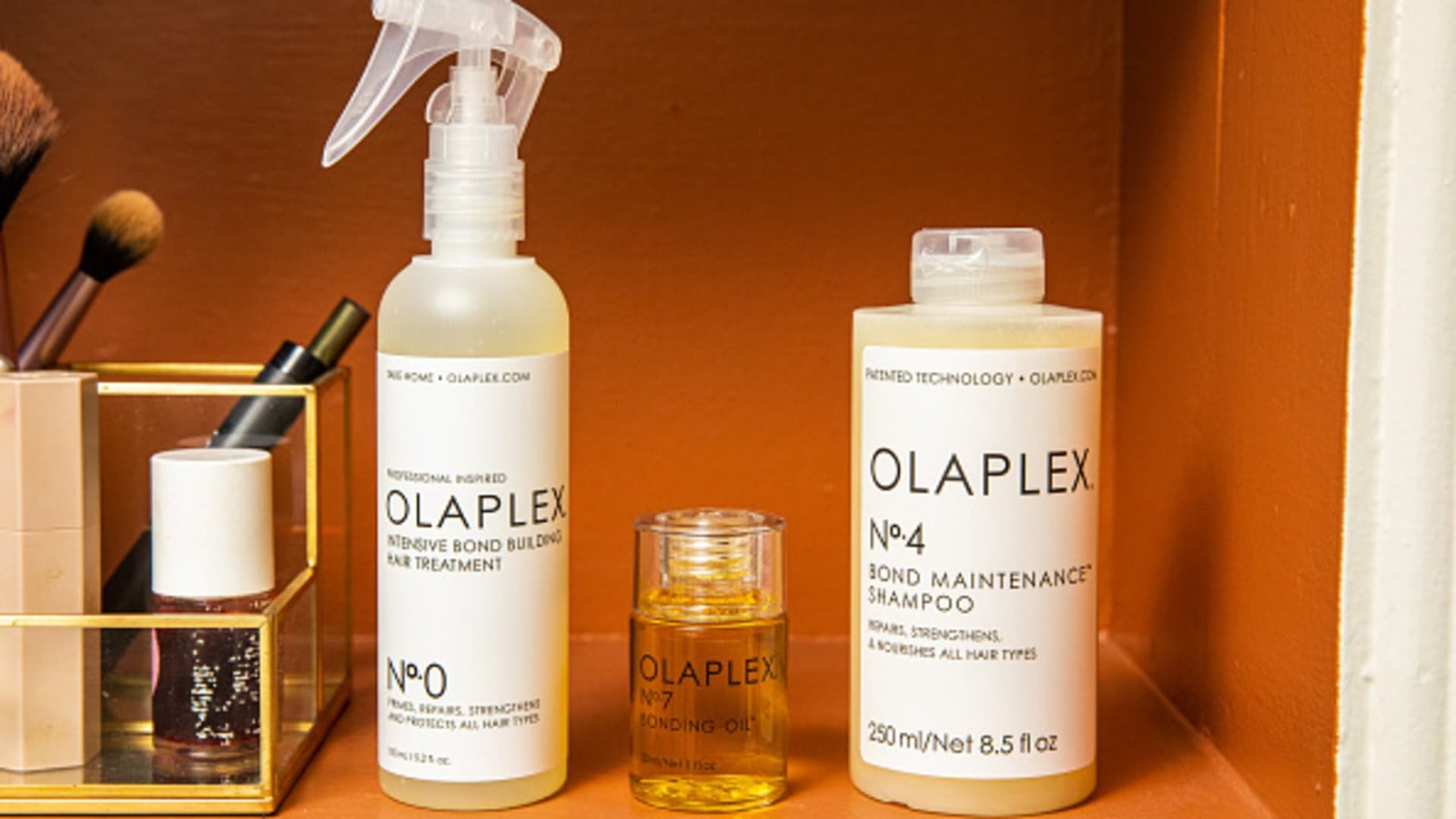
A bottle of Olaplex N.4 Bond Maintenance Shampoo arranged in Denver, Colorado, US, on Thursday, Dec. 8, 2022.
David Williams | Bloomberg | Getty Images
But Olaplex is singing a different tune.
On a third-quarter earnings call in November, Baldwin said research conducted when she first joined the company indicated that the brand was seen by consumers as “effective, yet cold and clinical.”
“According to the latest brand health tracker, which we fielded at the end of the quarter versus a baseline taken before we relaunched the brand, Olaplex is now perceived as more approachable and alluring while retaining its core identity as a scientific and iconic brand,” she said.
Susan Anderson, an analyst at Canaccord Genuity Global Capital Markets who has covered Olaplex for nearly all of its public history, said stabilizing sales, product innovation and distance from the lawsuit fallout are showing encouraging signs for the company’s progress.
“The negatives are just getting much less,” Anderson told CNBC.
She noted that the company’s challenges have been compounded by negative perception and increasing competitors, but she believes customers have largely “moved beyond” the hair loss allegations.
And hair and scalp health continues to be a buzzy category within hair care, she added.
“It’s one of the hotter areas of beauty,” Anderson said. “We don’t really see that going away anytime soon, and I do think it presents opportunities for Olaplex to continue to roll out new products.”
In a December survey, Canaccord found that Olaplex was the top prestige hair brand for consumers ages 18 to 29.
There have been recent green shoots for the company, too. In January, reports that Olaplex attracted a takeover offer from Germany-based company Henkel sent the stock surging more than 30%.
Olaplex declined to respond to the report.
“I’ve always thought this is definitely a takeout candidate, the valuation is attractive here,” Anderson said. “Obviously, it’s still a great brand that has a loyal following, so I guess I was not surprised at all.”
More than a million people have been displaced in Lebanon as the US-Israel war with Iran continues to impact the wider region.
It comes after Israel issued evacuation orders for large parts of the south. Israel intensified its campaign against the Iran-backed armed group Hezbollah in Lebanon after it fired rockets into northern Israel earlier this month. Hezbollah has continued firing rockets at Israel since then.
With shelters overwhelmed, many families are sleeping in their cars or in open areas in makeshift tents, under extreme weather conditions. Among them children and pregnant women.
Most of the families have come from areas where Hezbollah enjoys significant support including Beirut’s southern suburbs known as Dahieh.
One child told the BBC he felt “ashamed” to be sleeping in the streets after his family were forced to flee their home in Beirut.
The BBC’s Middle East Correspondent, Hugo Bachega, spoke to some of the hundreds of displaced families about the reality of living in Lebanon amid the conflict.
Filmed and edited by Neha Sharma
Produced by Samantha Granville, Neha Sharma and Angie Mrad
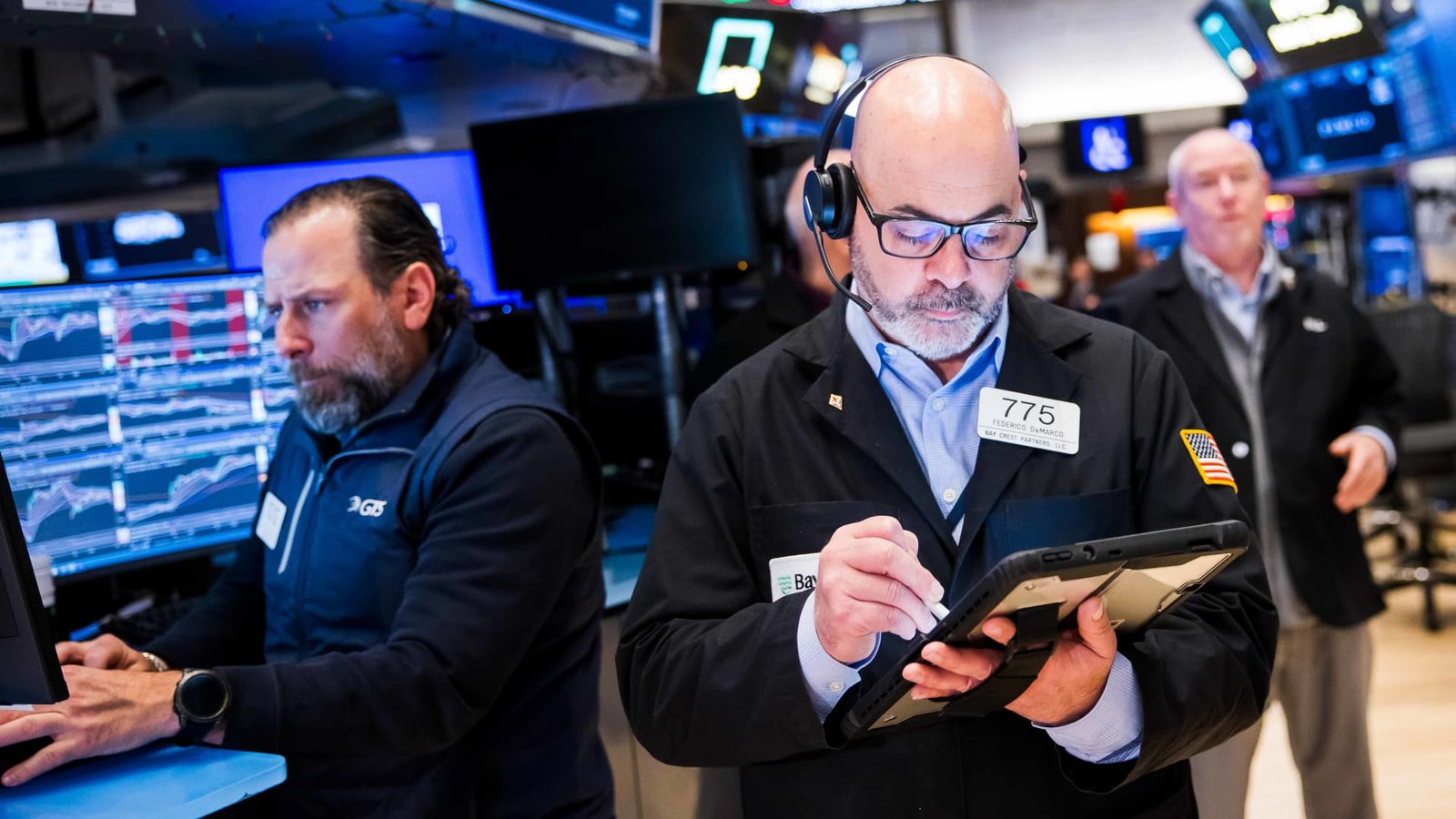
Retail investors have led the buy-the-dip and “TACO” trades over the past year. Lately, though, they’ve lost a lot of steam. Retail flows fell to $3 billion in the week beginning on March 19 and ending March 25, below the 12-month average of $6.8 billion, according to JPMorgan. Overall, stock purchases from retail traders has also fallen sharply, making up just 30% of levels seen before the U.S.-Iran war. For the past year, everyday investors have used market pullback as buying opportunities, especially around proclamations from President Donald Trump. The TACO strategy — shorthand for “Trump Always Chickens Out” — came to prominence in 2025 as President Donald Trump threatened to impose steep tariffs with a slew of imports, only for the commander to back off or impose less-severe duties. Sectors impacted would fall, then investors would swoop in and reap the gains after Trump backed off. Buying dips in general was also a successful approach for retail investors in 2025, which marked one of the strongest years for retail trading activity. However, since the start of the conflict in the Middle East, the stock market has experienced high volatility due to rising oil prices and concerns about inflation. This caused retail traders to pull back. The S & P 500 is down around 5% since the war began in late February. .SPX mountain 2026-03-02 SPX in March “The trend since the start of March has been one of gradually receding retail participation, alongside systematic deleveraging and only modest buying from long-only and hedge fund investors on the other side,” Vanda Research wrote Tuesday. The week began with low optimism from retail investors despite a major market surge. Everyday traders sold $20.6 million of single stocks on Monday, the first day of net selling since November 2023, Vanda data shows. That day, however, the S & P 500 soared 1.2% after Trump signaled the U.S. and Iran discussed an end to the war. To be sure, Iran denied the talks took place. “Monday stood out as particularly weak: despite a broader return to market enthusiasm, retail appeared to capitulate — turning net sellers for the first time in 9 months as they ‘sold the rip,”” wrote JPMorgan strategist Arun Jain. While overall retail trading activity stabilized by Tuesday, single stock trades among retail investors fell to the lowest since December on Wednesday, JPMorgan noted. That said, there were some favorite individual names among the mom-and-pop trading cohort. Retail investors this week favored megacap and “Magnificent Seven” stocks such as Nvidia , Tesla and Microsoft , with consumer staples leading against other sectors, per JPMorgan. Conversely, energy, technology and industrials experienced the most selling. All three major indexes were down on Thursday. The Nasdaq declined by 1.13%, the S & P 500 was down 0.71% and the Dow Jones Industrial Average fell by 0.24%
At the UN on Tuesday, Nikolay Mladenov, High Representative for Gaza on the Board of Peace, laid out what he said was a comprehensive framework to decommission the weapons of Palestinian armed groups – starting with “the most dangerous weapons, rockets, heavy munitions, explosive devices and assault rifles.”
Check out the companies making headlines before the bell: Netgear — The San Jose, Calif.-based maker of WiFi routers and network switches surged 11% after the Federal Communications Commission (FCC) banned all imports of consumer routers made abroad, saying they pose national security risks. Jefferies Financial Group — Shares of the investment bank rallied nearly 7% after The Financial Times, citing people familiar, reported that Japan’s second-largest lender, Sumitomo Mitsui Financial Group, is planning a possible takeover of Jefferies. Apollo Global Management — The asset management giant fell 2% after it was revealed the company will limit withdrawals from its flagship private credit fund to less than half of requests. In a filing with the Securities and Exchange Commission, Apollo said it had redemption requests that totaled to 11.2% of shares outstanding in the first quarter, exceeding the 5% cap per quarter the fund allows. Smithfield Foods — The packaged meats stock jumped 5.6% on better-than-expected results for the fourth quarter. Earnings from continuing operations came in at 83 cents on an adjusted bases, while revenue totaled $4.23 billion Analysts polled by FactSet expected a profit of 68 cents per share on revenue of $4.14 billion Earnings guidance also exceeded estimates, and the company increased its quarterly dividend by 25% to 31 cents per share. FS KKR Capital — Shares fell 2% after Moody’s downgraded the business development company’s bond rating to junk, saying its asset quality challenges has resulted in weaker profitability. The ratings agency lowered it to Ba1 from Baa3. CoreWeave — The AI cloud computing provider saw shares rising more than 2% in premarket after Bank of America reinstated coverage and upgraded the stock to buy from hold. The Wall Street firm said CoreWeave is well positioned to capture share of the AI infrastructure given the sustained demand for AI compute and its proprietary software optimized for AI workloads. Ralph Lauren — The fashion company was upgraded to buy from neutral at Citi, which believes affluent consumers will help Ralph Lauren navigate the current macro volatility. Shares gained 1.5%. Estee Lauder Companies — Shares of Estee Lauder were last slightly higher after the beauty company confirmed that it is in discussions with Puig about a potential merger . KB Home — The homebuilder dropped 2%, even after Citizens initiated coverage of KB Home with a market outperform rating, saying it’s undervalued. — CNBC’s Michelle Fox, Davis Giangiulio, Fred Imbert and Yun Li contributed reporting
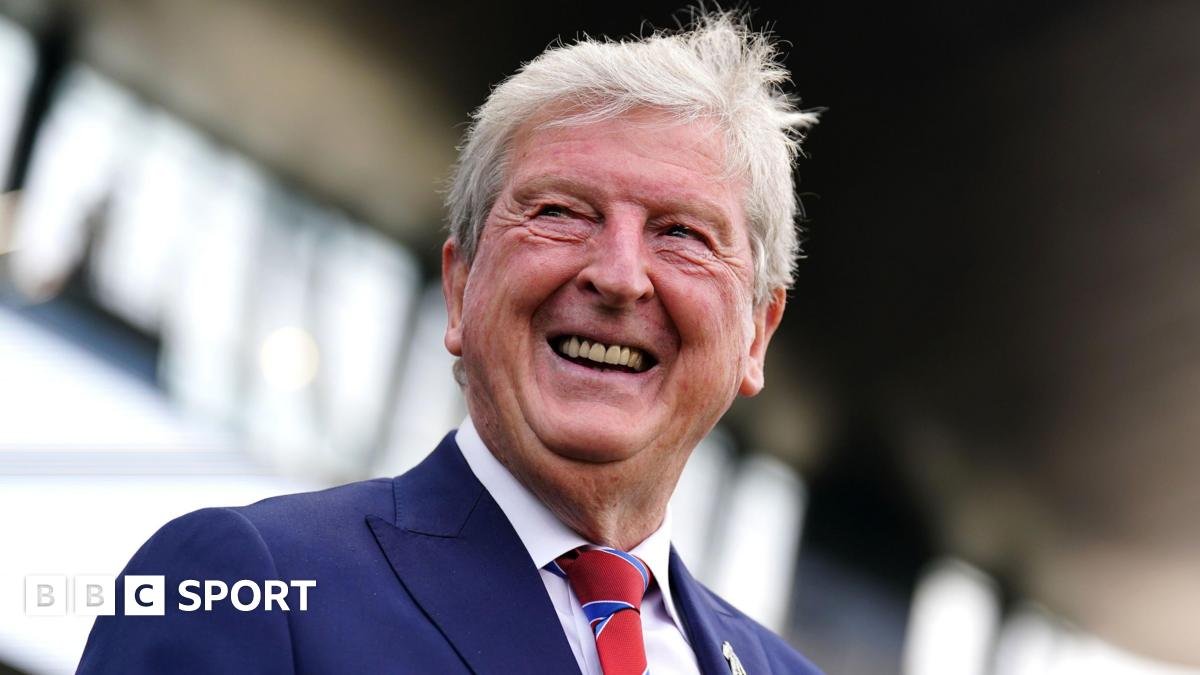
Roy Hodgson’s idea of celebrating 50 years in management is not to sit back reflecting on his career, but instead to return to the dugout at Bristol City.
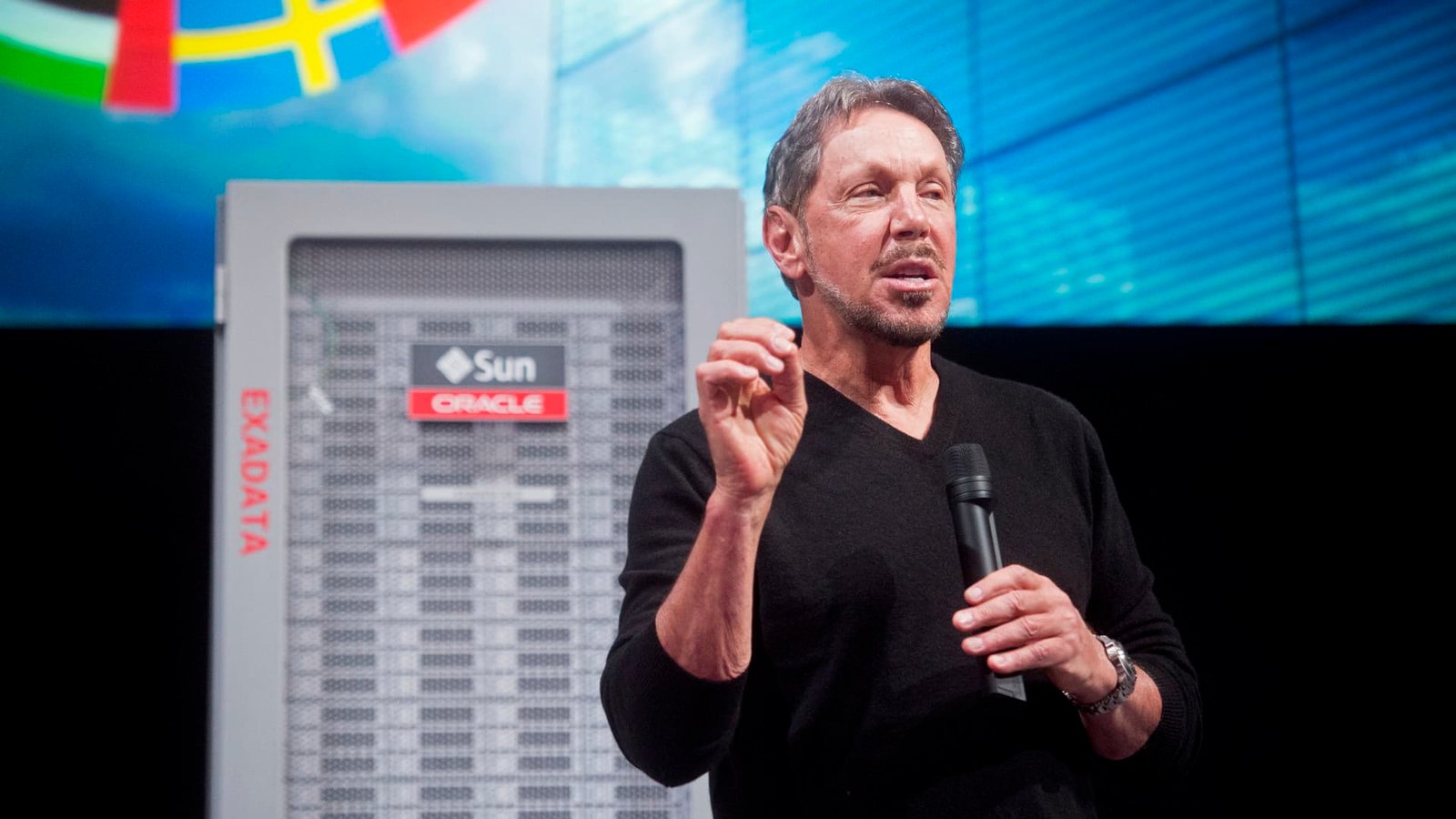
Oracle reports third-quarter earnings on Tuesday, and it will be an unofficial test for the artificial intelligence trade.
Following the announcement of a $50 billion financing plan at the beginning of February that included debt and equity, investors have been eager to understand the pace of dilution for current stockholders.
“The cadence matters,” said Gil Luria, equity analyst at DA Davidson, told CNBC.
Of all the hyperscalers that are leaning into AI cloud computing, Oracle has had to rely the most on financing measures to fund its ambitious data center build-out plans. Its latest debt raise included a $5 billion convertible preferred offering and roughly $25 billion in senior notes at different maturities, according to a credit investor who spoke to CNBC. The deal was oversubscribed, indicating strong demand.
Oracle’s ability to deliver data center assets to OpenAI, its main customer, is of utmost importance to investors.
Late Friday, Bloomberg reported that talks to expand its deal with OpenAI in Abilene, Texas, fell through. A source familiar with the situation told CNBC that Oracle’s deal to deliver eight sites to OpenAI remains on track and on schedule. The source asked not to be named in order to discuss a confidential matter.
OpenAI executive Sachin Katti later posted on X that while it contemplated expanding its presence in Abilene, it would look to other markets across the U.S.
“We considered expanding it further, but ultimately chose to put that additional capacity in other locations,” Katti wrote. “Today we have more than half a dozen sites under development across multiple states, including the site we’re building with Oracle in Wisconsin, where the first steel beams went up just this week.”
Katti is in charge of spearheading OpenAI’s compute infrastructure and previously held the role of AI chief and chief technology officer at Intel.
The market has become hypersensitive to any developments tied to Oracle’s $300 billion deal with OpenAI.
News of the deal initially sent Oracle’s stock up by 35% last September, its biggest intraday gain since 1992. The deal reinforced Oracle’s position as a major contender in the AI cloud computing space, putting it alongside Amazon, Google and Microsoft.
However, in late fall, Oracle surprised the market by raising a significant amount of debt, fueling investor fears that its AI build-out would be costly and put pressure on its balance sheet.
Oracle’s 5-year credit default swaps widened as bond investors were skeptical of the enterprise software company’s ability to hold on to its investment-grade credit rating, currently two notches above junk.
Credit default swaps are like insurance for investors, with buyers paying for protection in case the borrower can’t repay its debt. Bond investors told CNBC that they’ve become a popular way to hedge the risk tied to the AI trade.
Wall Street is looking for a clear read on the return on investment of Oracle’s AI bet when the company reports earnings Tuesday, in addition to any future capital raises.
Analysts have also speculated that the company may undergo consolidation measures to streamline costs.
TD Cowen wrote in a note to clients on Jan. 26 that “our channel checks indicate that Oracle is evaluating multiple paths forward to address financing questions including a 1) a RIF (Reduction in workforce) of 20-30K employees which could drive ~$8-10B of incremental free cash flow.”
Analysts there added that divestitures and securing vendor financing deals could also be in the cards.