
From jammed broadcasts to a blocked website: BBC Russian's 80 years of defiance
For half a century, BBC Russian had to fend off jammers. Now its website is blocked, but millions still read it.
Source link
For half a century, BBC Russian had to fend off jammers. Now its website is blocked, but millions still read it.
Source link
Clay Magouyrk, co-chief executive officer of Oracle Corp., during a media tour of the Stargate AI data center in Abilene, Texas, US, on Tuesday, Sept. 23, 2025.
Kyle Grillot | Bloomberg | Getty Images
Oracle shares rose as much as 10% in extended trading on Tuesday after the software vendor reported quarterly results that surpassed Wall Street projections and boosted its revenue guidance for fiscal 2027.
Oracle sees $1.92 and $1.96 in adjusted earnings per share for the fiscal fourth quarter, with revenue growth between 19% and 20%. LSEG’s consensus included $1.70 per share and 20% revenue growth.
Here’s how the company did in the quarter relative to LSEG consensus:
Oracle’s overall revenue increased 22% year over year in the fiscal third quarter, which ended on Feb. 28, according to a statement. Net income rose to $3.72 billion, or $1.27 a share, from $2.94 billion, or $1.02 a share, in the same quarter a year earlier. Adjusted earnings per share excludes stock-based compensation expense.
The company reported $8.9 billion in total cloud revenue, including infrastructure and software as a service, or SaaS. The number was up 44% and more than the $8.85 billion consensus among analysts surveyed by StreetAccount.
Management pushed up the company’s fiscal 2027 revenue forecast by $1 billion to $90 billion. Analysts polled by LSEG had anticipated $86.6 billion.
Oracle said it generated $4.9 billion in cloud infrastructure revenue, up 84%, a faster pace than the 68% growth in the prior quarter. The company touted cloud business from Air France-KLM, Lockheed Martin, SoftBank Corp. and Microsoft’s Activision Blizzard video game subsidiary.
Shares of Oracle have plummeted over 50% from their September highs, falling along with other software vendors on broader artificial intelligence concerns as well as Wall Street’s specific fears about the company’s hefty debt load that’s funding its AI buildout.
“Thank God we have these coding tools now that allow us to build a comprehensive set of software, agent-based software, to implement, to automate a complete ecosystem like healthcare or financial services,” Larry Ellison, Oracle’s co-founder, technology chief and executive chairman, said on a conference call with analysts. “That’s what we’re doing at Oracle. That’s why we think we’re a disruptor. That’s why we think the SaaS apocalypse applies to others but not to us.”
As of Tuesday’s close, the stock had declined 23% in 2026, while the S&P 500 is down less than 1% in the same period.
Oracle has won large contracts to deliver cloud infrastructure to AI companies such as OpenAI, but has less cash on hand than larger competitors such as Amazon and Microsoft.
Renting out Nvidia graphics chips ekes out a smaller profit margin than selling software licenses, and Oracle reported $13.18 billion in negative free cash flow for the past 12 months.
During the quarter, Oracle announced plans to raise $45 billion to $50 billion in the fiscal year to expand its cloud infrastructure capacity. The company is planning for over 10 gigawatts worth of computing power coming online in the next three years, Clay Magouyrk, its other CEO, said on the call.
The across-the-board beat may help settle a nervous investor base, at least for the time being, as Oracle’s results and backlog point to a continuing surge in demand for AI infrastructure. Remaining performance obligations more than quadrupled to $553 billion from a year earlier — although it was slightly lower than StreetAccount’s $556 billion consensus — and the company said it has the capital to support that growth.
“Most of the increase in RPO in Q3 related to large scale AI contracts where Oracle does not expect to have to raise any incremental funds to support these contracts as most of the equipment needed is either funded upfront via customer prepayments so Oracle can purchase the GPUs, or the customer buys the GPUs and supplies them to Oracle,” the company said in the statement.
In Abilene, Texas, where Oracle and Crusoe are constructing a data center project for OpenAI, “two buildings are completely operational and the rest of the campus is on track,” Oracle said in a Sunday X post. The statement came after Bloomberg reported that Oracle and OpenAI had dropped plans to expand the site, though Oracle said media reports regarding Abilene were incorrect.
At the end of February, OpenAI announced a $110 billion funding round, with backing from Amazon and Nvidia, among others.
“Some of the largest consumers of AI Cloud capacity have recently strengthened their financial positions quite substantially,” Oracle said in its Tuesday statement.
Bloomberg reported last week that Oracle was planning layoffs.
“AI models for generating computer code have become so efficient that we have been restructuring our product development teams into smaller, more agile and productive groups,” Oracle said in the statement. “This new AI Code Generation technology is enabling us to build more software in less time with fewer people. Oracle is now building more SaaS applications for more industries at a lower cost.”
— CNBC’s Ari Levy contributed to this report.
WATCH: Inside Oracle’s risky AI bet

The divisive 41-year-old was among the country’s most prominent influencers.
Source link
More than 70 people were killed during an uprising last year which ousted Oli’s government.
Source link
New York City.
Adam Gray | Reuters
Luxury stocks were among the hardest hit sectors early Tuesday, with European markets heading for another day of losses as the conflict in the Middle East intensified overnight.
Shares of conglomerate LVMH, Gucci-owner Kering, and British outerwear maker Burberry were among the worst performers, with week-to-date losses approaching 10% each. The wider European blue-chip index, Stoxx 600, was down nearly 3% Tuesday, after falling 1.6% on Monday.
The Middle East has been a driver of growth in the sector, which is battling a difficult macroeconomic backdrop, and many formerly best-selling brands are struggling to resonate with consumers.
The region’s strength, however, hasn’t been enough to offset weakness elsewhere, notably in China, and industry giants like LVMH and Kering are still struggling to get sales back on a positive track.
“The Middle East has been one of the few bright spots,” Morningstar analyst Jelena Sokolova told CNBC. “You have one area which was small, but which was very, very vibrant, and it’s being affected now.”
The U.S. and Israel launched widespread attacks on Iran over the weekend that killed the country’s Supreme Leader Ayatollah Ali Khamenei. Iran responded with retaliatory strikes, and the conflict now engulfs the wider Middle East region with no clear endpoint in sight.
U.S. President Donald Trump has said the war could last for four to five weeks, but that it could go on “far longer than that.”
Shares of Richemont, the owner of Cartier, Van Cleef, and Chloé, fell heavily on Monday and Tuesday, with a relatively big exposure to the region.

Luxury stocks fall as the U.S.-Iran conflict escalates.
But even with Middle East revenue exposure on average in the mid- to-high single digits for luxury brands, repercussions could spread if a conflict lasts for weeks or even months.
“If people don’t go back to normal, and we have more issues when it comes to sourcing oil and gas from the Gulf, then the probability of a recession globally could be increasing, and that would definitely dampen discretionary sectors like luxury,” Bernstein analyst Luca Solca told CNBC.
If the war carries on for another six months, during which oil is significantly disrupted, “then this is very bad news,” he added.
Luxury stocks come under pressure during times of heighted geopolitical and economic uncertainty because demand typically requires a “feel-good” backdrop and supportive consumer confidence, analysts say.
“Luxury demand relies on positive consumer confidence and constructive outlook of one’s future prospects, as well as the consumer experience which is often less transactional and more emotional,” RBC Capital Markets analysts wrote in a note to clients on Monday. “Conflict, shock, uncertainty and fear are not helpful in this context and can have a shortterm impact on luxury demand.”
The Damac Heights real estate development, right, in the Dubai Marina in Dubai, United Arab Emirates, on Friday, Feb. 20, 2026.
Bloomberg | Bloomberg | Getty Images
The impact on asset prices overall remains to be seen, but moves so far indicate that a hit, at least in the short term, is to be expected.
There are massive uncertainties about a potential end to the conflict and when that would be, said Sokolova, however, also calling the market reaction “exaggerated” given the relatively small sales portion coming from the region.
Strikes between the U.S., Israel and Iran in the region have forced airlines to cancel thousands of flights. While some airlines said Monday they would resume a “limited number” of flights, aircraft remain largely grounded as the conflict enters its fourth day.
The timing of the strikes also coincides with Ramadan, meaning that post-Ramadan travel may be disrupted if the conflict drags on. Travel from the Middle East after the month-long observance is predominantly to Europe, RBC said.
“Given the timing of the Iran War conflict, and the current grounding of commercial flights, there may be a reluctance for Middle East consumers to travel post Ramadan in 2026 which would likely negatively impact a portion of luxury consumption in Europe.”
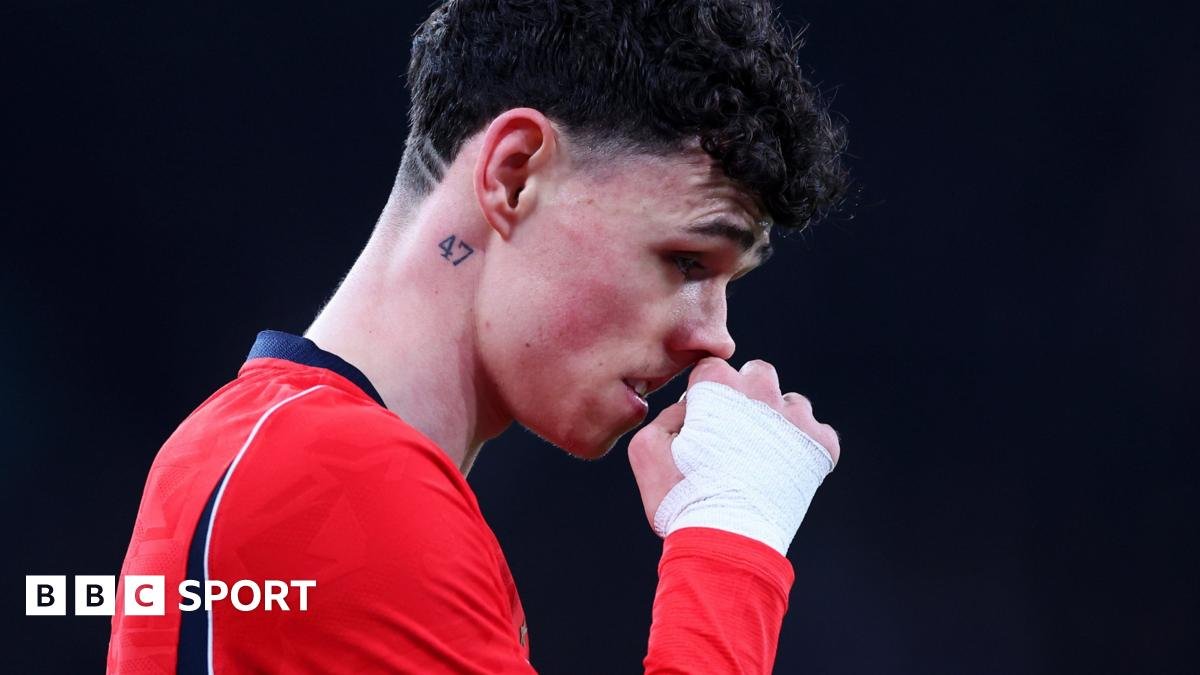
Marcus Rashford was lively against Uruguay, while Newcastle United’s Anthony Gordon currently appears favourite to start in that position at the World Cup, with Arsenal forward Noni Madueke also comfortable on both flanks.
Tuchel has spoken about Foden as an unorthodox deputy for captain Harry Kane as a central striker, but this would surely be too much of a stretch. The World Cup is no place for wild experiments.
It all leaves Foden as one of the players whose place on the plane to the United States is uncertain, wondering if a big opportunity had passed him by against Uruguay.
England’s struggle to impose themselves on Uruguay meant it was a testing night for those wanting to impress.
“There’s no-one out there in a red shirt that looked over to the bench and said, ‘I’m ready. I’m going to America. I want a ticket for that plane’,” said ex-England goalkeeper Paul Robinson on BBC Radio 5 Live.
Manchester United’s Harry Maguire made the most of his recall in defence with a solid display, capped by two brave, crucial blocks in the closing stages as Uruguay pressed for an unlikely winner.
He is now a serious contender for the squad, especially with fitness doubts continuing to surround John Stones. Tuchel may also find Maguire’s experience at major tournaments crucial.
James Trafford had little to do on his debut in goal, while another making his first full appearance, Everton’s James Garner, was tidy and made a good impression. Whether it is enough for a World Cup place is another matter.
Tottenham Hotspur striker Dominic Solanke worked hard in attack as he pressed his claim to be understudy to Kane, but Leeds United’s Calvert-Lewin – whose last appearance was five years ago – will bitterly regret his missed opportunity with the scoreline goalless.
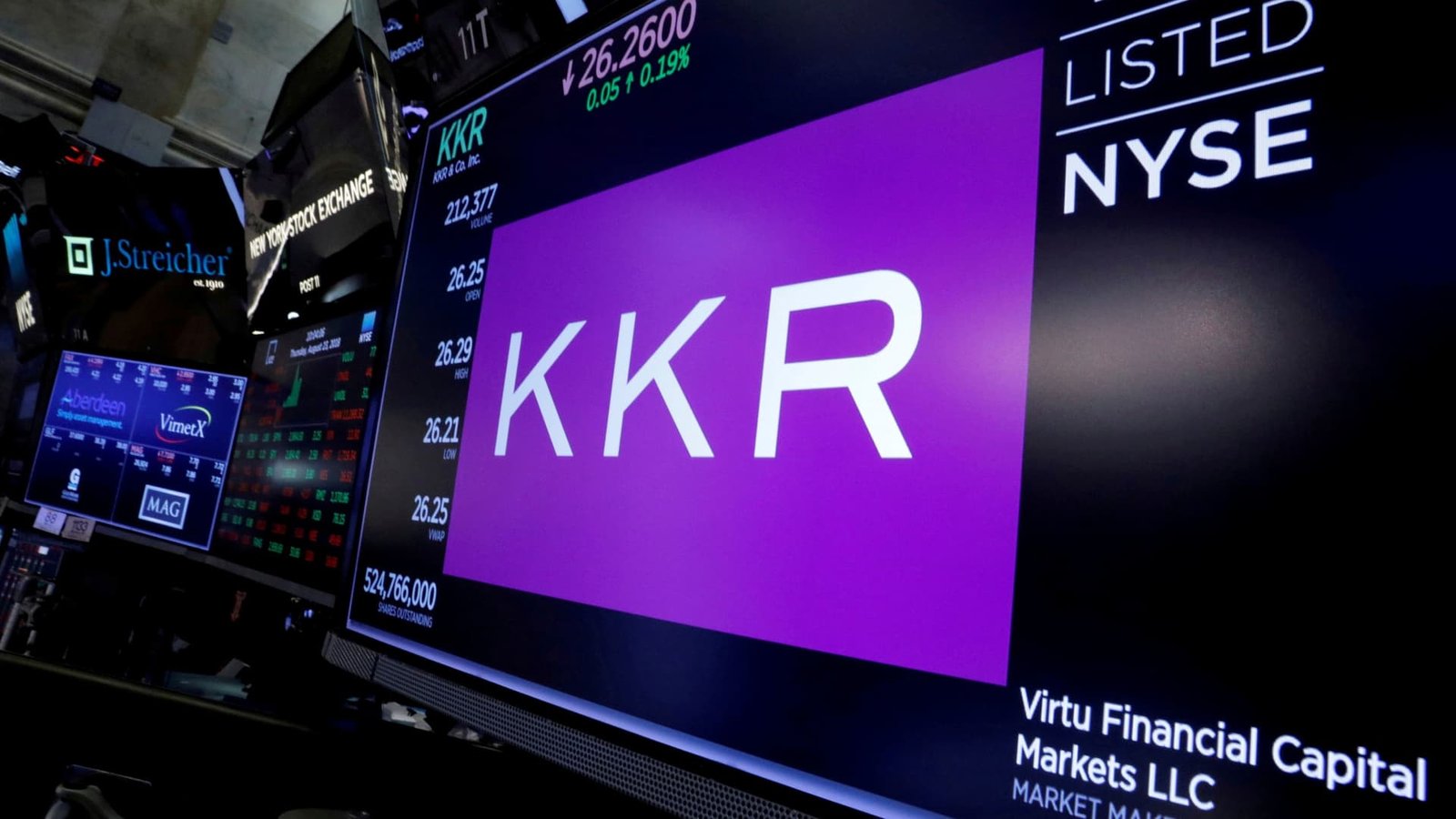
A KKR logo displayed on the floor of the New York Stock Exchange on Aug. 23, 2018.
Brendan McDermid | Reuters
Moody’s Ratings on Monday downgraded a private credit fund run by KKR and Future Standard to junk amid rising bad loans and a string of weak earnings.
The ratings firm lowered the debt ratings of FS KKR Capital Corp by one notch to Ba1 from Baa3 — pushing it into “junk” territory — saying that the fund’s underlying asset quality had worsened more than its peers.
Non-accrual loans, meaning loans that borrowers have stopped making payments on, rose to 5.5% of total investments at the end of 2025, one of the highest rates among rated business development companies, according to the report.
“The downgrade reflects FSK’s continued asset quality challenges, which have resulted in weaker profitability and greater net asset value erosion over time relative to business development company (BDC) peers,” Moody’s said, referring to the fund by its ticker.
Shares of FSK dropped 4% in Tuesday morning trading. They’ve plunged by more than 30% this year.
The move by Moody’s is the latest sign of distress in the private credit world. Retail investors have been rushing to withdraw funds, running into gates amid concerns about upcoming credit losses, especially related to software loans. Asset managers from Blackstone to Blue Owl have had to contend with elevated redemption requests for their private credit funds, a potential turning point for a category that has seen explosive growth in the past decade.
FSK, which lends to private, middle-market U.S. companies, became the second-largest publicly traded BDC when it was formed through a merger of two predecessor funds in 2018.
Funds such as FSK issue debt to help juice returns, so the Moody’s downgrade could increase its borrowing costs and, therefore, lower future returns.
“FSK remains well positioned despite the decision,” a spokesperson for the fund told CNBC in an email. “It has a strong, well‑laddered liability structure with no 2026 unsecured maturities and limited near‑term maturities, enabling us to continue supporting our portfolio companies and navigate the current market environment.”
Moody’s also flagged other aspects of the fund that could expose it to greater losses over time, including higher leverage, a higher proportion of payment-in-kind loans, and a lower percentage of first-lien loans than peers.
FSK posted a net loss of $114 million in the fourth quarter and earned just $11 million in net income for all of 2025, according to Moody’s.
The fund’s largest single category of loans is for software and related services, which made up 16.4% of exposure at year-end.
The analysts identified a Precision Strike Missile (PrSM) in footage of the strike on the southern town of Lamerd.
Source link
German Rheinmetall MAN tactical military transport vehicles parked in the Edvard Peperko military barracks.
Luka Dakskobler | Lightrocket | Getty Images
German arms maker Rheinmetall said it sees this year’s sales growing by as much as 45% as it reported 2025 revenue growing 29% year-over-year, missing expectations.
It also said it was in a “prime position to help the US replenish their missile stockpiles” used in the war in Iran, such as supplying critical solid rocket motors.
In a presentation to accompany earnings on Wednesday, the company said “higher spend for missile restocking and air defence” was “inevitable.”
It comes as defense companies are expected to be on the receiving end of governments’ hiked spending on military capabilities, amid increased demand due to the wars in Ukraine and Iran. Rheinmetall expects its order backlog to more than double to 135 billion euros this year.
“The tense security situation underpins the promising position of the Group, whose products are playing an increasingly important role for the increase in defence capabilities in Germany and its partner countries,” Rheinmetall said.
The defense giant, Germany’s seventh-largest company by market value, issued its 2026 outlook, which it had hinted at during a preclose call in early February.
Group sales are expected to grow by between 40% and 45% to between 14 billion ($16.26 billion) and 14.5 billion euros. Operating result margin is expected to be around 19%, up from 18.5% in 2025. Jefferies analysts called the guidance “realistic but soft.”
“The world is changing rapidly, and Rheinmetall is well prepared,” said CEO Armin Papperger in a statement.
“With our products, we will have a significant share in the increasing equipment spend of the armed forces and deliver what modern armed forces need in the 21st century.”
Shares fell 5.2% in early trading on Wednesday while the pan-European Stoxx 600 index was down 0.7%.
Shares of defense stocks have risen over the past year.
Sales grew by 29% over the full year to 9.94 billion euros ($11.56 billion), missing expectations of 10.53 billion euros, according LSEG estimates.
Earnings before tax and interest came in at 1.68 billion euros, compared with estimates of 1.75 billion euros, while the order backlog reached a record high of 63.8 billion euros, a 36% jump from the previous year.
“As budget approvals resumed toward year‑end and defence spending picked up across Europe – particularly in Germany – we expect delayed programmes to convert into contracts, supporting a rebound in nominations and reinforcing the company’s already elevated backlog,” noted Morningstar analyst Loredana Muharremi ahead of the print.
In February, the company indicated sales for this year would come in at between 13.2 billion and 14.1 billion euros, and EBIT between 2.4 billion and 2.8 billion euros, both more than 10% below expectations. Shares subsequently fell 6.5%.
Barclays analysts in February called the share move following the indicated guidance “a marked over-reaction,” saying that “expectations are high, and shares continue to be very sensitive to any information that comes out.”
Noting some confusion over the like-for-like numbers this year, given recent changes to the business structure, the analysts said that weapon and ammunition growth will remain elevated, and there is scope for its naval business to be resilient, too.
“From a structural perspective we think nothing has really changed here: the backlog growth in 2026 will be material.”
Rheinmetall shares have risen about 540% over the past three years, as a leading provider of land systems and ammunition in Europe.
Gains, however, have moderated over the past year as some investors question whether shares have reached their full value and if growth can be sustained long-term. Coming into Wednesday trading, the stock was up just 3.4% year-to-date.
Rheinmetall and other defense firms like Britain’s Bae Systems and Italy’s Leonardo are viewed as well-placed to capitalize on hiked spending by European governments over the next five years against a backdrop of the Russia-Ukraine war.
Rheinmetall is looking to sell its civilian automotive to focus purely on meeting demand for its defence business. It’s also now active in the naval sector following its acquisition of shipbuilder Naval Vessels Lürssen, which closed in February.
Shares of defense companies, including Rheinmetall, initially spiked after the U.S. and Israel launched attacks on Iran on Feb. 28, killing its Supreme Leader, Ayatollah Ali Khamenei. It raised fears that the attacks would develop into a full-blown war engulfing the entire Middle East region, which would eventually lead to more demand for military equipment.
Gains later pared some gains, and while large European defense stocks are up on average between 5% and 10% since the first strikes, Rheinmetall was largely flat over that period, coming into Wednesday trading.
Smaller country-peer Renk’s CEO Alexander Sagel said earlier this month that the Iran war could drive increasing demand for defense capabilities in the Gulf region.
In November last year, Rheinmetall predicted its sales would quintuple over the next five years, boosted by robust demand for its weapons systems amid geopolitical tensions and the war in Ukraine. The bulk of the estimated 50 billion euros in revenue by 2030 will come from its vehicle systems and weapon and ammunition businesses, the company forecasted. It also sees operating margin expanding to about 20%, up from 15.2% in 2024.
In 2025, the Weapon and Ammunition business grew 27% to 3.53 billion euros. Its largest unit, Vehicle Systems, which makes tanks and military trucks, grew 32% to 4.99 billion euros over the year.
It proposed a dividend of 11.50 euros per share, up from 8.10 euros last year, on the back of the growing sales and profits.