Salesforce issues $25 billion in debt to buy back stock. Should we be concerned?


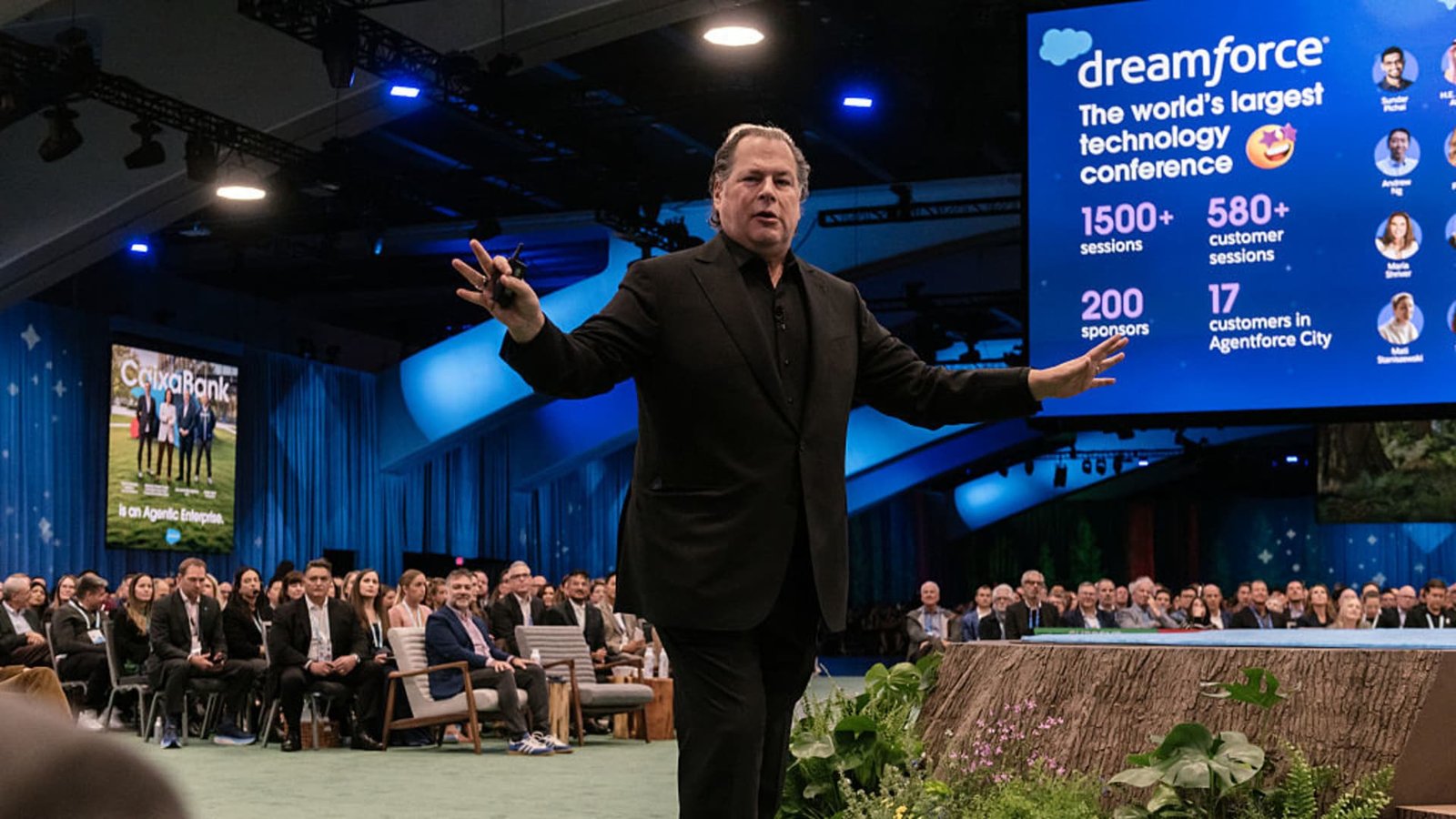
Marc Benioff, chief executive officer of Salesforce Inc., speaks during the 2025 Dreamforce conference in San Francisco, California, US, on Tuesday, Oct. 14, 2025.

Michael Short | Bloomberg | Getty Images

Salesforce announced this week that it executed the first steps in its debt-fueled $25 billion accelerated stock buyback plan. That’s half of the bigger $50 billion repurchase authorization approved in February.

Raising debt to repurchase stock is a move that deserves scrutiny.

After all, equity comes with neither the financial obligations nor the consequences of issuing debt. If a company misses a stock dividend payment, it doesn’t look good, and the stock will get hit. However, there are no legal consequences or claims to be filed. If a company defaults on debt, it will face legal issues and claims from bondholders.

We know why Salesforce wants to repurchase stock — management believes that last month’s brutal sell-off on AI disruption fears has made the share price attractive — because, as CEO Marc Benioff said in Monday’s press release: “We are so confident in the future of Salesforce.” (Salesforce insiders are also buying. Board member and Williams-Sonoma CEO Laura Alber purchased about $500,000 worth of Salesforce stock on Thursday, and David Kirk, also a director and former chief scientist at Nvidia, picked up roughly $500,000 worth of Salesforce stock on Wednesday.)

So, why is Salesforce issuing debt to buy back stock? Part of it may be that Benioff and company want to conserve cash. But mainly, it comes down to the cost of equity versus the cost of debt. CNBC Investing Club Reporter Paulina Likos and I actually touched on this concept briefly in a recent video about discounted cash flow valuation modeling. While the video was more focused on terminal value, we did cover the concept of a discounted rate, or the required rate of return an investor demands for investing in a given security. We noted that individual investors can and should use whatever rate they deem appropriate for the risk they are considering.

‘Shark Tank’ analogy on cost of capital

This stuff can be pretty complicated. In an oversimplified “Shark Tank” analogy, imagine you are starting a business. You need to figure out how to fund it. You can either give the sharks a percentage of your business (equity) or take a bank loan (which comes with the financial obligation to repay the principal plus interest). That decision is predicated on the cost of each — the interest rate on the loan (cost of debt) versus what you think that equity stake can generate (because you’re giving up the equity, this is your “cost of equity”). The ultimate goal, whichever route you go, is to fund your business with the lowest possible overall cost of capital.

For companies on Wall Street, however, the discount rate is often their own “weighted average cost of capital,” or WACC. The WACC is the weighted average of the cost of debt and equity required to fund the company.

Weighted average cost of capital

Breaking it down:

  • V = Total value is equity plus debt
  • E = Market value of equity (E/V is the weight of equity in the capital structure)
  • D = Market value of debt (D/V is the weight of debt in the capital structure)
  • Ce = Cost of equity
  • Cd = Cost of debt
  • T = Corporate tax rate

Don’t worry too much about how to calculate this. The real purpose is to look at what goes into the equation to better understand how corporations think about achieving the most efficient capital structure, meaning the lowest possible WACC. The lower the discount rate — WACC in this case — the higher the present value of future earnings and cash flows. The takeaway: Any increase in the weight of the lesser-priced asset — equity or debt — can reduce WACC. That is, until the point at which investors start to be concerned with the leverage on the balance sheet and begin to express that concern by demanding a higher return on equity, driving the stock lower, and the company’s cost of equity higher.

Cost of debt

So, what’s lower for Salesforce: cost of equity or cost of debt? Figuring the debt part is easy enough because Salesforce told us what yield they are paying on the bonds. That’s what the following slide shows.

Referring back to the earlier WACC equation, the cost of debt is multiplied by one minus the tax rate to reflect that companies get a tax deduction on debt interest payments. So, the actual cost of debt is lower than what is represented on the slide. Don’t worry about how much lower, just know that based on the WACC calculation, the true cost of debt is the yield seen above multiplied by a number less than 1. So, at the highest level, on the notes that mature in 2066, Salesforce has a pre-tax cost of about 6.7% and post tax cost on the debt somewhere below that — maybe closer to about 5.3%, assuming a 22% corporate tax rate.

Cost of equity

Now that we know what the most expensive portion of this debt raise will cost Salesforce, let’s figure out what its cost of equity is. To do this, the capital asset pricing model (CAPM) is used. Here is the calculation:

Breaking it down:

  • Rf = Risk-free rate — an often used proxy is the 10-year Treasury yield
  • β = Beta — a measure of systemic risk, is a stock’s volatility versus the index
  • Rm = Expected market return (Rm Rf is a calculation of market risk premium)

There is an equation for figuring out beta; however, most data providers already have it. We pulled the beta input for Salesforce from FactSet, rather than calculate ourselves. So, with Salesforce’s three-year beta of 1.21, the 10-year Treasury yield of 4.24% (as of this writing), and 8% as an expected market return, which is conservative, Salesforce’s cost of equity is around 9.27%. Since the cost of equity is much higher than the cost of debt, swapping out equity for debt lowers Salesforce’s weighted average cost of capital.

Bottom line

It’s understandable to question Salesforce’s debt-fueled stock buyback because it brings on new financial obligations at a time when the stock is saying the long-term prospects are in trouble due to AI. However, from the perspective of management, which clearly is not concerned about the long-term fundamentals, it’s a smart move to enhance the company’s capital structure by lowering the overall cost of capital. A lower WACC not only helps to increase present value by lowering the discount rate in Wall Street’s financial models, but it can also open up more investment opportunities because the hurdle to generate a positive return is lower.

The move may be rational, but whether it’s smart, only time will tell. Salesforce is trading out balance sheet optionality for a lower share count, which boosts earnings per share. But the strategy also results in a lowered credit rating by S&P Global due to increased leverage on the balance sheet. That means future debt will come at a higher cost.

It all hinges on whether Salesforce can service the debt, and that likely comes down to who is right on the AI debate. If Salesforce actually does get replaced by Claude-like replacements (we don’t think that will be the case but it’s clearly what the market fears), then the debt will get harder to service, investors will grow even more concerned now that the balance sheet has been levered up, and the stock likely declines — resulting in all of this being not only a total waste of money but a financial anchor as well. On the other hand, should management be proven correct and Salesforce does grow through this and actually benefits from AI, then this move will strengthen the company’s capital structure.

While the credit rating ding remains troubling, it can be reversed if all works out, as management will be able to pay back the debt, deleverage the balance sheet, and improve overall financial credibility. The move would also increase the reward should the bulls be proven correct by ensuring that shareholders all own a bit more of the company than they did previously, thanks to the retirement of the shares that this debt will repurchase.

(Jim Cramer’s Charitable Trust is long CRM. See here for a full list of the stocks.)

As a subscriber to the CNBC Investing Club with Jim Cramer, you will receive a trade alert before Jim makes a trade. Jim waits 45 minutes after sending a trade alert before buying or selling a stock in his charitable trust’s portfolio. If Jim has talked about a stock on CNBC TV, he waits 72 hours after issuing the trade alert before executing the trade.

THE ABOVE INVESTING CLUB INFORMATION IS SUBJECT TO OUR TERMS AND CONDITIONS AND PRIVACY POLICY, TOGETHER WITH OUR DISCLAIMER.  NO FIDUCIARY OBLIGATION OR DUTY EXISTS, OR IS CREATED, BY VIRTUE OF YOUR RECEIPT OF ANY INFORMATION PROVIDED IN CONNECTION WITH THE INVESTING CLUB.  NO SPECIFIC OUTCOME OR PROFIT IS GUARANTEED.
Choose CNBC as your preferred source on Google and never miss a moment from the most trusted name in business news.


Source link

Everything to Know For INDYCAR’s Trip to Eclectic Barber Track


Barber Motorsports Park (Leeds, Ala.) — They say a picture is worth a thousand words. 

At Barber Motorsports Park, a picture is worth a thousand double-takes.

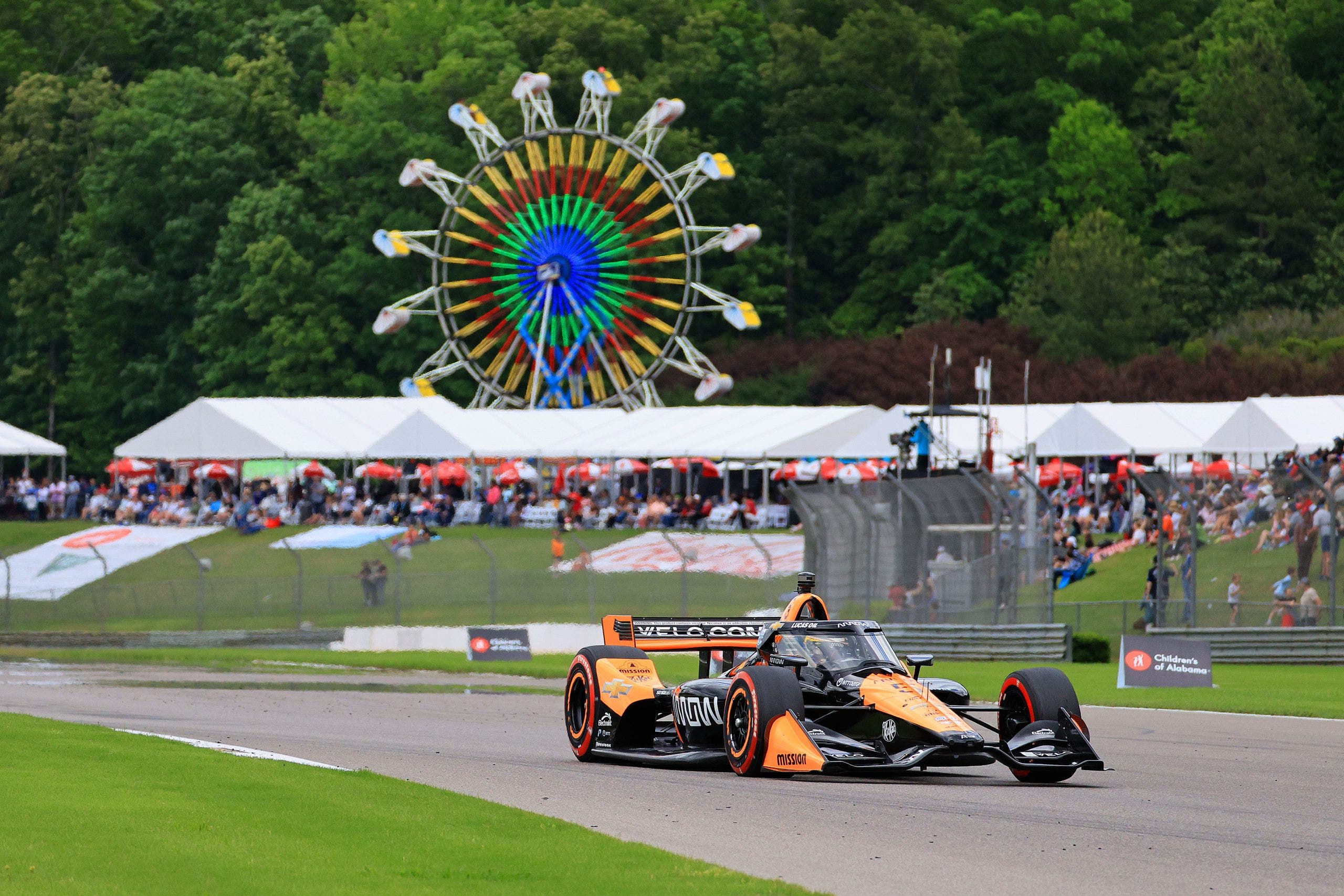
From a big spider statue in one turn to a huge figurine of a lady’s head in a lake to a mannequin hanging from one of the bridges, this 2.3-mile, 17-turn road course is picturesque and eclectic like no other.

The Barber track in Alabama is full of unique sights.

Drivers will try not to pay attention to the artwork around the track. Well, that’s unless the mannequin Georgina falls and gets clipped by one of the cars like it did two years ago. 

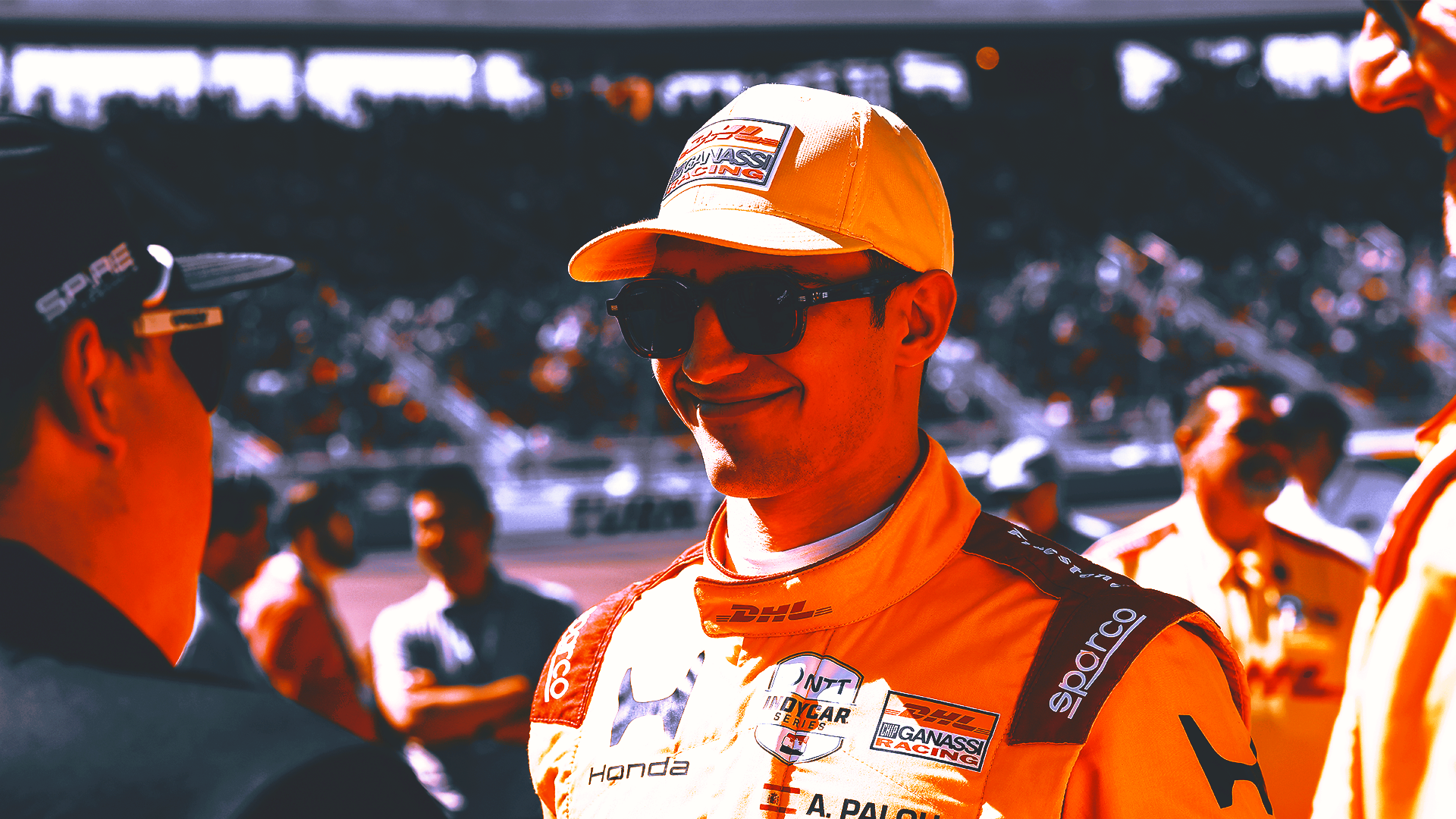
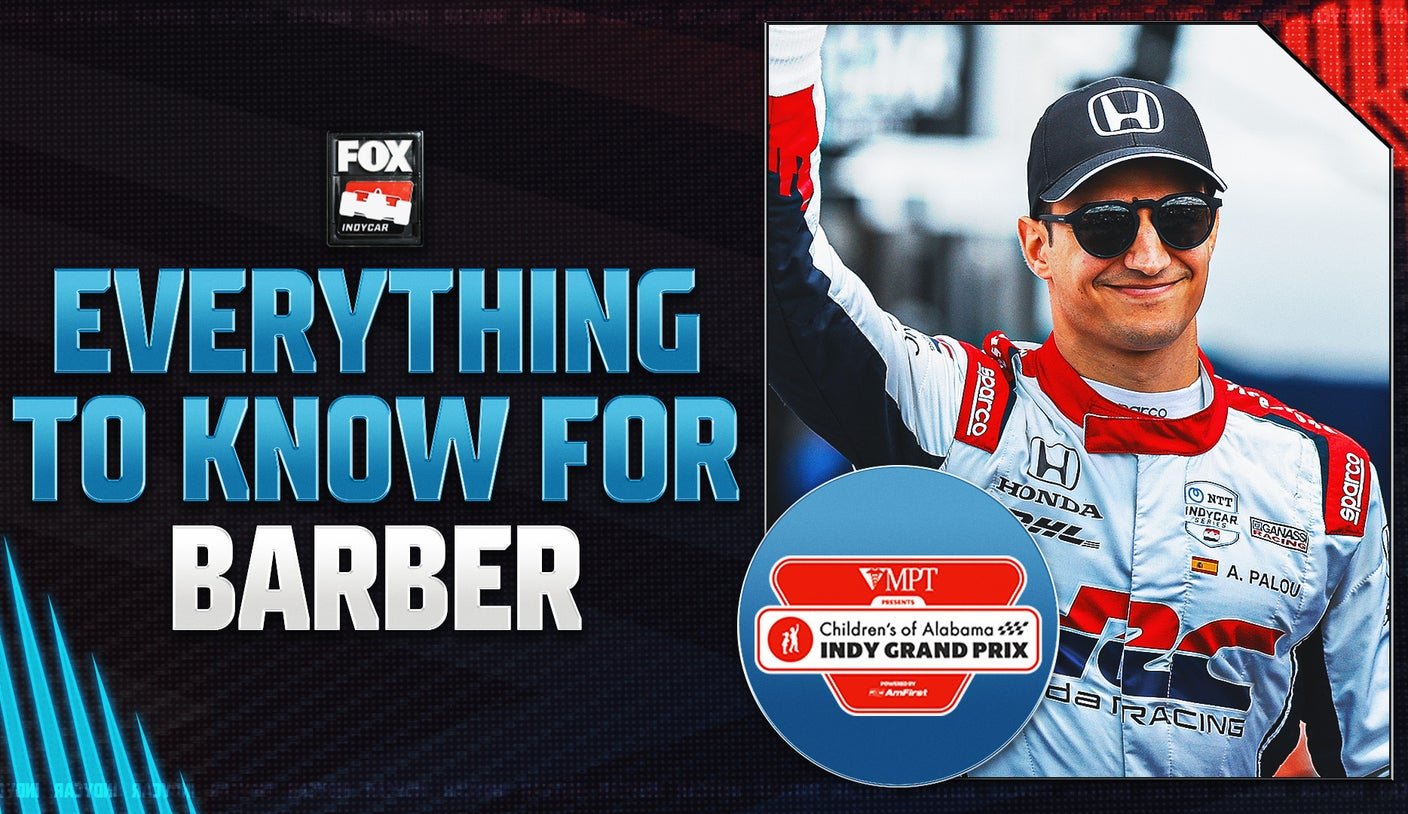
They will likely pay most attention to Alex Palou, who led 81 of the 90 laps last year. The Children’s of Alabama Indy Grand Prix is part of a FOX-FS1 doubleheader of racing with coverage of Barber beginning at 1 p.m. ET on FOX and then the NASCAR race at Martinsville set for 3:30 p.m. ET on FS1. 

Here’s what to know about this race weekend at Barber:

Is Alex Palou the points leader?

No. No he is not for the second race in a row. Kyle Kirkwood, for the first time in his five seasons in the series, leads the standings. Yes, it is only after three races of an 18-race schedule, but he is the leader.

“Hopefully it’s not just for one weekend,” Kirkwood told me and other reporters Friday morning. “It’s a good feeling to be the points leader for the first time ever in an INDYCAR championship. I haven’t led a points championship since Indy Lights in 2021 so it’s a pretty big deal.

“It’s a fun time to be alive in INDYCAR racing. Given that, we’re three races in. It’s not really a big focus right now, but it is a nice feather in my cap to say I had led an INDYCAR championship. And hopefully that trend does continue.”

Prior to coming over to the media, Palou talked to Kirkwood. He said they weren’t talking about points. They were talking about the IMSA race at Sebring last weekend.

“It’s rough,” the three-time defending series champion Palou sarcastically told me and other reporters Friday morning about not being the points leader. “It’s tough.”

Kyle Kirkwood currently leads the field in points.

[INDYCAR INSIGHTS: Rotating Points Leaders Means More INDYCAR Parity]

Can Palou lead 81 laps again?

He can. But much like the way he views his overall dominance from last year, he views a repeat performance as tough.

“Last year was great for the 10 car [of me],” Palou said. “Who knows [if it will be the same]. We will try. I think it changes every year. Two years ago, we’re not like that. Then last year we were. So hopefully [we are].

“It’s a place I love. I’m excited to be back on a road course. Finally, first one of 2026.”

Palou won at Barber in 2025 after leading 81 laps on the day.

Can Andretti Have Clean Pit Stops?

Andretti Global teams had a rough day on pit road at Arlington. The organization did not make changes for Barber.

“Pit stops are not my job, so I just drive the car, hit the marks, and that’s it,” Kirkwood said. “On our car, we were having an issue with the right rear, and we know exactly what was happening.

“We’ve been really good at pit stops at the beginning of the year. Across the board, we’re all faster than we have been. But we just need the consistency now and to tie it all together.” 

Kirkwood doesn’t get into suggesting what they can do better. He just tries to keep his crew motivated.

“When I saw our rear right guy, Adam [Martin] after the race, I just was like: Listen, dude, you’ve been great all season, yes, there’s a couple of hiccups this weekend, but we know how good you are. Don’t be too hard on yourself. We know we’re going to rebound here at Barber, and everything’s going to be fine,” Kirkwood said. 

Who Might Surprise Fans?

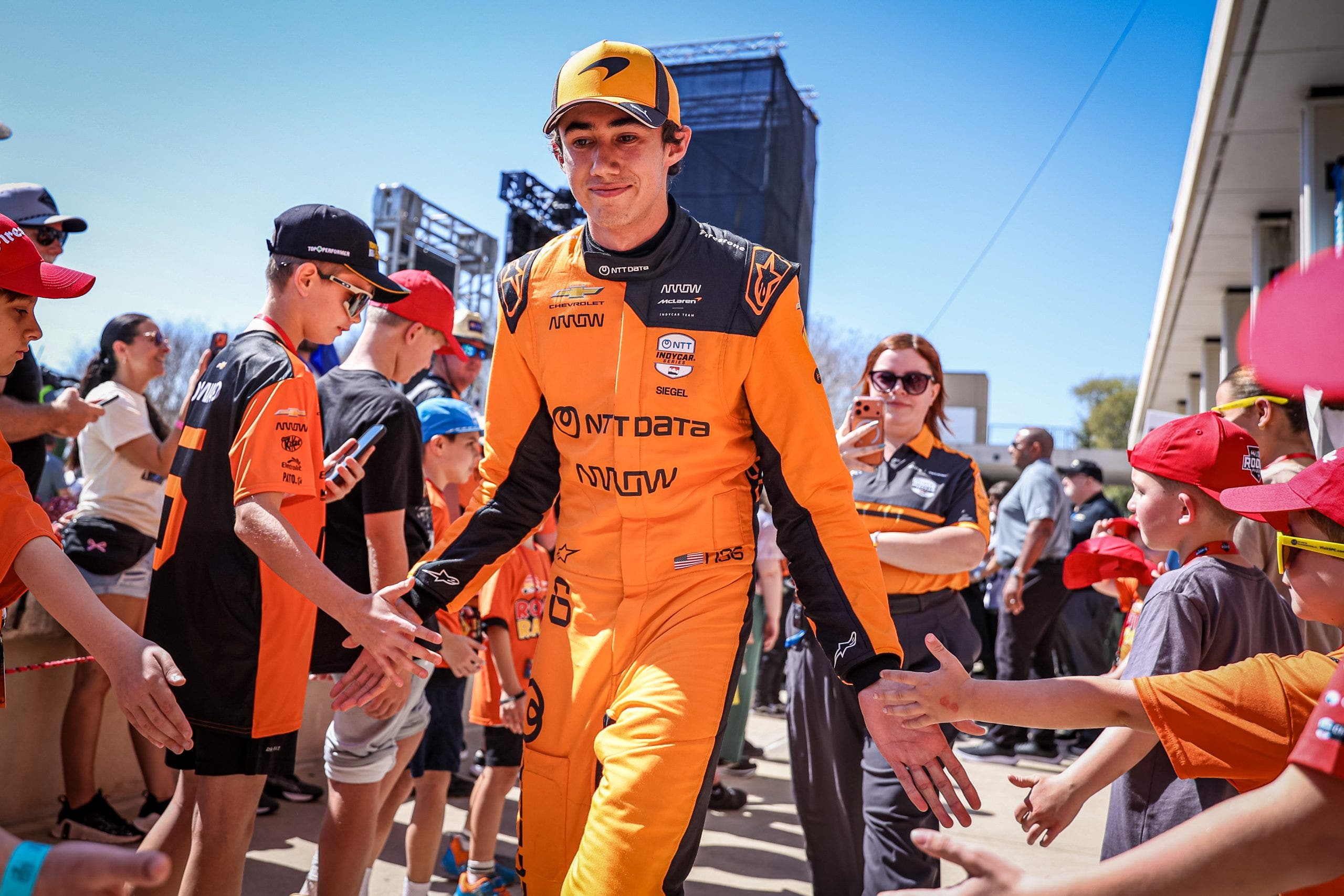
Nolan Siegel started sixth and finished ninth at Barber last year. The Arrow McLaren driver could really use that type of day as he has had finishes of 20th, 20th and 24th this year.

“It’s interesting and almost more frustrating in a way because I actually feel like this year has felt much better than the majority of the races last year,” Siegel told me and other reporters Friday morning.

“I feel like the team has worked well together. I feel like the execution has actually been quite good, and the results have been just really poor. We have not matched kind of the way that I felt. It’s exciting to come here where we know we’ll be strong and just try to kind of get the results going and get some momentum building.”

Could Barber be the beginning of a better season for Siegel?

[INSIDE THE GARAGE: How Bad do Drivers Want to Beat Former Teammates?]

How Is Mick Schumacher Doing?

Former F1 driver Mick Schumacher sits last in the standings but he’s optimistic. He never got a chance to race at St. Pete after getting taken out on a first-lap crash. Phoenix was his first oval. And then he had a drive-through penalty for avoidable contact at Arlington.

“Overall, I think that the results don’t really speak for the performance that we’ve shown,” Schumacher told me and other reporters Friday morning. 

Was There A Penalty From Arlington?

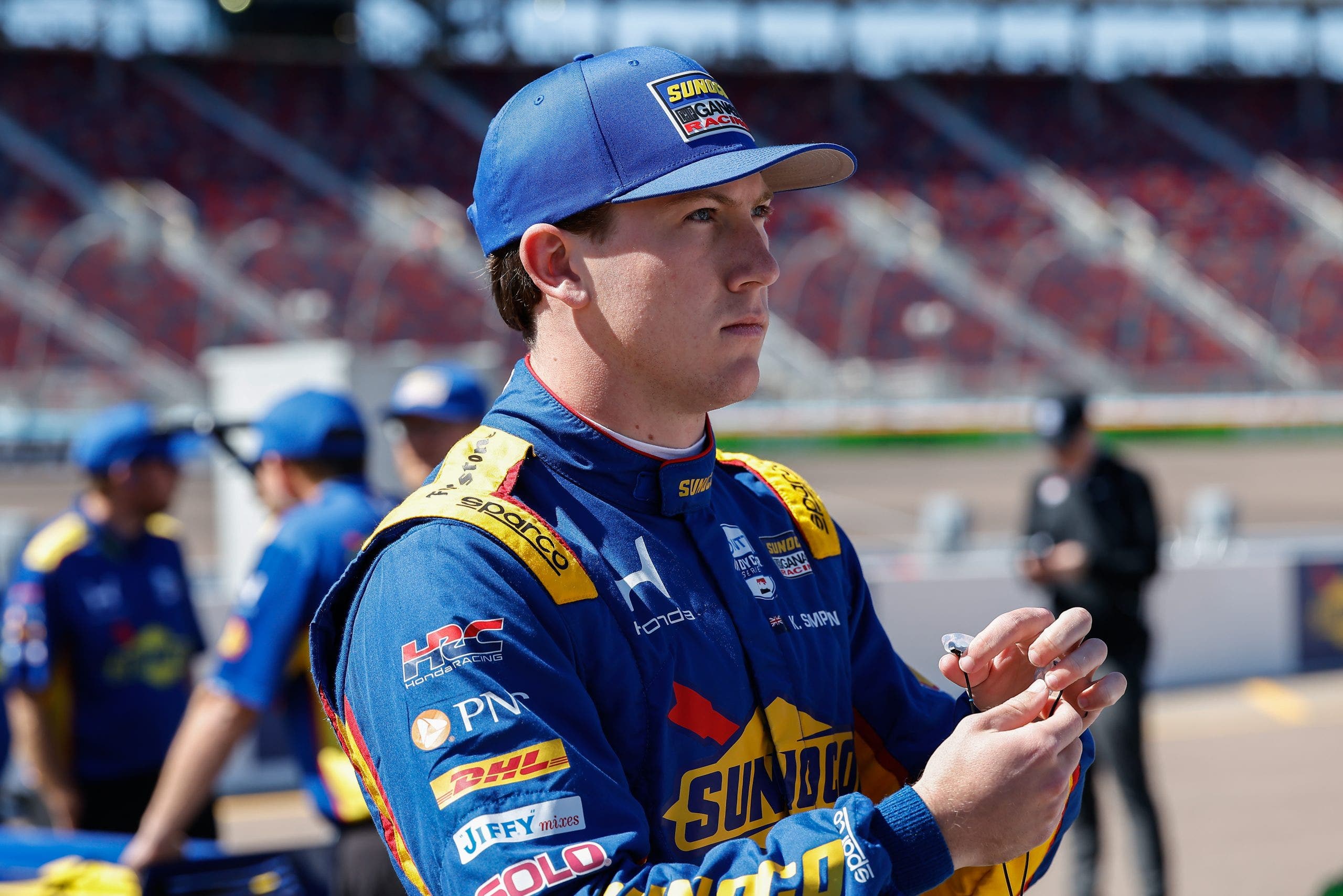
Yes, INDYCAR explained on Wednesday afternoon that Kyffin Simpson would be penalized to the tail end of the lead lap for unavoidable contact on the restart before the one-lap dash to the finish March 15 at Arlington.

Simpson finished 19th, as he was able to continue after the wreck, finishing ahead of Felix Rosenqvist. They ended up switching positions with Rosenqvist 19th and Simpson 20th.

“I get it,” Simpson told me and other reporters on Friday morning. “The incident was my fault. I take responsibility for it, so I understand the penalty.” 

Kyffin Simpson will start Barber at the back of the field.

Will The Same Format As Arlington Be Used For Qualifying? 

No. The final round of the six fastest drivers will be a group session. INDYCAR experimented at Arlington by sending them out one at a time for one lap. The sanctioning body is still evaluating whether to use that format again.

The issue at Arlington was because they went from slowest to fastest in the final round. The sixth-fastest driver from the previous round got to go out first and had more heat in his tires.

 Do they give an extra set of tires for use in the final round if they go single-car? Is it that big a benefit?

The biggest benefit is that those drivers and teams get the attention for a couple of minutes with no other cars on the track.

“[Those cars] should get exposure for that. … People talking about them, it creates this excitement, Team Penske driver Scott McLaughlin told me and other reporters Friday morning.  

Are The Tire Rules The Same As Arlington? 

No. There are different tire-use rules on permanent road courses than on street courses.

The rule for street courses is that teams must use at least two sets of soft tires (used or new) and at least one set of primary tires (used or new) during the race.

The rule for road courses is that teams must use at least one set of new soft tires and at least one set of primary tires (used or new) during the race.

What Else Should Fans Watch For? 

There will be tributes throughout the weekend to track founder George Barber, who died in February. He was 85.

His passionate advocacy for INDYCAR and motorsports is seen throughout the course, which in some ways is one big tribute to him and his vision.


Source link

This AI marketing stock is a top gainer today. Goldman says there’s much more to go


Source link

Stocks making the biggest moves premarket: AZN, U, COIN


Source link

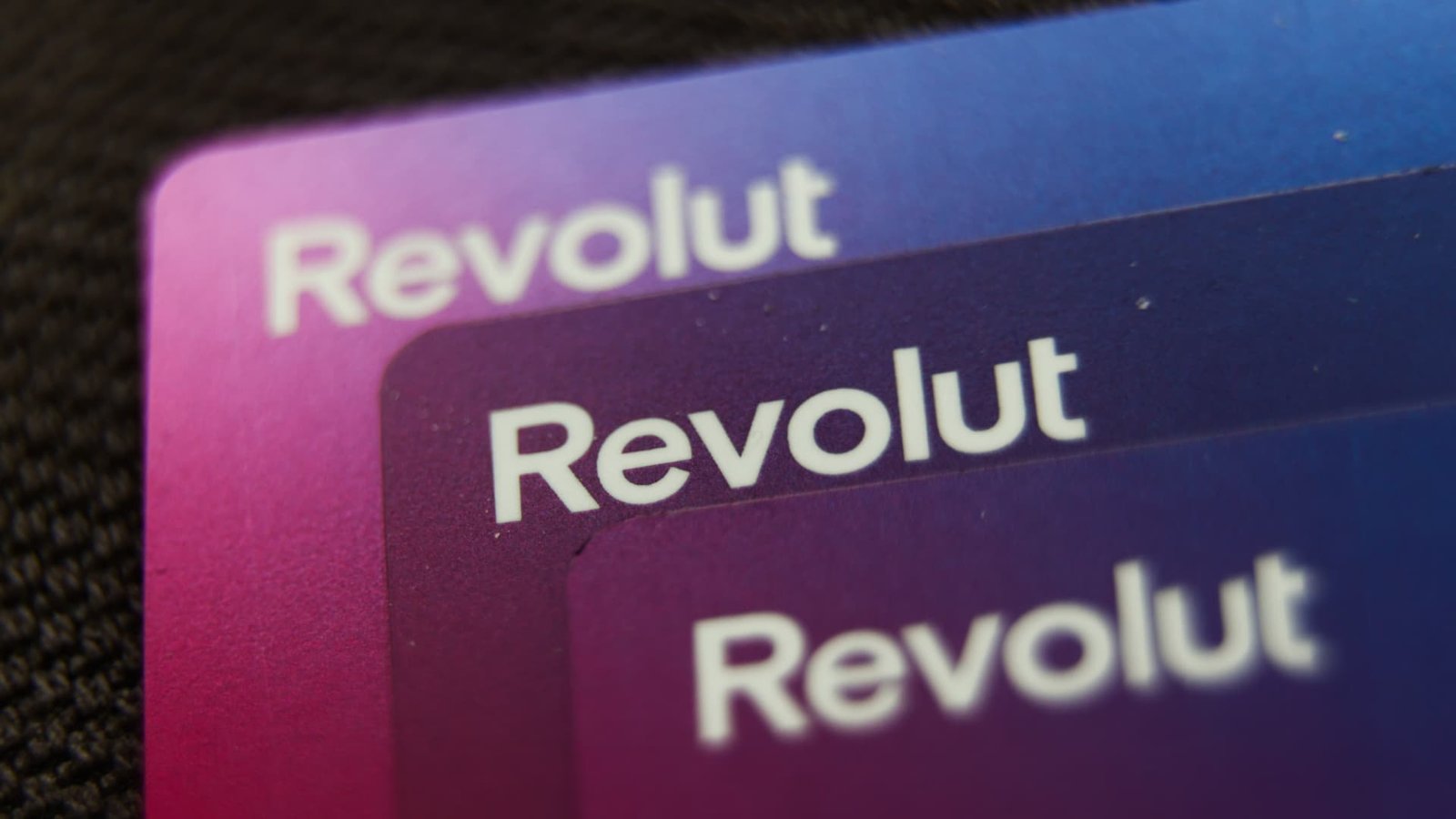
Revolut reports record 2025 profit as it gears up for U.S. push


British fintech Revolut on Tuesday reported a record annual pretax profit, as it ramps up plans to expand into the U.S. following its long-awaited granting of a full U.K. banking license earlier this month.

Profit before tax rose 57% to £1.7 billion ($2.3 billion) in 2025, compared to £1.09 billion in 2024. Group revenue increased by 46% to $6 billion, which the company said was in part due to the performance of its business banking services, accounting for 16% of total income.

The startup, which hit a $75 billion valuation in 2025, is one of Europe’s most valuable private tech companies. Founded in 2015, Revolut says it operates in 40 markets globally.

“We have built a diversified, resilient business that is profitable at scale, providing the foundation for our next phase of growth,” said Cofounder and CEO Nik Storonsky in a statement.

“As we transition into a truly global bank, we are proving that our technology-driven operating model continues to drive rapid expansion and record profitability. A decade into this journey, we have only just begun to show what is possible.”

Total customer balances rose 66% to $67.5 billion as Revolut’s retail customer base grew by 30% to 68.3 million and business customers increased 33% to 767,000.

The neobank says it wants to reach 100 million customers by mid 2027.

U.S. push

Earlier in March, Revolut announced it had secured a full U.K. banking license after a lengthy back-and-forth between the company and the Prudential Regulation Authority.

It unlocks Revolut’s ability to offer a new range of products in the country, including lucrative lending, a market dominated by traditional banks. Revolut also launched full banking operations in Mexico in January.

The company is now gearing up for major global expansion.

Geographic growth beyond Europe will become the “next frontier of focus” for the company once it finalizes the launch of a U.K bank, Chief Financial Officer Victor Stinga said in a conference call with media.

Revolut filed for a U.S. Bank Charter in March, which if granted, would mark another significant regulatory milestone. The charter would allow the company to operate across all 50 U.S. states under one regulatory framework, alongside offering personal loans and credit cards.

Choose CNBC as your preferred source on Google and never miss a moment from the most trusted name in business news.


Source link