


5 things to know before the stock market opens Thursday
Tech
1. Rain check
Kevin Warsh, chairman of the US Federal Reserve, during a news conference following a Federal Open Market Committee (FOMC) meeting in Washington, DC, US, on Wednesday, July 29, 2026.
Al Drago | Bloomberg | Getty Images
Federal Reserve Chairman Kevin Warsh has floated reducing the number of policy meetings that the central bank holds. That could bring more volatility to markets, experts tell CNBC’s Jeff Cox. But a possible schedule change isn’t the only thing on Fed watchers’ minds this week.
Here’s what to know:
- Minneapolis Fed President Neel Kashkari told CNBC yesterday that “now is the time to start slowly moving up” interest rates, saying the central bank has “more work to do to get inflation back down.”
- Fed Governor Lisa Cook also said Wednesday that she is “prepared to act” on a rate hike to curb inflation.
- While Kashkari was one of three dissenters at last week’s Fed meeting, Cook voted with the majority to hold rates steady.
- Private payrolls expanded by less than expected last month, according ADP data released yesterday. Economists will get another read on the labor market tomorrow morning with the release of July’s all-important jobs report.
- The Dow climbed to a new record in Wednesday’s session, but the S&P 500 snapped its four-day win streak.
- Follow live market updates here.
2. Revolving door
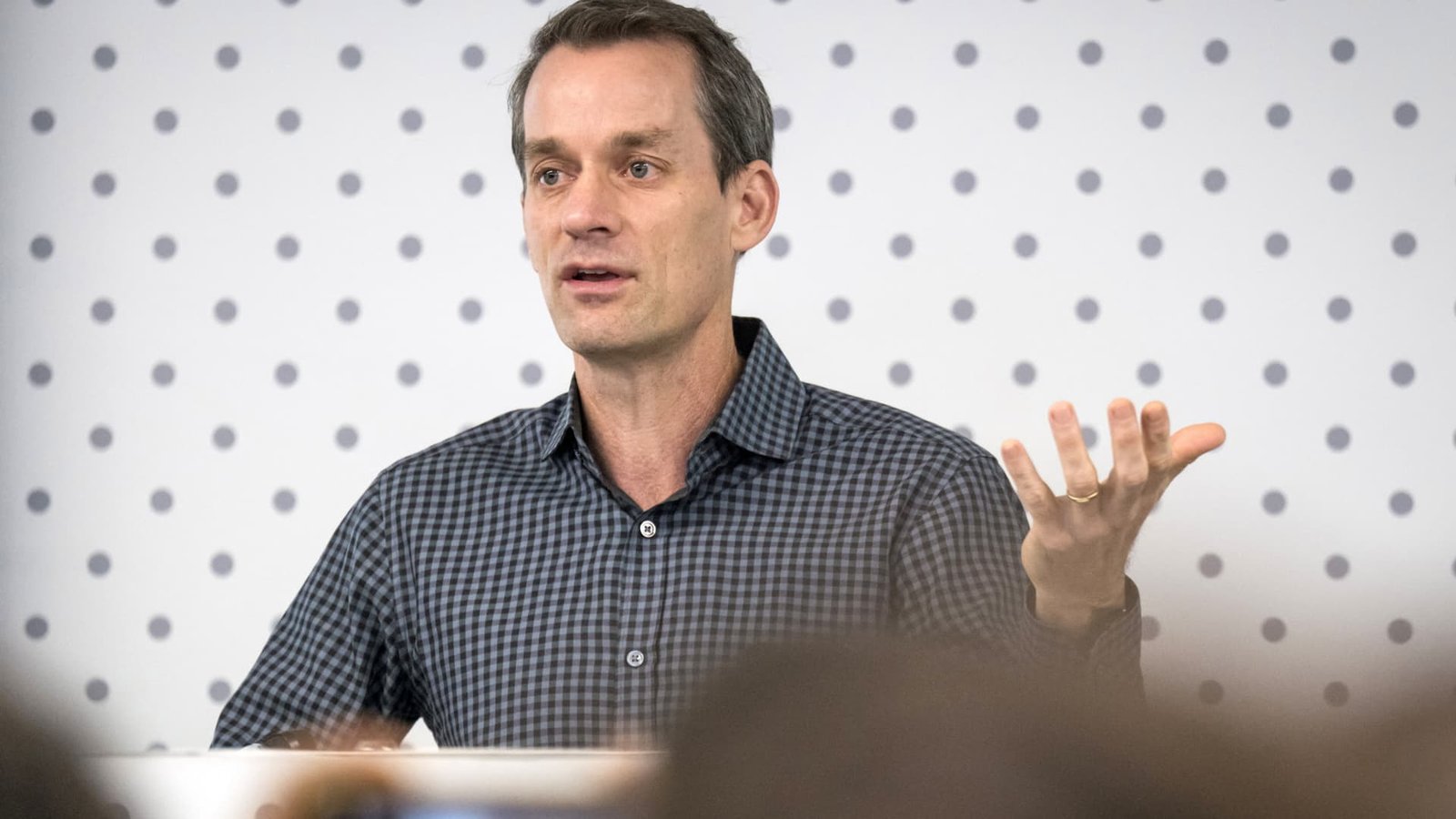
Jeff Dean, head of artificial intelligence at Google LLC, speaks during a Google AI event in San Francisco, California, U.S., on Tuesday, Jan. 28, 2020.
David Paul Morris | Bloomberg | Getty Images
Shares of Alphabet fell 4% yesterday after the Google parent announced it is shaking up its artificial intelligence divisions. Chief scientist Jeff Dean is leaving after 27 years to start his own company, and Google DeepMind CEO Demis Hassabis is assuming his title.
As CNBC’s MacKenzie Sigalos writes, Dean is only the latest talent to leave Google. His departure and Hassabis’ new position raise questions about Google’s ability to be an AI leader, particularly as booming growth in its cloud unit tests its commitment to frontier AI.
Google wasn’t the only one announcing leadership changes yesterday: Salesforce elevated its revenue head Miguel Milano to operating chief. Milano was previously an Oracle executive before rejoining Salesforce in 2023.
3. Cut the check
Elf Beauty cosmetics
Courtesy: ELF Beauty
The White House has refunded around $100 billion of the tariff revenue it collected before the Supreme Court struck down the duties in February, according to a filing this week with the U.S. Court of International Trade.
That’s about 60% of the $166 billion haul the government reported from President Donald Trump’s “liberation day” tariffs. Trump, who has tried to replaced the blocked duties using other methods, said this week that the “Supreme Court gave us a little shot, but we’re allowed to do it in a different manner.”
One refund recipient was E.l.f. Beauty, which said yesterday that it got about $50 million back. The refund boosted E.l.f.’s net income in the first quarter, and the cosmetics retailer said it would use the money on marketing and to lower prices on around 10% of its assortment.
4. Analyzing the situation
Brian Moynihan, CEO of Bank of America, speaking to CNBC from Aspen, Colorado, Aug. 5, 2026.
CNBC
After the near collapse of Situational Awareness, Bank of America CEO Brian Moynihan said leveraged financial markets should be on notice. “These are all warning shots,” Moynihan told CNBC’s Andrew Ross Sorkin. “Valuations get out, leverage in the system gets there. You have to be careful.”
The comments from the leader of Bank of America — which was one of Situational Awareness’ prime brokers — imply that Wall Street’s leading prime brokers could be reevaluating their exposure to other highly levered firms.
Moynihan said Bank of America would have been “fine” even if Citadel hadn’t struck a deal with Situational Awareness. But following the saga, there’s a natural inclination to “tighten the underwriting standards,” he said.
5. Reclaim the crown
A Burger King store in Venice, Florida.
Erik Mcgregor | Lightrocket | Getty Images
Restaurant Brands International reported better-than-expected earnings for the second quarter this morning, as a sharp rebound at Burger King boosted its results.
U.S. same-store sales at the chain jumped 8.5%, far outpacing RBI’s other brands. Burger King’s strength helped the company offset continued weakness at Popeyes and largely flat sales at Tim Hortons.
Meanwhile, Salad and Go filed for Chapter 11 bankruptcy protection and closed all of its locations yesterday. As CNBC’s Amelia Lucas reports, the upstart chain said that the cyclospora outbreak intensified already existing business challenges.
The Daily Dividend
In an interview with CNBC yesterday, Advanced Micro Devices CEO Lisa Su brushed off Elon Musk’s comments about SpaceX exclusively using Nvidia chips. AMD shares fell 7% in yesterday’s session, even after beating earnings expectations.

— CNBC’s Jeff Cox, MacKenzie Sigalos, Kif Leswing, Jordan Novet, Kevin Breuninger, Gabrielle Fonrouge, Hugh Son, Amelia Lucas and Chris Eudaily contributed to this report.
Luke Fountain assisted in the production of this newsletter. Josephine Rozzelle edited this edition.
5 things to know before the stock market opens Thursday
Source link