



Why some charity shop donations do more harm than good
BBC News
Jane Ward is turning the blackened, mouldy pages of a Mr Men book. “You wouldn’t want your child curled up in bed with this,” she says.
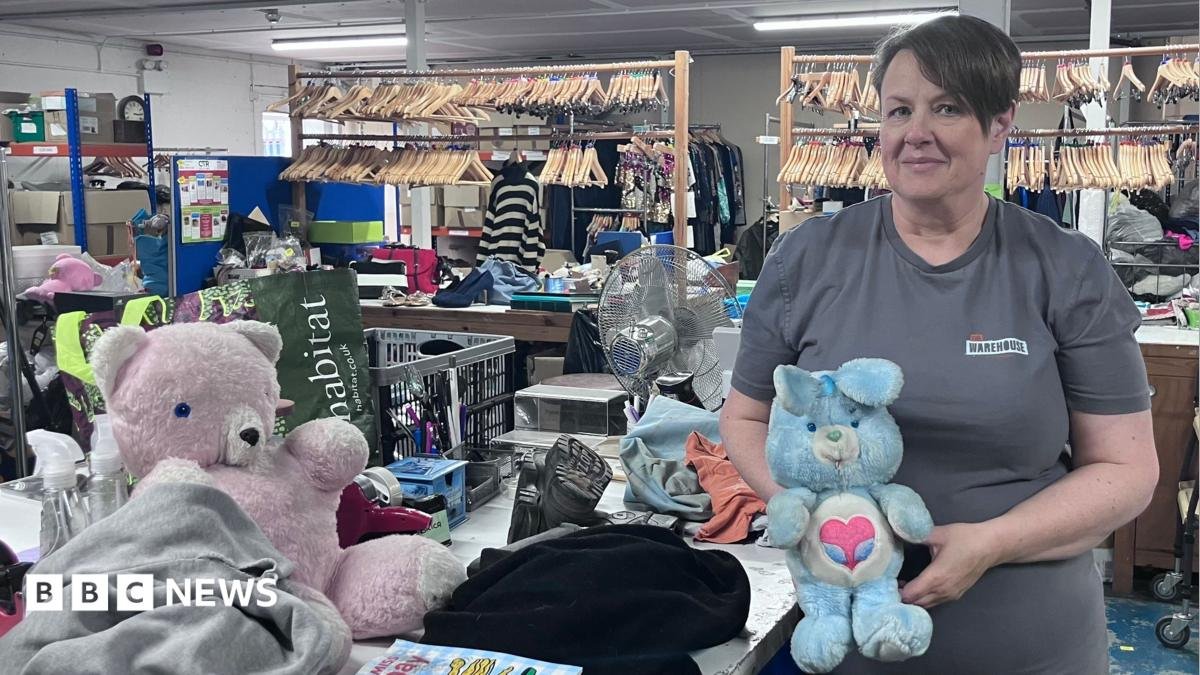
We are at a charity shop run by St Barnabas Hospice in Lincoln. On the table in front of us is a fleece work jacket, covered in dog hair, along with a large, stained teddy bear and a single, dirty, grey slipper.
“If we had the pair, it still wouldn’t be wearable,” Ward, the store’s deputy manager, tells me. “Even our rag companies wouldn’t be able to accept that.”
Broken, dirty and downright grotty donations are costing hospice charities tens of thousands of pounds to dispose of.
St Barnabas and Dove House Hospice, in Hull, spent a combined £70,000 on dealing with unwanted waste last year.
While St Barnabas says the quality of donations can be “phenomenal”, staff are calling on people to be more mindful of items the charity will not be able to sell and which instead become a cost.
Its flagship shop, called The Warehouse, is a large unit on an industrial estate with a retail space out front, selling furniture, electrical goods, homeware and toys, as well as racks of clothing and shoes.
According to the hospice website, the store has generated more than £2m in income since opening in 2022. But some donations cost the charity money.
#charity #shop #donations #harm #good,
Source link