



Big Tech’s free cash flow — or lack thereof — only tells part of the investment story
Tech
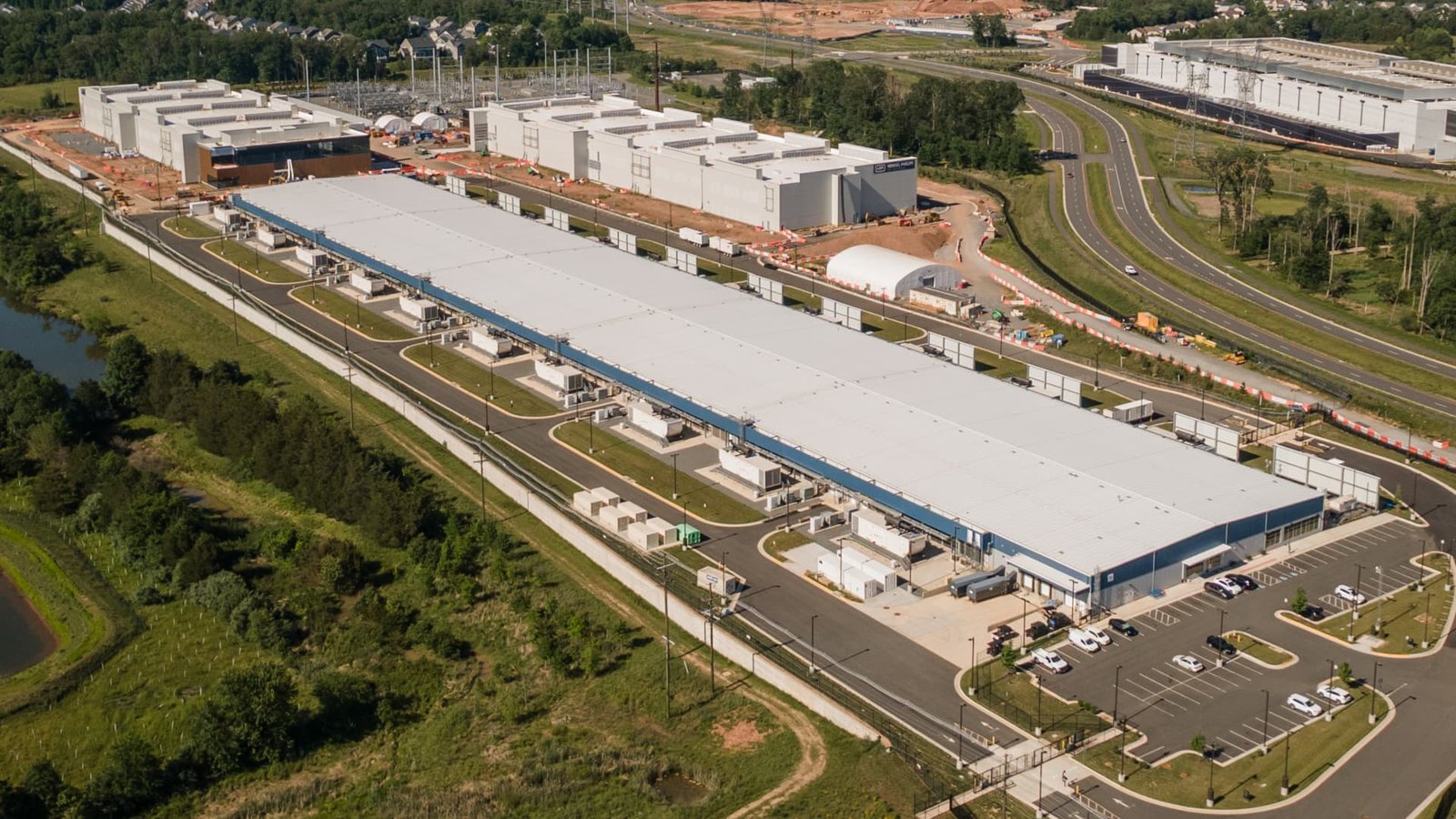
Wall Street is fixated on all the money Big Tech is spending on artificial intelligence infrastructure. But not enough attention is being paid to all the cash still coming through the door at these hyperscalers. One of the dominant topics this earnings season has been the dwindling amount of cash remaining after all that AI spending, known as free cash flow. Amazon’s and Alphabet’s were actually negative in the June quarter, and Meta and Microsoft saw declines too. The concern is understandable because this is an important metric when evaluating the health of a business. But widening the aperture to focus on both the cash that arrives — operating cash flow — and what is left over paints a less-troubling long-term picture than a narrower discussion focused only on free cash flow. The hyperscalers’ operating cash flows are still growing at impressive clips, offering reason to stick with their stocks through turbulence to reap the AI spending rewards later on. The simplest way to think about free cash flow is that it’s the money left over after a company pays for its daily expenses and invests in new equipment and property — like data centers and the computer servers inside them. Investors love this pot of money for all the optionality that it provides. Companies use it to invest back in the business, pay down debt, and return some of it to their investors through dividends and stock buybacks. After all, cash is king. This is why investors do not simply look at a company’s earnings — or net income, to use the accounting name — when evaluating the health of the business. Of course, earnings are crucial and form the basis of the most common way to value stocks on Wall Street ( a price-to-earnings ratio ). But earnings also include various non-cash charges, including a company’s on-paper gains and losses on its investments; stock-based compensation; and depreciation expenses. That’s a key difference versus free cash flow, and it helps explain the need for a metric that isolates the actual cash that remains after bills are paid and capital investments are made. So, when companies that used to routinely print tens of billions in annual free cash flow start putting up immaterial sums — or even outflows — investors understandably start to be concerned. Both Alphabet and Amazon’s free cash flow was negative in the June quarter, falling 210% and 770% year over year , respectively. Meta’s FCF contracted by 91%, while Microsoft’s declined by a relatively tame 23% . The source of pressure was the same across the board: soaring capital expenditures to build more artificial intelligence infrastructure. Concerns about dwindling free cash flow are even more understandable given management commentary on earnings calls indicate that additional spending will be needed in the future. Plus, companies have started to tap debt and equity markets in order to sustain the spending. Alphabet is selling $85 billion in equity and on Thursday announced plans for a $25 billion bond sale . Meta and Amazon have also both tapped the debt markets this year to fund additional AI spending. There are pros and cons to those decisions. Selling stock helps keep borrowing levels and associated interest payments in check, at the expense of shareholder dilution (your investors now own a smaller percentage of a larger pie). Issuing bonds protects against shareholder equity, at the expense of the balance sheet (higher debt loads and more interest costs). But ultimately, neither is ideal as spending done with internally generated cash. That’s why Jim Cramer has taken such issue with Alphabet’s lack of a clear explanation into its spending. “I didn’t like how they didn’t seem to care about how much they were spending,” he wrote in his Sunday column . It’s one thing to spend, as all the hyperscalers are. It’s another thing to spend without a thorough explanation as to why it is warranted, especially when it starts to impact shareholder equity and/or the balance sheet. Amazon provided a fantastic explanation of why the spending is needed and will eventually provide positive returns. Alphabet, on the other hand, provided almost no explanation, instead acting as if it was no big deal. Meta didn’t have the most articulate explanation, but at least we heard CEO Mark Zuckerberg explain the various monetization paths available to them to ensure worthwhile returns in the future. At the moment, we have fewer questions about Microsoft’s spend given positive momentum with AI assistant Copilot, accelerating growth at cloud unit Azure, and perhaps most important, the fact that free cash flow in the recently reported quarter was still very much in positive territory — to the tune of nearly $20 billion. The reality is that we recognize these companies cannot make money off AI infrastructure if they never spend to build it — just like Amazon, Microsoft, and Alphabet had to spend to build out their initial cloud services businesses, which have all become incredibly lucrative. And, as long-term investors, we’re willing to accept that sometimes an investment opportunity looks so bountiful that management teams will determine it’s appropriate to dent their free cash flow to seize it. It’s not exactly a fun pill to swallow, but it’s what we have on our hands with the hyperscalers at this stage of the AI boom. One reason that we’re willing to accept it is that, when we take a holistic look at these companies’ financials, we see encouraging trends on how much cash their businesses are generating from their day-to-day operations. In other words, we’re not only looking at the endpoint (free cash flow). We’re also looking at the starting point for calculating it (operating cash flow). This is what we mean by widening the aperture. Free cash flow shows the near-term burden of the AI buildout, but operating cash flow helps investors assess whether the underlying business can ultimately absorb that spending and, eventually, restore free cash flow to levels higher than we’ve ever seen, justifying the risk being taken on currently. Obtaining the operating cash flow figure starts with reported net income. You add back in all those non-cash charges, such as stock-based comp and depreciation, and subtract out any gains that added to net income but didn’t bring in actual cash. The idea is to figure out how much cash actually came in or went out the door due to operations. Operations is the key term here. This is the cash flow that relies on sales and operating excellence. There is still plenty to like here. In the June quarter, Alphabet’s operating cash flow surged about 40% year over year, while Amazon’s increased by a similar amount. At Meta, operating cash flow was up nearly 25% in that time. Microsoft grew operating cash flow 30% versus the year-ago period. Those growth rates all indicate underlying businesses that are healthy and still capable of generating plenty of cash. Focusing only on what goes out the door — without considering what came in — paints an incomplete picture. That’s especially true in the wake of Amazon CEO Andy Jassy’s earnings call commentary , where he explained in detail the breakdown in capital expenditures allocated toward the actual data center building, which has a lifespan of about 30 years, versus the portion allocated to chips, which have a lifespan closer to six years. Jassy’s masterclass was a reminder that we cannot forget to focus on operating cash flows during this historic capex cycle. Once the actual data centers are built — including both the physical buildings and the power infrastructure to turn the lights on — Amazon won’t need to reinvest in those components for some three decades. Amazon starts spending capital on a data center two years “before we can put servers into them to start monetizing,” Jassy said. “Once a data center opens with servers plugged in, we start generating significant revenue right away and then get to monetize these data centers for 30-plus years without having to spend that start-up capital again,” Jassy said. What this means is that if you’re considering the economics of an individual data center project, you need to model a huge outflow (capex) for data center construction for, say, two to three years. Then, that portion of capex goes away ; once the chips are installed and the data center is operational, it begins to contribute to operating cash flow for the next quarter century. This is not to say that capex overall won’t sustain, or hold in the future, as more demand for AI computing power drives the need for more 30-plus-year buildings to be stood up. However, by then, it stands to reason the initial buildings will be yielding very healthy returns and are already bringing in cash, which would help justify the additional spending. Now, let’s consider the shorter cycle portion of capex. That’s all the money going to the chips and networking equipment that connects the servers together. This is arguably where more concern about capex spending levels should lie, simply because that is where obsolescence becomes an actual issue if demand for AI wanes. In other words, did companies spend a bunch of money on expensive, cutting-edge chips that are now sitting idle? The good news is that Jassy told Wall Street the return on investment here is much easier to see. “We typically purchase these a few months before putting them into service… If the demand isn’t there, we won’t spend the capital. … On average, it takes a little less than three years to break even on that investment. The servers currently have a useful life of at least five to six years, and most of our AI capacity these days is being contracted for at least five-year terms.” So, if we were to zoom in again and focus on the individual data center project level, the way to think about it is a large cash outflow for a few months on servers and networking gear, which then enters into contracted use for at least five years. This gives the company, in this case Amazon, three years to break even, with two-plus years of contributing to operating cash flow. That is why the operating cash flow needs more attention. It is telling you where the free cash flow can potentially go. If you do that, then the rally we saw in the hyperscale names following Amazon’s earnings release, where Jassy laid all this out, makes much more sense despite the free cash flow dynamics. Jassy was the only one to spell it out this clearly, but given the similarities in the cloud businesses, it stands to reason that a similar dynamic is at play with Alphabet and Microsoft. The bottom line? Free cash flow is important because where it goes in the near-term may have an impact on shareholder equity and the balance sheet. Again, no free cash flow means funds need to be raised externally; equity offerings dilute shareholders, while debt offerings increase leverage and interest expense. However, if you want to know where free cash flow can potentially go in the long term, don’t forget to pay attention to operating cash flow. Right now, that picture still looks pretty good. (Jim Cramer’s Charitable Trust is long AMZN, META, GOOGL and MSFT. See here for a full list of the stocks.) As a subscriber to the CNBC Investing Club with Jim Cramer, you will receive a trade alert before Jim makes a trade. Jim waits 45 minutes after sending a trade alert before buying or selling a stock in his charitable trust’s portfolio. If Jim has talked about a stock on CNBC TV, he waits 72 hours after issuing the trade alert before executing the trade. THE ABOVE INVESTING CLUB INFORMATION IS SUBJECT TO OUR TERMS AND CONDITIONS AND PRIVACY POLICY , TOGETHER WITH OUR DISCLAIMER . NO FIDUCIARY OBLIGATION OR DUTY EXISTS, OR IS CREATED, BY VIRTUE OF YOUR RECEIPT OF ANY INFORMATION PROVIDED IN CONNECTION WITH THE INVESTING CLUB. NO SPECIFIC OUTCOME OR PROFIT IS GUARANTEED.
Big Tech’s free cash flow — or lack thereof — only tells part of the investment story
Source link