




From Seconds of Visual Impact to Minutes of Storytelling: AI Video Is Moving Toward Narrative Depth
Digital Trends
As AI video generation moves from short, fast-paced imagery toward more developed storytelling, creators increasingly need tools that can support multi-scene narratives, consistent characters, and structured workflows. Tools such as CapCut Video Studio Director Mode are being developed to help creators manage these elements within a shared creative environment.
These tools are not a replacement for imagination. Instead, they can simplify parts of the filmmaking process while helping creators keep characters recognizable, locations connected,
and plots are logical.
When a Striking Clip Is No Longer Enough
AI-generated video can engage viewers instantly with high-quality imagery and immediate visual impact. Although short, attention-grabbing clips still have an important role, longer-form video allows creators to explore stories and characters in greater depth. Increased video length, however, also adds complexity.
A single successful shot does not create a complete story. Changing appearances, shifting environments, and developing plots require greater coordination. Long-form AI video is therefore not simply about image quality or generation speed. It requires tools that can support creative control and continuity across a longer sequence.
The Move Toward Longer AI Narratives
AI video is moving toward longer, more structured content rather than remaining limited to clips lasting only several seconds. More emphasis is being placed on plot development, scene continuity, character consistency, story pace, and visual language.
Early AI video generation demonstrated how AI could create cinematic imagery, animation, and imaginative visuals from prompts. For longer videos, however, the challenge is no longer limited to producing one impressive image. AI tools must support a complete story across multiple scenes while managing changes in characters, locations, and plot.
This shift is already visible across the creative industry. Lionsgate has expanded its collaboration with AI research company Runway, using its technology in areas including previsualization, storyboarding, and final-frame production. The partnership reflects how generative AI is increasingly being tested as part of established filmmaking workflows.
Adobe’s 2026 Creators’ Toolkit Report found that 75% of creators consider creative AI integrated into or essential to their work, while 85% believe the final creative decision should remain with the creator. This suggests creators want more than automation. They also want tools that preserve creative control.
Long-video generation still presents technical challenges. Many current systems produce clips measured in seconds, while longer sequences may struggle to maintain consistent characters, scene layouts, motion, and semantic alignment. As researchers have noted in the ACM Computing Surveys paper “Video Is Worth a Thousand Images: Exploring the Latest Trends in Long Video Generation,” the challenge is therefore not only generating better clips, but giving creators more reliable control across connected scenes.
Introducing Director Mode
This is where structured AI video workflows become more important. If the first wave of AI video focused on generating impressive individual shots, the next phase is about helping creators manage the elements that make those shots feel like parts of the same story.
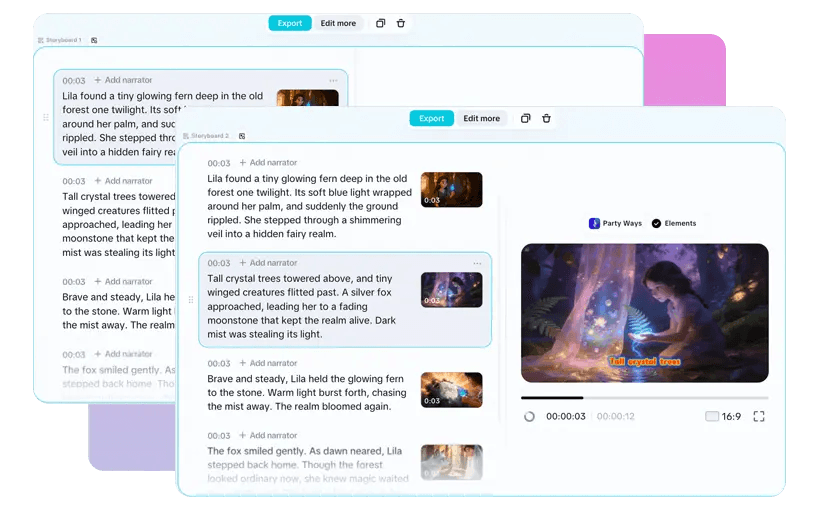
CapCut Video Studio Director Mode is designed to support the transition from short clips to longer-form video creation. It allows creators to manage characters, scenes, props, scripts, and visual direction within a shared workspace.
Rather than producing unrelated clips, creators can generate multiple shots around the same story concept. A structured environment can help keep characters recognizable, storylines easier to follow, and creative assets organized for reuse. This can support greater consistency, smoother narrative development, and more control throughout production.
The Broader Impact on Creators
Stronger continuity in AI filmmaking does more than help viewers connect with characters. Story-management tools also give creators the opportunity to produce more complete and expressive AI-generated videos.
For creators, the next step in AI video is not simply faster generation or better-looking clips. It is the ability to return to the same character, refine a scene, adjust the visual direction, and continue a story without starting from scratch each time.
As AI video becomes more capable, the creative advantage may come less from producing one surprising result and more from managing a story with consistency, structure, and intent. Tools such as Director Mode point toward that direction: AI video as a workflow for directing connected stories rather than simply generating isolated clips.
Creators interested in moving beyond individual AI-generated clips can learn more about CapCut Video Studio Director Mode and how it supports connected, longer-form storytelling.
From Seconds of Visual Impact to Minutes of Storytelling: AI Video Is Moving Toward Narrative Depth
Source link