

Luxury stocks fall as Iran war weighs on earnings; Hermes, Kering sink
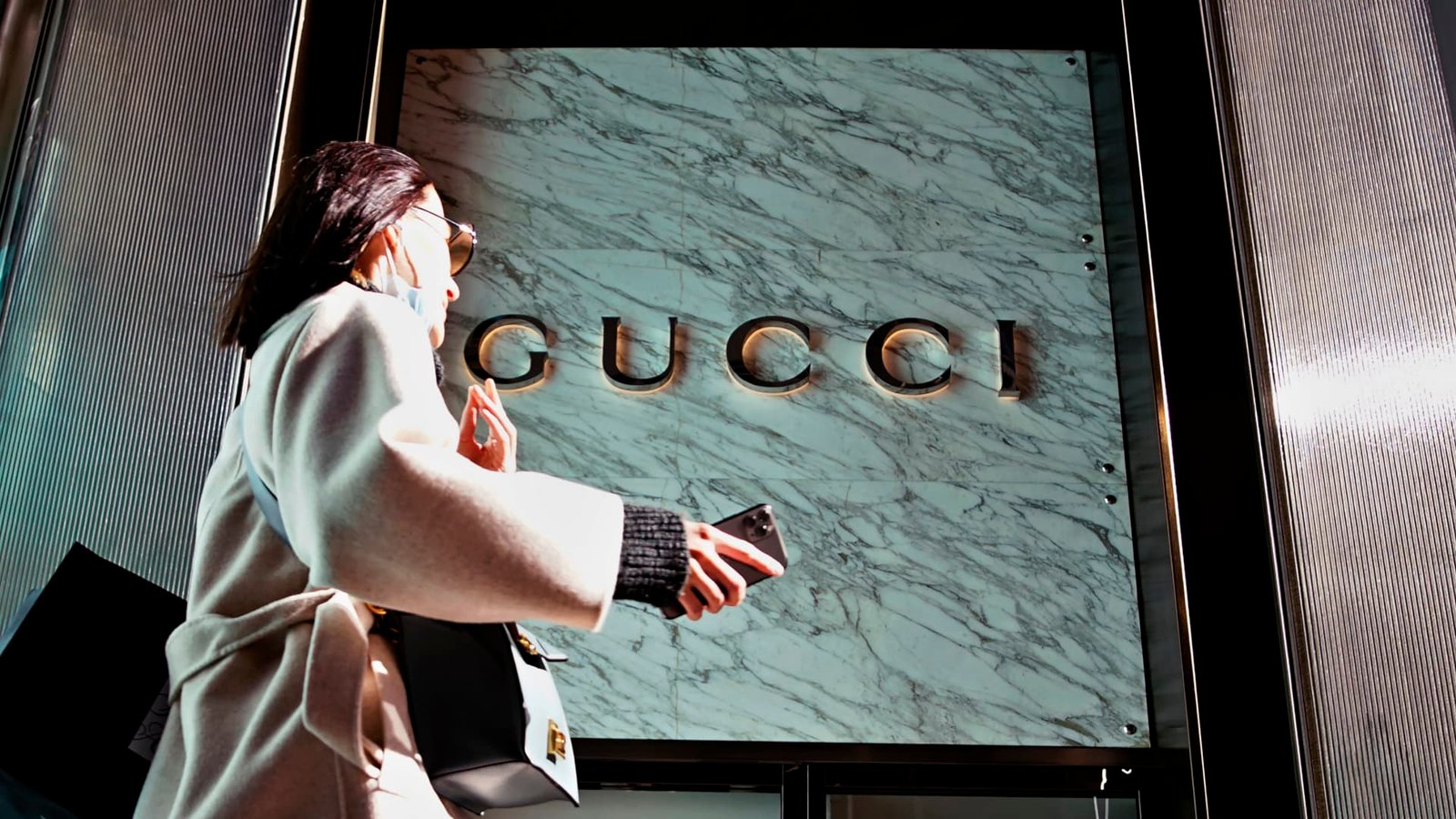
A woman walks in front of the Gucci store on Fifth Avenue in Trump Tower on February 24, 2021 in New York City.
John Smith | Corbis News | Getty Images
Luxury stocks tanked early Wednesday after Gucci-owner Kering and Hermes reported first-quarter earnings that disappointed investors amid a conflict in the Middle East that is hitting luxury sales.
Shares of Hermes plummeted 14%, while Kering fell 10%. The companies’ updates also weighed on the broader luxury sector, with Burberry, Christian Dior, LVMH, and Moncler the worst performers in the pan-European Stoxx 600 index, down between 2% and 3% each.
“Despite the slowdown in tourist flows linked to the situation in the Middle East, sales in the group’s stores increased by 7%,” Hermes said Wednesday as it reported sales of 4.1 billion euros ($4.8 billion) in the first quarter.
“Wholesale activity was significantly affected by lower sales to concession stores, particularly in the Middle East and in airports,” the company added.
Meanwhile, Kering reported sales below expectations late Tuesday, as the luxury conglomerate’s biggest brand, Gucci, remained a drag despite efforts by new CEO Luca de Meo to turn the company’s fortunes around.
First-quarter revenue came in at 3.57 billion euros, down 6% year-on-year on a reported basis, and flat on a comparable basis at constant exchange rates.
Gucci’s organic sales fell by 8%, a bigger drop than the 6% decline seen in a sell-side consensus cited by analysts.
Kering, which also owns brands Yves Saint Laurent, Bottega Veneta and Balenciaga, also said retail revenue in the Middle East declined by 11% in the first quarter, following growth over the first two months of the year.
With 79 stores in the region, the Middle East represents around 5% of retail revenue.
While results underwhelmed, investors’ attention is firmly on the company’s Capital Markets Day on Thursday, where de Meo will present Kering’s strategic roadmap “ReconKering.”
“Gucci remains our top priority. A comprehensive turnaround is underway, with decisive actions across client, distribution and, above all, the offer,” de Meo said in a statement after the bell on Tuesday.
Bernstein analyst Luca Solca described the results as a “reality check.”
“The 1Q26E update shows what we have observed several times over with self-help stories: it is easier and faster for the market to believe in a revival, than it is for management to produce it,” the analyst said.

Kering stock has outperformed most peers over the past year.
It comes as Kering, like many of its luxury peers, has seen years of contraction following a boom that ended in 2022. Demand spiked during the Covid-19 pandemic, leading to price hikes that eventually alienated customers. Coupled with weak demand in China, formerly one of the sector’s main growth drivers, businesses suffered.
Last year, Kering appointed de Meo to get the company back on a growth track. While he was a surprising choice for many, given his background in the auto industry, the stock is up about 10% since he officially took on the role on Sept. 15, outperforming most peers as investors become increasingly optimistic about his turnaround plans.
In February, shares soared by double digits after the company reported fourth-quarter results and de Meo gave an update.