
Young girls who grew up in Asia in the ’90s were enamored by female anchor Yang Lan, much like Americans were with Oprah. Gracy Chen was so inspired that she followed Lan into a career as a TV host and producer.
Chen then went from TV host to entrepreneur, falling in love with the mathematical beauty of Bitcoin and later became the only female CEO leading one of the five biggest exchanges in the world (although Binance recently announced Yi He as co-CEO along with Richard Teng.) Chen was poised, positive and pragmatic when she spoke to Magazine.
During her stint at Phoenix TV, she interviewed business leaders and celebrities like venture capitalist Tim Draper and renowned computer scientist and inventor Ray Kurzweil.
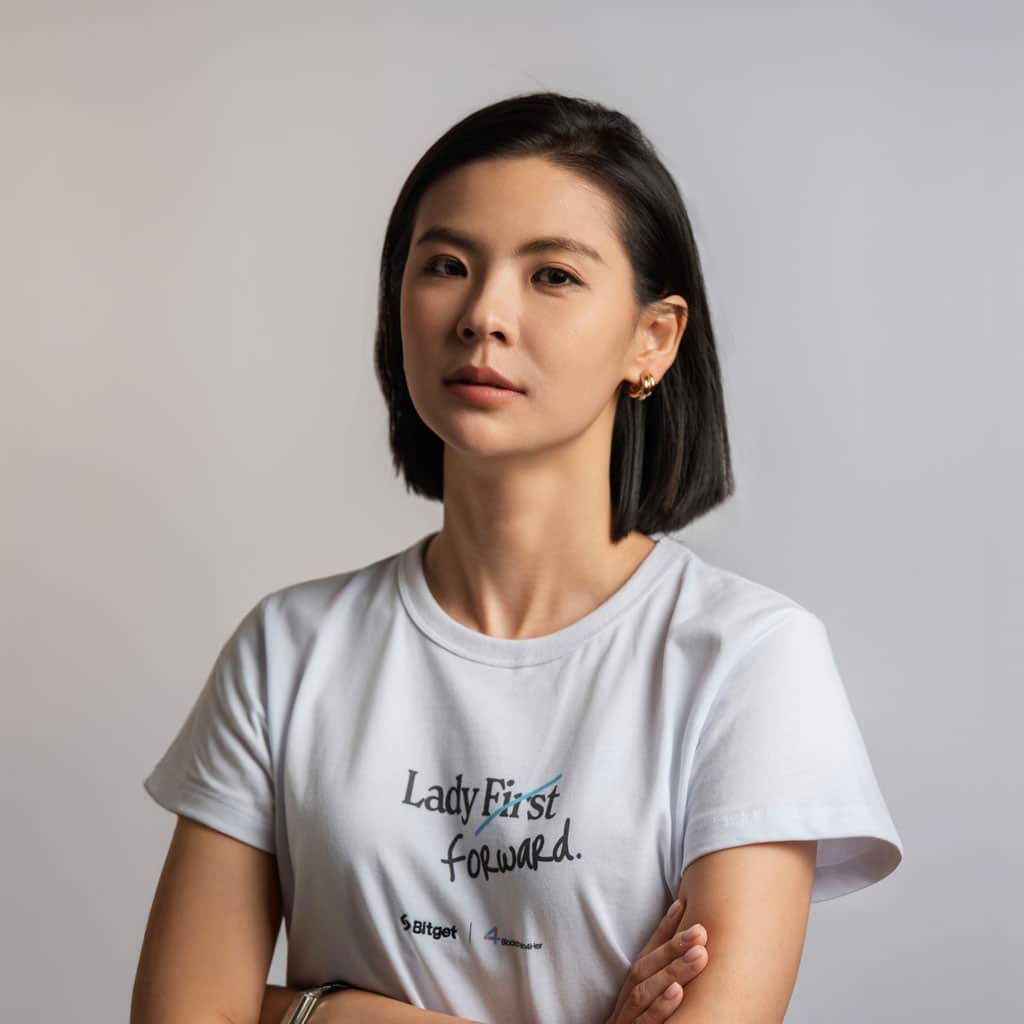
It was the perfect role for the curious host, standing on the front line of innovations, building her little black book of contacts. This was 2014 in Beijing, and it was in this inner circle of tech and TV friends that she first heard about “this thing called Bitcoin.” She bought a little bit of Bitcoin, which was USD $300 at the time, but the investment turned into much more than she bargained for.
But more on that later.
Chen had the entrepreneurial itch after interviewing all those founders and futurists, so in the next seven years she created two companies. One failure, one unicorn.
The first company, Accumulus, was a financial technology service providing payment settlement for freelancers in China. “The company still exists today and has more than 100 million users. It’s the largest taxpayer in the Tianjin province,” Chen said.
The second startup, ReigVR, was a VR metaverse company. She shut that down because it wasn’t doing well. Although these endeavors weren’t in crypto, Chen said there were similarities, given that she built a platform to deal with lots of transactions on a daily basis.
Over these seven years, she continued to invest in cryptocurrencies and crypto companies and noticed much of her personal wealth had come from that early-stage Bitcoin she bought. She had a realization: “If I invest my money in crypto, why not invest my time in crypto, too.”
From fintech to crypto CEO
In 2022, Chen joined leading cryptocurrency exchange, Bitget, first as managing director and today as CEO. She brought strong marketing chops and a bias to build. She knew the formula for success: Scale up, get profitable, then IPO – unlike crypto projects, where IPO activity happens early and startups aren’t incentivized to continue to scale.
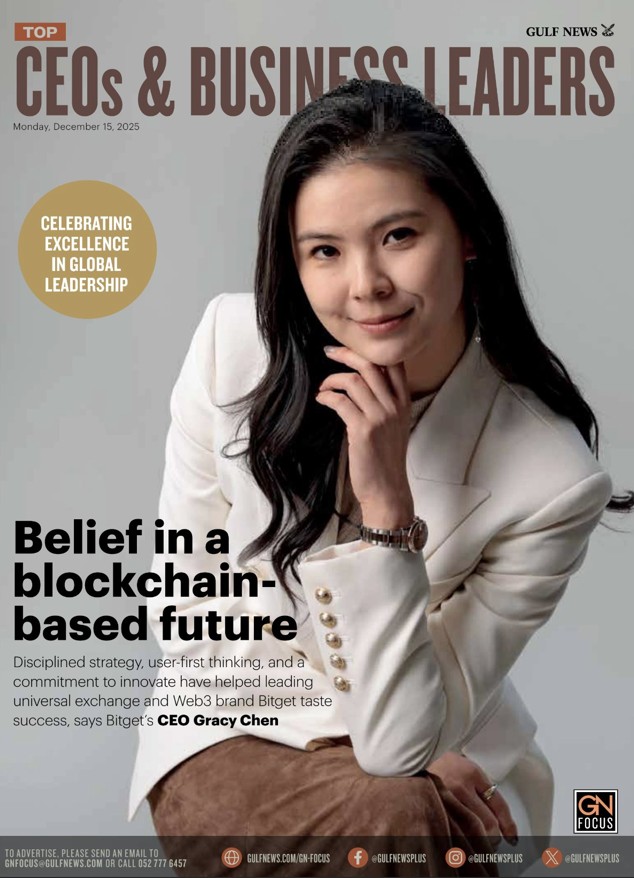
Bitget has since experienced record growth, doubled its user base from around 50 million to 120 million, and secured a place among the top five crypto exchanges in derivatives trading volumes.
Chen also plays a key role in institutional business development, working closely with major clients and partners to strengthen Bitget’s global presence.
One of those initiatives brought her back to her TV roots, when she became a judge on Killer Whales – Shark Tank’s doppelganger for crypto companies. It was streamed on mainstream platforms, including Apple TV and Amazon Prime. She was the only female, Asian and exchange representative on the panel, sitting alongside the likes of Anthony Scaramucci and YouTubers Austin Arnold from Altcoin Daily and Ran Neuner from Crypto Banter.
Chen was only able to participate in one episode in season one, but found her footing in season two. “I’m a statistics person, I have an MBA from MIT, and I’m CEO of this big crypto exchange. So, I used that same kind of judging criteria when we were reviewing the projects. If a project had good fundamentals, a business model that made sense, good cash inflow and revenue, and the founders were serious, I’d usually go for it. They have to be entrepreneurs, not wantrepreneurs.”
She was put off by projects with arrogant founders. “We had a famous YouTuber tell us it would be easy to transfer his followers into users,” Chen shared. She had a soft spot for female-led projects.
Chen had experience blocking out the haters, not from her days in TV, but from her teenage years when she ran the school station. “When I was 16, I got aired on the school’s TV every week. One day, one of my friends said that I had become famous on this Chinese Reddit. They were writing bad things about me that weren’t true.” She learned that if she were a speaker, she would be misunderstood, so she moved on. It gave her thick skin to be in the public eye.
Women in high places
Chen always went against the grain. A troublemaker, tinkerer and pseudo-scientist, she was the token naughty kid. She skipped classes, didn’t do her homework and spent all her time obsessed with oddities. “I tried to build this little swimming pool for ants, without knowing anything about architecture. I probably killed a lot of ants,” she tells Magazine.
She grew up in Sichuan, China, in a time when son preference was prevalent. But challenging tradition was in her blood. Chen came from a broken home and was raised by a single mother who fought for a place at a top university in the province, where she got her MBA.
Read also
Her mother was her role model. She taught Chen the importance of being independent, both financially and as a life philosophy. Mischievous, Chen soon discovered a love for math, and soon, the bad student became the scholarship student.
“I won silver at the National Olympics Mathematical Games in China and went on to study at the best high school in Sichuan, which was very technology and science-focused,” Chen says. This led to a scholarship program in applied mathematics abroad, in Singapore, where she found herself in classes mostly with men.
Like mother, like daughter.
Anyone can become a CEO, she believes.
Running a multinational corporation with 1,500 employees is a tall order for anyone, regardless of gender. “I’m Bitget’s CEO, not because I’m female, but because I’m bringing results to the table,” Chen shares.
“In the two and a half years before I became CEO, I proved that I could elevate our brand’s image, increase our user base and get more trading volume. I want people to share the same idea of hiring or promoting someone based on their results, instead of their marital status or gender.”
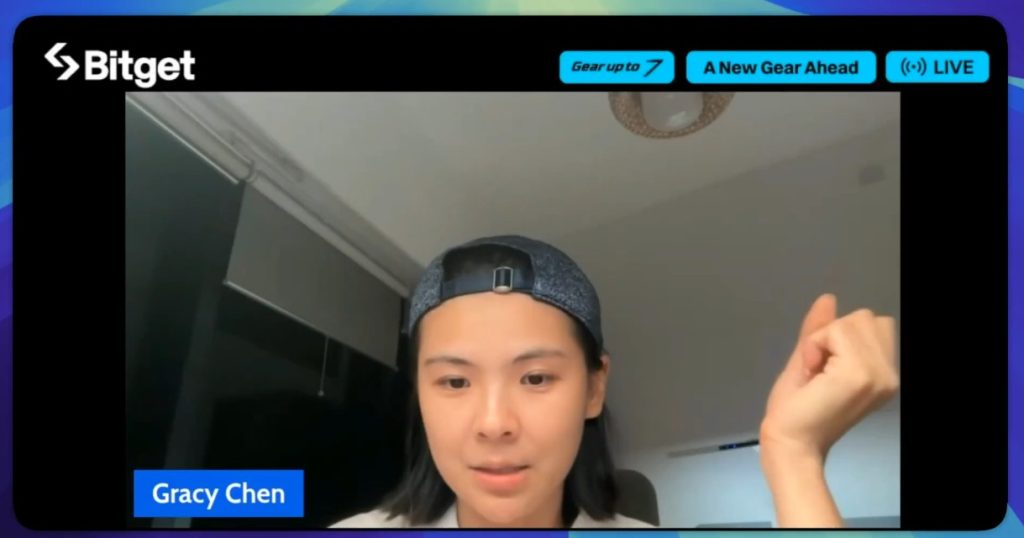
Bitget management is majority female
Bitget’s management team is 51% female, which is unheard of in crypto and tech in general. While Chen says the gender ratio isn’t intentional, Bitget’s philosophy of open communication, 360-degree evaluations every 90 days, “bonus of birth”, and rewards for continuous learning attracts women.
Ironically, her war stories as a female CEO are from her Web2 days.
“While I was raising funds for my VR company, I had investors tell me, Gracy, we like you and your project, but we don’t invest in female founders – especially those who are married but don’t have children yet.”
But crypto? It’s been good to her.
“There are lesser preconceived notions compared to the male-dominated traditional tech world. Bitcoin was made under a pseudonym, and in crypto most people don’t have biases based on the gender of the person leading the company. They care about creating great products, and that’s what we deliver.”
Read also
Chen acknowledges there’s still a way to go to balance the gender ratio in crypto and that Bitget is an outlier.
“It’s been one of our Corporate Social Responsibility (CSR) efforts to create impact through education and inclusion, especially around gender,” she says.
During the World Economic Forum in 2024, Chen launched a project called Blockchain4Her, a $10 million program to give female-led start-ups funding, mentorship and opportunities, particularly in developing nations.

The program fosters inclusivity and gender diversity in the blockchain industry and is supported by a partnership with UNICEF which will provide education to 1.1 million people worldwide by 2027.
Bitget is simultaneously funding $10 million for the Blockchain4Youth project to onboard and educate the younger education.
“We want to prove that crypto should be used for good and should be available for everyone,” Chen believes.
Especially women and mothers.
Chen went on to become a single mother herself, and she channels these traits into her role as CEO. “I lead with high integrity and open communication, which are the examples I set for my son.”
“I build a team at home, not just at work, in order to manage everything,” Chen explains.
Gracy Chen’s personal life
Working single mothers are in a league of their own, and Chen proves that women can succeed in an executive role, and crypto’s remote-first nature allows for this. It just requires ingenuity and a sound support system. Chen might miss an athletic day at school, but she can take her son to Paris on a whim. It makes for an interesting life, emulating the formative experiences her mother gave her.
In her personal life, her ambitions are modest. She practices yoga, reads, meditates, goes to the gym, hikes, and tries to stay in Hong Kong for longer periods, rather than following the conference circuit.
Her home life is intentionally simple, juxtaposed with Bitget’s growth goals. Institutional partners, PayFi and cross-border transactions are three main areas of focus.
“I’m excited about tokenizing RWAs and the intersection of traditional assets with crypto, which is helping drive an ongoing wave of institutional adoption. It bridges a pathway for women in conventional financial markets to step into crypto and women in crypto get access to global assets worldwide,” Chen says.
“Positive regulatory developments are also helping grow crypto adoption, drive awareness to get more women educated about crypto, and even get their projects funded. All of this together has a positive impact for women in crypto.”
Chen jokes about her name being “very female,” which she’s happy about. She takes great pleasure in people realizing the CEO of Bitget is a woman.
With other female crypto leaders rising the ranks, such as Solana Foundation’s Lily Lu, Chen says, “it’s definitely getting better.”
Subscribe
The most engaging reads in blockchain. Delivered once a
week.


Amanda Smith
Amanda Smith is an accomplished writer and culture journalist. Her ability to hold a mirror up to society, to see both the malaise and majesty, has led to assignments with highly respected titles such as The Guardian, Business Insider, and National Geographic. She’s covered crypto, AI and finance for CNET, NerdWallet, and MIT Technology Review. An Australian, she currently lives in New York City.